Mensink Gert B M, Schienkiewitz Anja, Rabenberg Martina, Borrmann Anja, Richter Almut, Haftenberger Marjolein
Robert Koch Institute, Berlin, Department of Epidemiology and Health Monitoring.
J Health Monit. 2018 Mar 15;3(1):31-37. doi: 10.17886/RKI-GBE-2018-024. eCollection 2018 Mar.
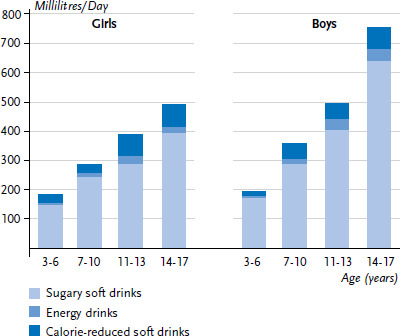
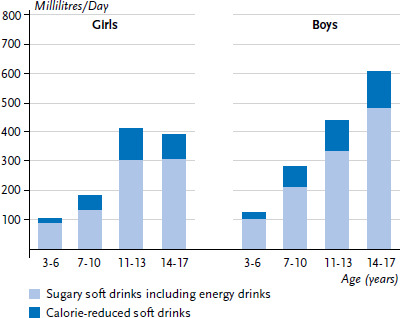
Consuming large amounts of sugary beverages has been related to developing obesity, diabetes mellitus type II and other chronic diseases. KiGGS Wave 2 (2014-2017) provides data on the consumption of sugary soft drinks in the 3-17 year age group in Germany. Overall, 13.7% of girls and 17.6% of boys consume one to three times a day sugary soft drinks and 3.3% of girls and 4.7% of boys four or more times. Consumption frequency increases with age and is higher among children and adolescents with low socioeconomic status (SES) than for those of the same age with high SES. The share of adolescents who drink sugary soft drinks daily has decreased since the KiGGS baseline study (2003-2006).
大量饮用含糖饮料与肥胖、II型糖尿病及其他慢性疾病的发生有关。德国儿童青少年健康监测与促进项目第二轮(2014 - 2017年)提供了德国3至17岁年龄组人群饮用含糖软饮料的相关数据。总体而言,13.7%的女孩和17.6%的男孩每天饮用一至三次含糖软饮料,3.3%的女孩和4.7%的男孩每天饮用四次或更多次。饮用频率随年龄增长而增加,社会经济地位较低(SES)的儿童和青少年的饮用频率高于同龄社会经济地位较高的儿童和青少年。自德国儿童青少年健康监测与促进项目基线研究(2003 - 2006年)以来,每天饮用含糖软饮料的青少年比例有所下降。