Department of Orthopaedics, Johns Hopkins University, Baltimore, United States.
Department of Surgery, Tulane School of Medicine, New Orleans, United States.
Elife. 2022 May 26;11:e71542. doi: 10.7554/eLife.71542.
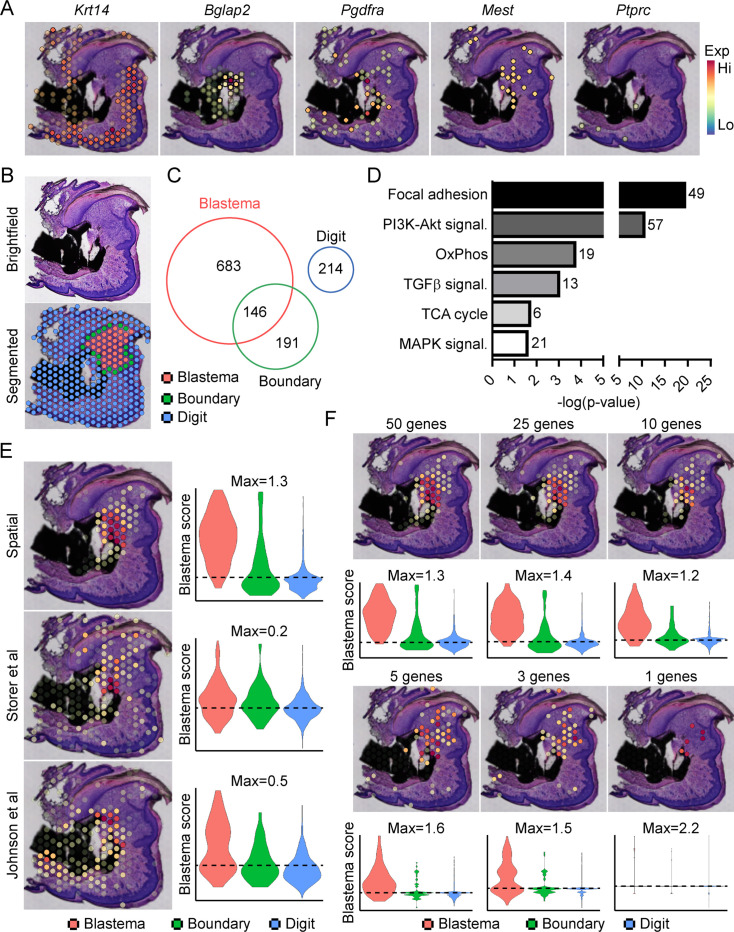
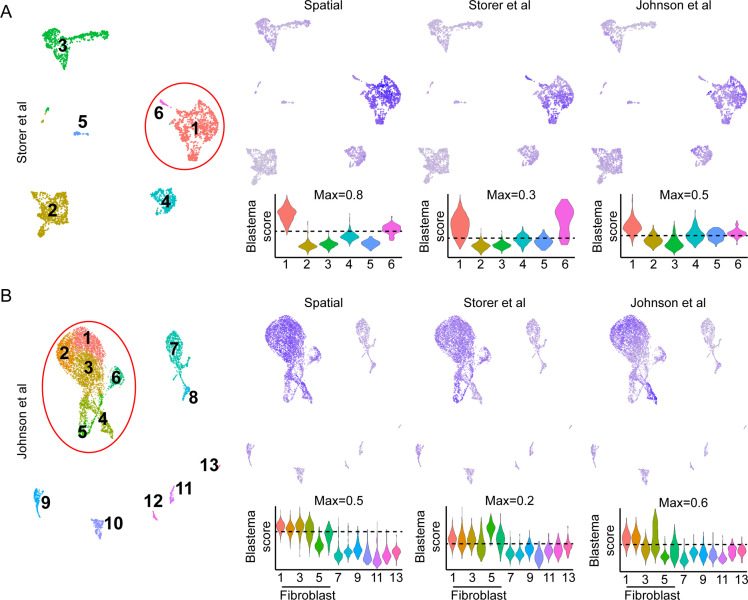
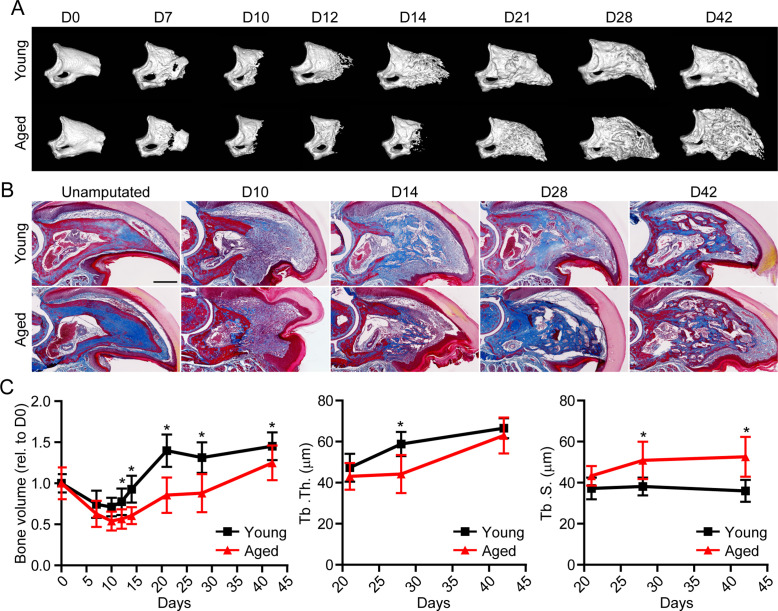
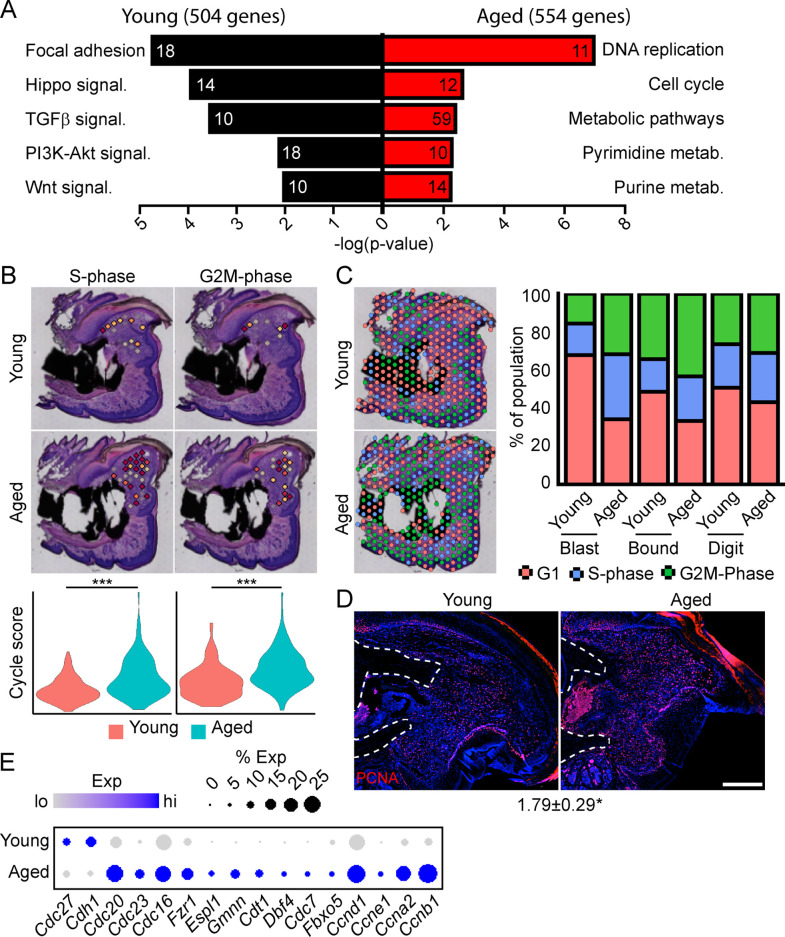
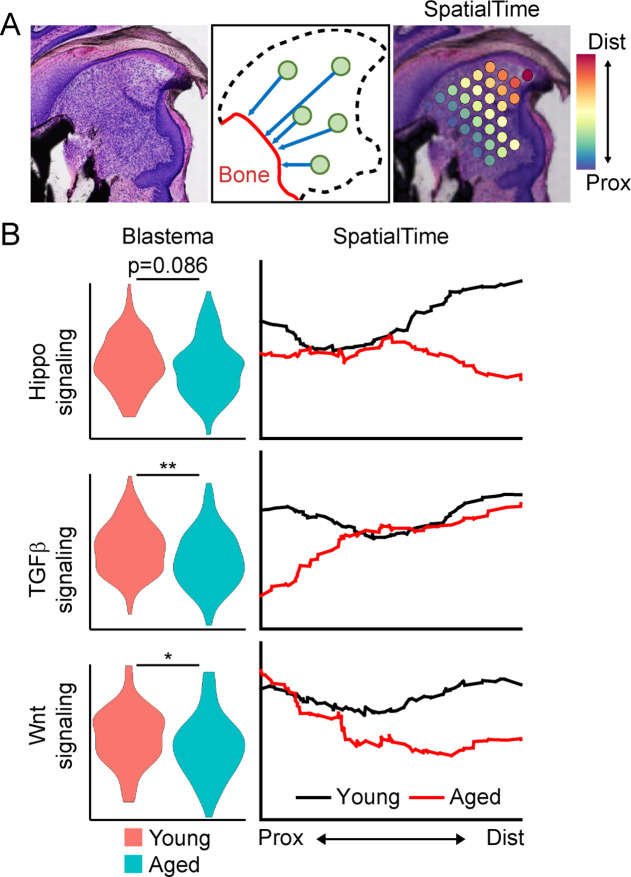
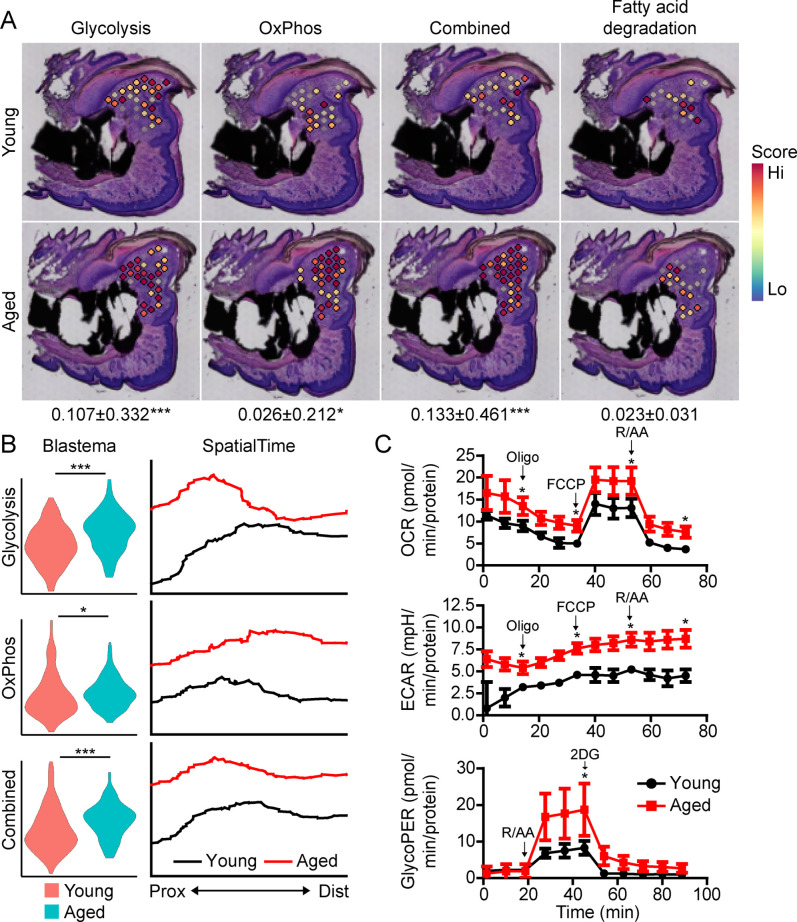
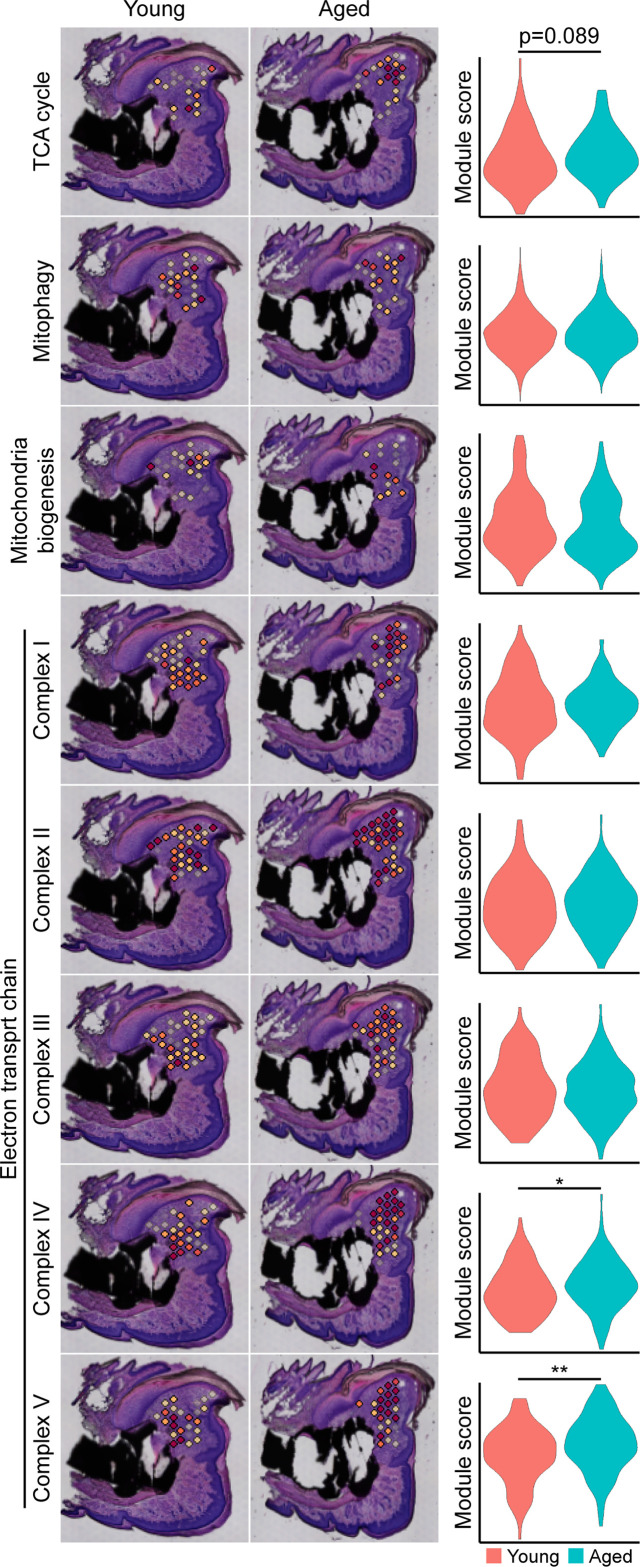
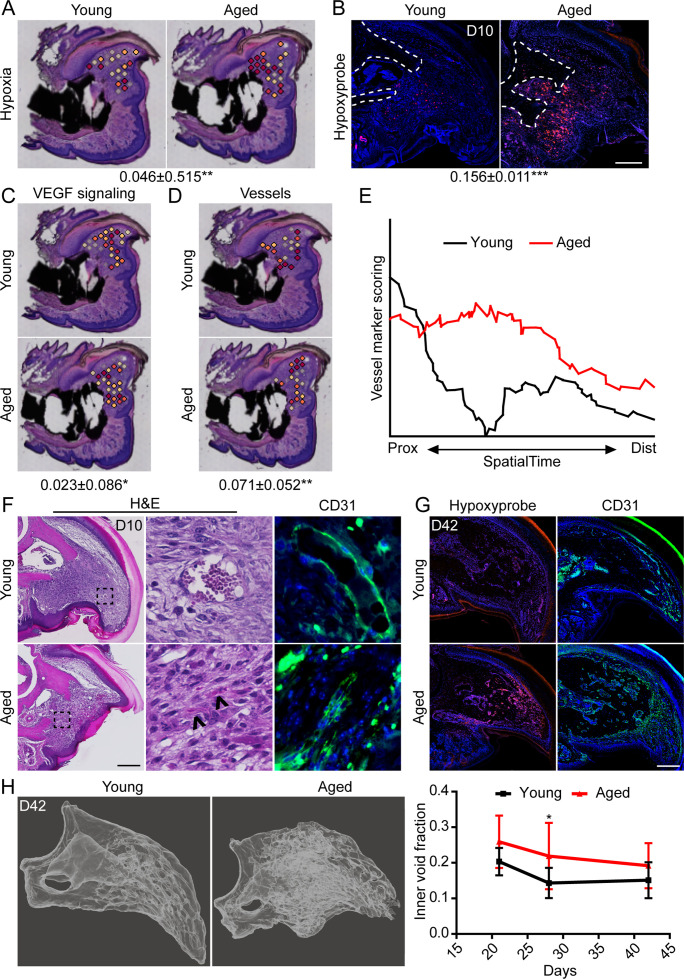
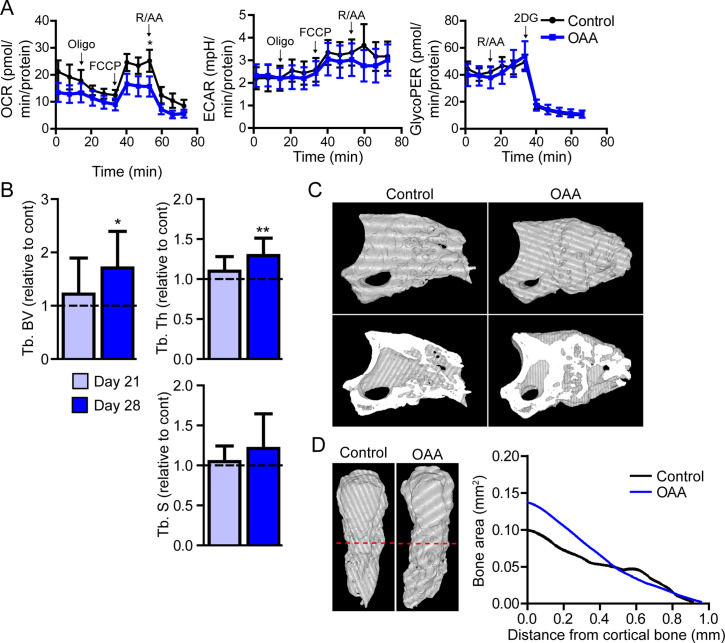
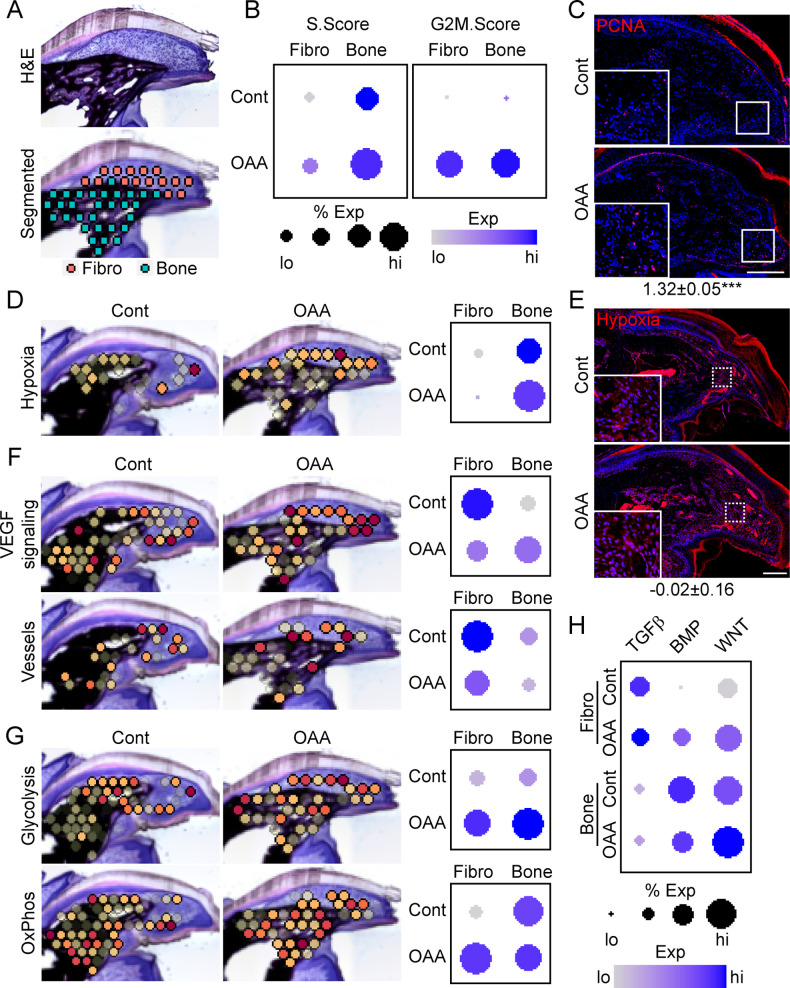
De novo limb regeneration after amputation is restricted in mammals to the distal digit tip. Central to this regenerative process is the blastema, a heterogeneous population of lineage-restricted, dedifferentiated cells that ultimately orchestrates regeneration of the amputated bone and surrounding soft tissue. To investigate skeletal regeneration, we made use of spatial transcriptomics to characterize the transcriptional profile specifically within the blastema. Using this technique, we generated a gene signature with high specificity for the blastema in both our spatial data, as well as other previously published single-cell RNA-sequencing transcriptomic studies. To elucidate potential mechanisms distinguishing regenerative from non-regenerative healing, we applied spatial transcriptomics to an aging model. Consistent with other forms of repair, our digit amputation mouse model showed a significant impairment in regeneration in aged mice. Contrasting young and aged mice, spatial analysis revealed a metabolic shift in aged blastema associated with an increased bioenergetic requirement. This enhanced metabolic turnover was associated with increased hypoxia and angiogenic signaling, leading to excessive vascularization and altered regenerated bone architecture in aged mice. Administration of the metabolite oxaloacetate decreased the oxygen consumption rate of the aged blastema and increased WNT signaling, leading to enhanced in vivo bone regeneration. Thus, targeting cell metabolism may be a promising strategy to mitigate aging-induced declines in tissue regeneration.
肢体切除后的新生在哺乳动物中仅限于远端指端。这个再生过程的核心是芽基,它是一种异质的、谱系受限的去分化细胞群体,最终协调了被切除的骨骼和周围软组织的再生。为了研究骨骼再生,我们利用空间转录组学来专门描述芽基中的转录谱。使用这项技术,我们在我们的空间数据以及其他以前发表的单细胞 RNA 测序转录组学研究中生成了一个对芽基具有高特异性的基因特征。为了阐明区分再生和非再生愈合的潜在机制,我们将空间转录组学应用于衰老模型。与其他修复形式一致,我们的指切除小鼠模型显示在老年小鼠中再生能力显著受损。与年轻和老年小鼠相比,空间分析揭示了与增加的生物能需求相关的老年芽基中的代谢转变。这种增强的代谢周转率与缺氧和血管生成信号的增加有关,导致老年小鼠中血管过度化和再生骨骼结构改变。代谢物草酰乙酸的给药降低了老年芽基的耗氧率并增加了 WNT 信号,导致体内骨再生增强。因此,靶向细胞代谢可能是减轻组织再生中与年龄相关的下降的一种有前途的策略。