Department of Materials and Environmental Chemistry, Stockholm University, SE-10691 Stockholm, Sweden.
Advanced Multifunctional Materials Laboratory, Department of Chemistry, Faculty of Science, Assiut University, Assiut 71515, Egypt.
Int J Mol Sci. 2022 May 12;23(10):5405. doi: 10.3390/ijms23105405.
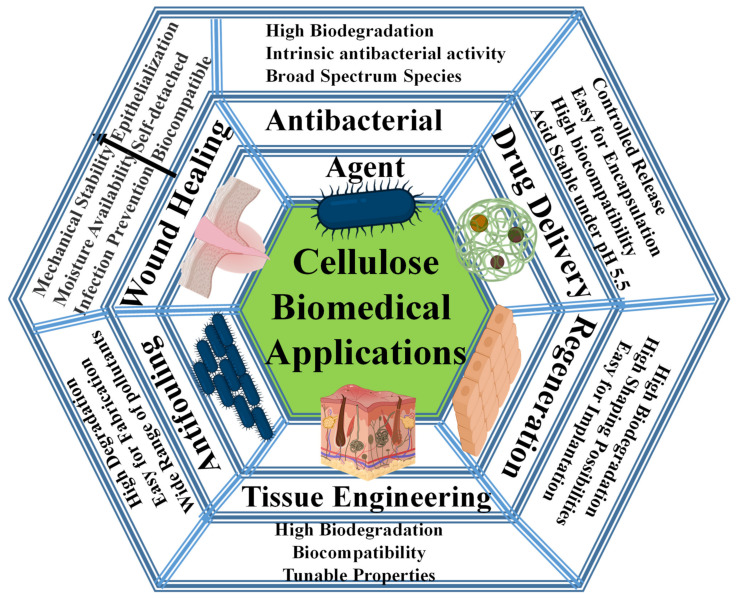
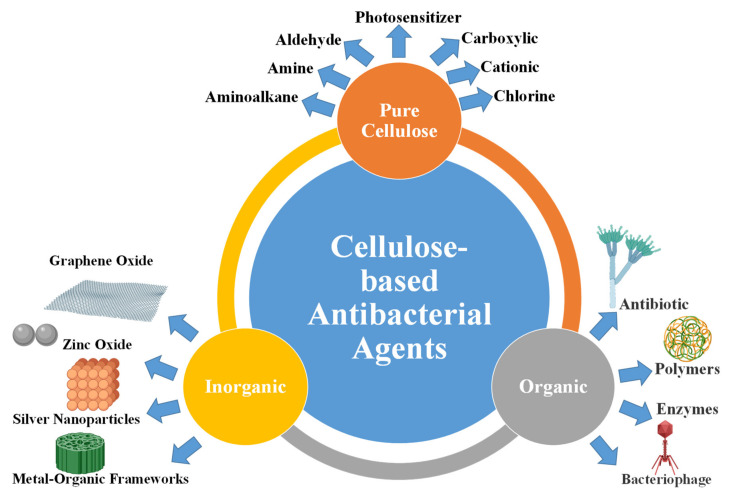
There are various biomaterials, but none fulfills all requirements. Cellulose biopolymers have advanced biomedicine to satisfy high market demand and circumvent many ecological concerns. This review aims to present an overview of cellulose knowledge and technical biomedical applications such as antibacterial agents, antifouling, wound healing, drug delivery, tissue engineering, and bone regeneration. It includes an extensive bibliography of recent research findings from fundamental and applied investigations. Cellulose-based materials are tailorable to obtain suitable chemical, mechanical, and physical properties required for biomedical applications. The chemical structure of cellulose allows modifications and simple conjugation with several materials, including nanoparticles, without tedious efforts. They render the applications cheap, biocompatible, biodegradable, and easy to shape and process.
有各种各样的生物材料,但没有一种能满足所有要求。纤维素生物聚合物推动了生物医学的发展,以满足高市场需求并规避许多生态问题。本综述旨在介绍纤维素的知识概述和技术生物医学应用,如抗菌剂、抗污、伤口愈合、药物输送、组织工程和骨再生。它包括基础和应用研究的最新研究成果的广泛参考文献。基于纤维素的材料可定制,以获得生物医学应用所需的合适的化学、机械和物理性能。纤维素的化学结构允许进行修饰和与几种材料(包括纳米颗粒)的简单结合,而无需繁琐的努力。它们使这些应用具有廉价、生物相容、可生物降解以及易于成型和加工的特点。