Department of Nutrition, Chung Shan Medical University, Taichung, Taiwan.
Department of Food Science and Biotechnology, National Chung Hsing University, Taichung, Taiwan.
J Food Drug Anal. 2022 Mar 15;30(1):1-10. doi: 10.38212/2224-6614.3396.
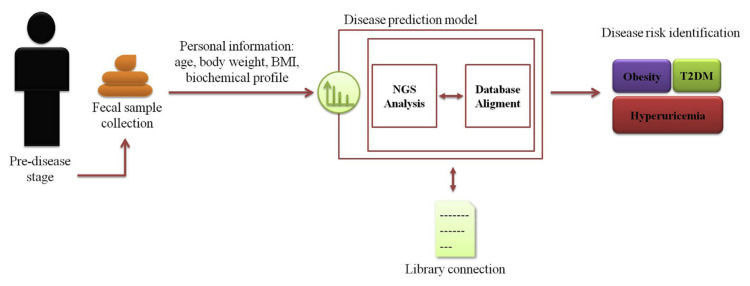
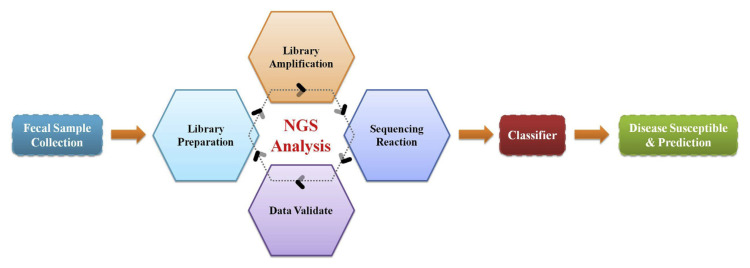
The prevalence of metabolic disease has rising and affected over 1,000 million populations globally. Since the metabolic disease and its related complication are board, it has become the major health hazard of modern world. However, Long term medication of metabolic disease may cause serious side effects and risk for adverse health problems. Recently, emerging studies focus on exploring the mechanistic details of metabolic state in disease development and progression. Gut bacteria ecosystem was considered to play a pivotal role in regulating energy homeostasis and great associated with the development of metabolic disease. Accumulated evidences indicated that Akkermansia muciniphila, Faecalibacterium prausnitzii, and Roseburia hominis improve the balance of the microecology in the intestine of the host and have positive effects on enhancing nutrients absorption. Hence, the novel probiotics as therapeutic target to modify gut microbiota generally focus on improving microbiota dysbiosis, and offers new prospects for treating metabolic disease. In the present review, we discuss the significant roles and regulatory properties of specific bacterium in the context of intestinal microbial balance, explores the kinds of harmful/beneficial bacteria that were likely to act as indicator for metabolic disease. Further proposed a stepwise procedure in the basis of sequencing technology with that of innovative option to reestablish the microbial equilibrium and prevent metabolic disease.
代谢性疾病的患病率不断上升,影响着全球超过 10 亿人口。由于代谢性疾病及其相关并发症广泛存在,它已成为现代世界的主要健康危害。然而,长期服用代谢性疾病药物可能会导致严重的副作用和不良健康问题的风险。最近,新兴的研究集中在探索代谢状态在疾病发展和进展中的机制细节。肠道细菌生态系统被认为在调节能量平衡方面起着关键作用,并与代谢性疾病的发展密切相关。越来越多的证据表明,阿克曼氏菌(Akkermansia muciniphila)、普拉梭菌(Faecalibacterium prausnitzii)和罗氏菌(Roseburia hominis)改善了宿主肠道内微生物群落的平衡,并对增强营养物质吸收有积极作用。因此,新型益生菌作为治疗靶点来调节肠道微生物群,通常侧重于改善微生物群落失调,并为治疗代谢性疾病提供了新的前景。在本综述中,我们讨论了特定细菌在肠道微生物平衡中的重要作用和调节特性,探讨了可能作为代谢性疾病指标的有害/有益细菌种类。进一步提出了一种基于测序技术的逐步程序,并结合创新的选择来重新建立微生物平衡,预防代谢性疾病。