Oldham Stuart, Fulcher Ben D, Aquino Kevin, Arnatkevičiūtė Aurina, Paquola Casey, Shishegar Rosita, Fornito Alex
Turner Institute for Brain and Mental Health, School of Psychological Sciences, and Monash Biomedical Imaging, Monash University, Melbourne, VIC, Australia.
Murdoch Children's Research Institute, Melbourne, VIC, Australia.
Sci Adv. 2022 Jun 3;8(22):eabm6127. doi: 10.1126/sciadv.abm6127.
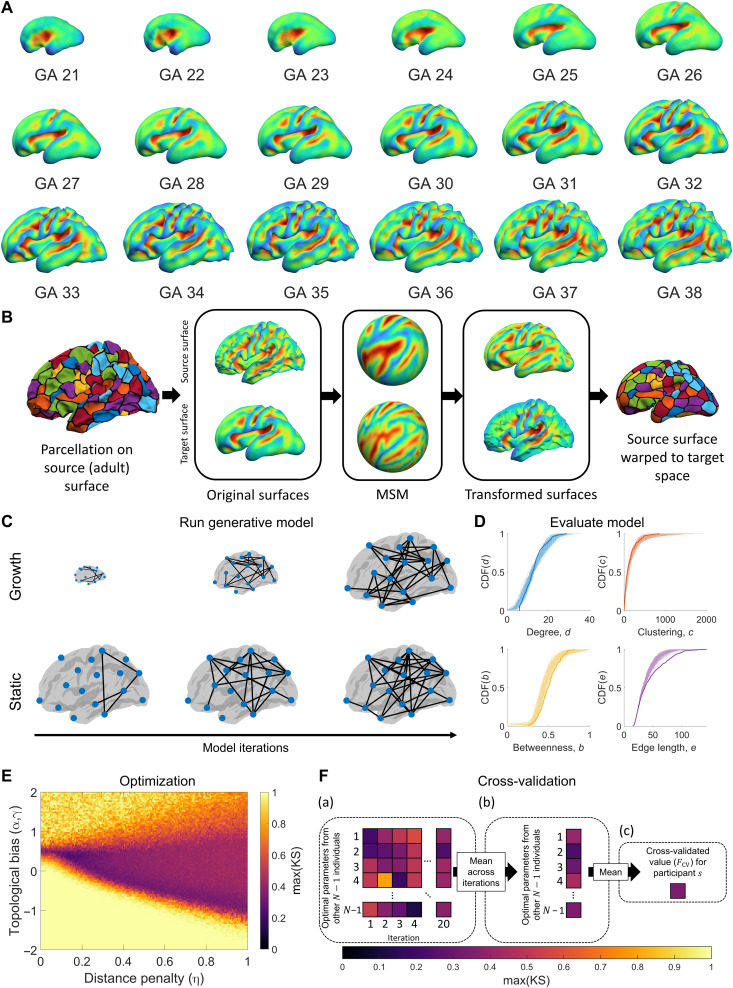
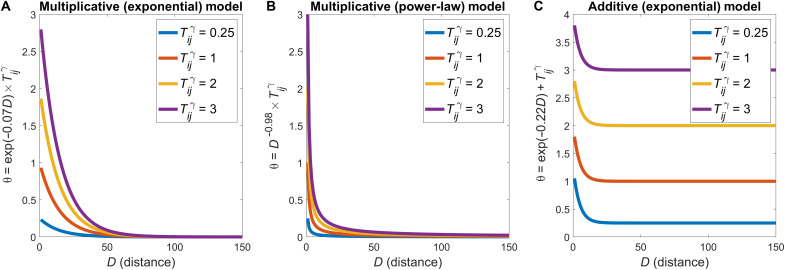
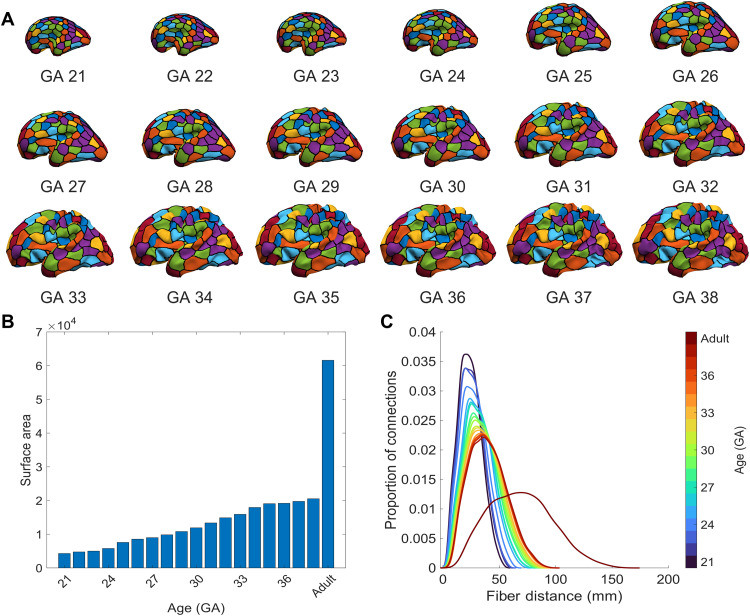
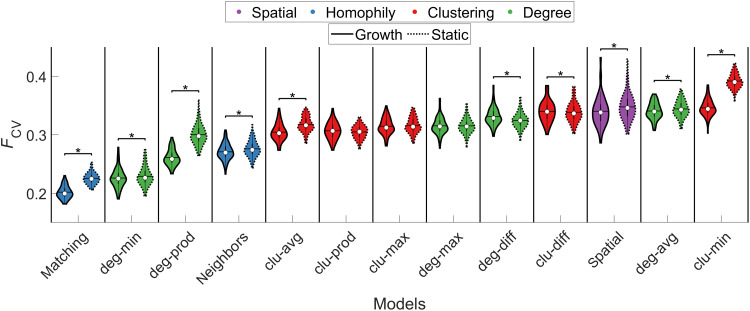
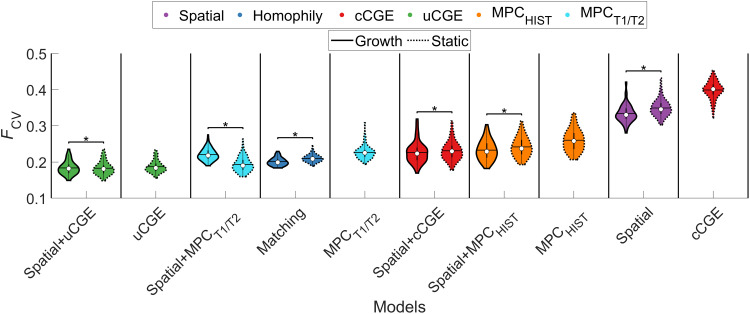
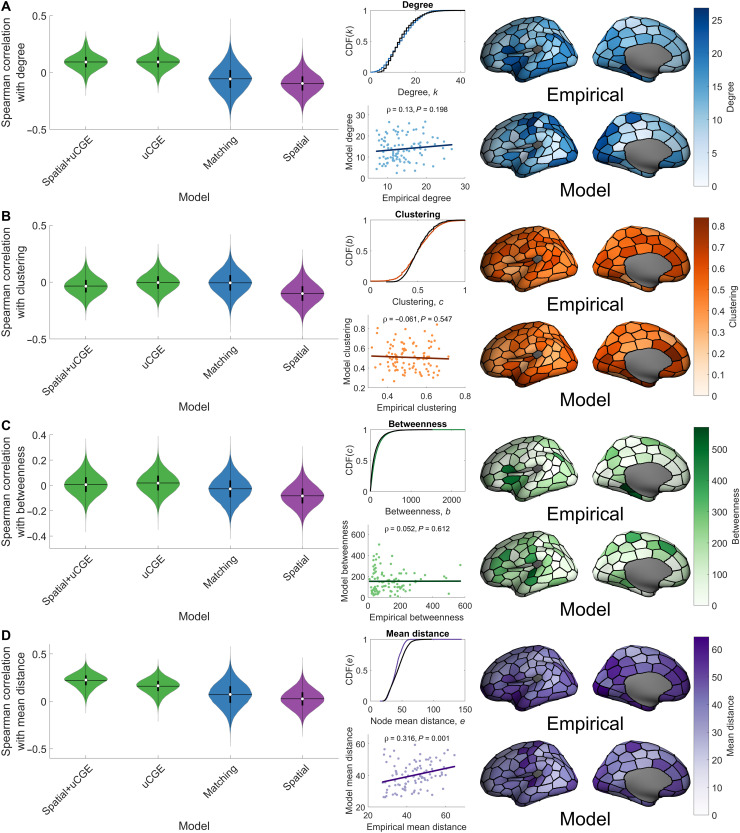
The complex connectivity of nervous systems is thought to have been shaped by competitive selection pressures to minimize wiring costs and support adaptive function. Accordingly, recent modeling work indicates that stochastic processes, shaped by putative trade-offs between the cost and value of each connection, can successfully reproduce many topological properties of macroscale human connectomes measured with diffusion magnetic resonance imaging. Here, we derive a new formalism that more accurately captures the competing pressures of wiring cost minimization and topological complexity. We further show that model performance can be improved by accounting for developmental changes in brain geometry and associated wiring costs, and by using interregional transcriptional or microstructural similarity rather than topological wiring rules. However, all models struggled to capture topographical (i.e., spatial) network properties. Our findings highlight an important role for genetics in shaping macroscale brain connectivity and indicate that stochastic models offer an incomplete account of connectome organization.
神经系统的复杂连通性被认为是由竞争性选择压力塑造而成的,目的是将布线成本降至最低并支持适应性功能。因此,最近的建模工作表明,由每个连接的成本和价值之间的假定权衡所塑造的随机过程,可以成功地再现通过扩散磁共振成像测量的宏观人类连接组的许多拓扑特性。在这里,我们推导了一种新的形式主义,它能更准确地捕捉布线成本最小化和拓扑复杂性的竞争压力。我们进一步表明,通过考虑大脑几何结构的发育变化和相关的布线成本,以及使用区域间转录或微观结构相似性而非拓扑布线规则,可以提高模型性能。然而,所有模型都难以捕捉地形(即空间)网络特性。我们的研究结果突出了遗传学在塑造宏观大脑连通性方面的重要作用,并表明随机模型对连接组组织的解释并不完整。