Petrizzelli Francesco, Guzzi Pietro Hiram, Mazza Tommaso
Laboratory of Bioinformatics, Fondazione IRCCS Casa Sollievo della Sofferenza, Viale Capuccini, 71013 S. Giovanni Rotondo, Fg, Italy.
Department of Surgical and Medical Sciences, University of Catanzaro, Catanzaro, Campus S Venuta, 88100, Italy.
Comput Struct Biotechnol J. 2022;20:2664-2671. doi: 10.1016/j.csbj.2022.05.040. Epub 2022 May 27.
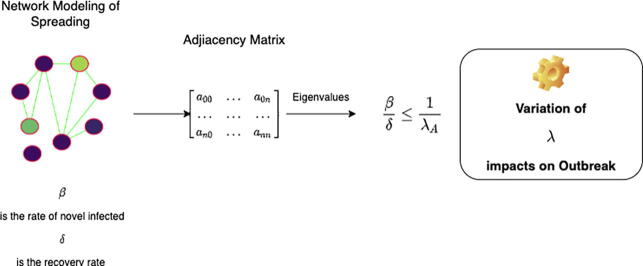
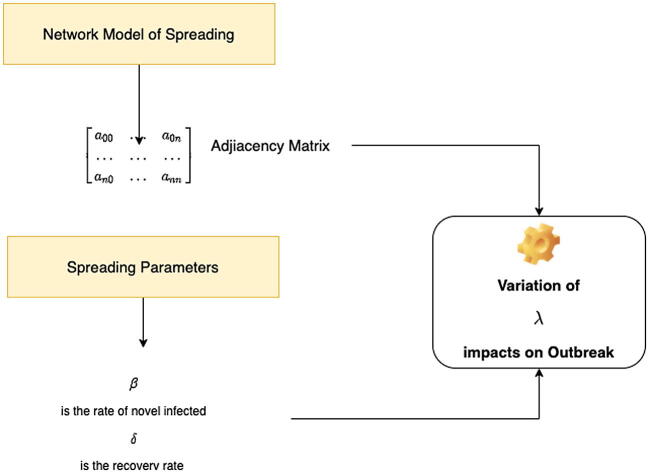
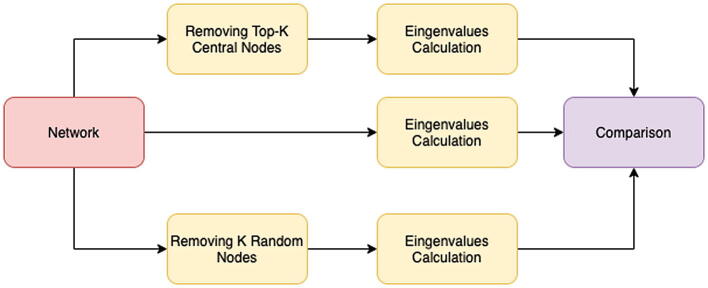
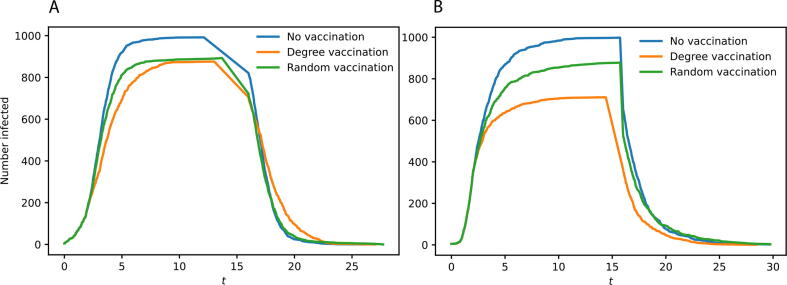
The mitigation of an infectious disease spreading has recently gained considerable attention from the research community. It may be obtained by adopting sanitary measurements (e.g., vaccination, wearing masks), social rules (e.g., social distancing), together with an extensive vaccination campaign. Vaccination is currently the primary way for mitigating the Coronavirus Disease (COVID-19) outbreak without severe lockdown. Its effectiveness also depends on the number and timeliness of administrations and thus demands strict prioritization criteria. Almost all countries have prioritized similar classes of exposed workers: healthcare professionals and the elderly, obtaining to maximize the survival of patients and years of life saved. Nevertheless, the virus is currently spreading at high rates, and any prioritization criterion so far adopted did not account for the structural organization of the contact networks. We reckon that a network where nodes are people while the edges represent their social contacts may efficiently model the virus's spreading. It is known that tailored interventions (e.g., vaccination) on nodes may efficiently stop the propagation, thereby eliminating the "bridge edges." We then introduce such a model and consider both synthetic and real datasets. We present the benefits of a topology-aware versus an age-based vaccination strategy to mitigate the spreading of the virus. The code is available at https://github.com/mazzalab/playgrounds.
传染病传播的缓解问题最近受到了研究界的广泛关注。可以通过采取卫生措施(如接种疫苗、佩戴口罩)、社会规则(如保持社交距离)以及广泛的疫苗接种运动来实现。目前,接种疫苗是在不进行严格封锁的情况下缓解冠状病毒病(COVID-19)疫情的主要方式。其有效性还取决于接种的数量和及时性,因此需要严格的优先排序标准。几乎所有国家都对类似类别的暴露人群进行了优先排序:医护人员和老年人,以最大限度地提高患者的生存率和挽救的生命年数。然而,目前病毒正在高速传播,迄今为止采用的任何优先排序标准都没有考虑接触网络的结构组织。我们认为,一个节点为人而边代表其社会接触的网络可以有效地模拟病毒的传播。众所周知,对节点进行量身定制的干预措施(如接种疫苗)可以有效地阻止传播,从而消除“桥接边”。然后,我们引入这样一个模型,并考虑合成数据集和真实数据集。我们展示了一种拓扑感知的疫苗接种策略相对于基于年龄的疫苗接种策略在缓解病毒传播方面的优势。代码可在https://github.com/mazzalab/playgrounds获取。