Kawamura Aki, Nemoto Ken, Sugita Masaaki
Faculty of Sport Science, Nippon Sport Science University, Tokyo1588508, Japan.
Br J Nutr. 2022 Jun 16;129(6):1-11. doi: 10.1017/S0007114522001805.
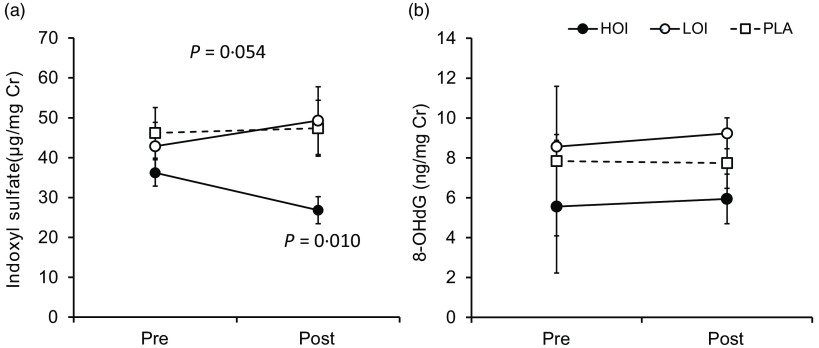
Previous studies have examined the effects of -3 fatty acid intake in supplement form or fish oil capsules, but there are few studies based on other foods. Perilla oil is a traditional Japanese seed oil rich in -3 fatty acids. This randomised trial aimed to determine the appropriate -3 fatty acid dose through consumption of perilla oil, which improves gut function and microbiota in trained athletes, and the amount of fat fuel required to provide energy to athletes involved in high-intensity training to improve athletic performance. Thirty-six female athletes training six times per week were randomly assigned to three groups according to perilla oil intake: 9 g/d (high oil intake (HOI)), 3 g/d (low oil intake (LOI)) and placebo-supplementation (PLA) groups. The HOI and LOI groups had perilla oil-containing jelly and the PLA group had placebo jelly for 8 weeks. Gut microbiota, constipation score and urinary biochemical index were measured pre- and post-intervention. The spoilage bacteria, , significantly decreased ( = 0·036, = 0·53), whereas -producing bacteria, , significantly increased ( = 0·007, = 1·2) in the HOI group. Urinary indoxyl sulphate significantly decreased in the HOI group only ( = 0·010, = 0·82). Changes in the constipation score were significantly lower in the HOI group ( = 0·020) and even lower in the LOI group ( = 0·073) than in the PLA group; there were significant differences between groups ( = 0·035). Therefore, perilla oil intake may improve gut function and microbiota in athletes, with higher doses resulting in further improvement.
以往的研究探讨了以补充剂形式摄入ω-3脂肪酸或服用鱼油胶囊的效果,但基于其他食物的研究较少。紫苏油是一种富含ω-3脂肪酸的传统日本籽油。这项随机试验旨在通过食用紫苏油来确定合适的ω-3脂肪酸剂量,紫苏油可改善训练有素的运动员的肠道功能和微生物群,还能确定为参与高强度训练的运动员提供能量以提高运动成绩所需的脂肪燃料量。36名每周训练6次的女性运动员根据紫苏油摄入量被随机分为三组:9克/天(高油摄入量(HOI)组)、3克/天(低油摄入量(LOI)组)和安慰剂补充(PLA)组。HOI组和LOI组食用含紫苏油的果冻,PLA组食用安慰剂果冻,为期8周。在干预前后测量肠道微生物群、便秘评分和尿液生化指标。HOI组中腐败菌显著减少(P = 0·036,效应量 = 0·53),而产丁酸菌显著增加(P = 0·007,效应量 = 1·2)。仅HOI组的尿硫酸吲哚酚显著降低(P = 0·010,效应量 = 0·82)。HOI组便秘评分的变化显著低于PLA组(P = 0·020),LOI组甚至更低(P = 0·073);组间存在显著差异(P = 0·035)。因此,摄入紫苏油可能改善运动员的肠道功能和微生物群,剂量越高改善越明显。