Zhu Ziquan, Lu Siyuan, Wang Shui-Hua, Gorriz Juan Manuel, Zhang Yu-Dong
School of Computing and Mathematical Sciences, University of Leicester, East Midlands, United Kingdom.
School of Computer Science and Technology, Henan Polytechnic University, Jiaozuo, China.
Front Syst Neurosci. 2022 May 26;16:838822. doi: 10.3389/fnsys.2022.838822. eCollection 2022.
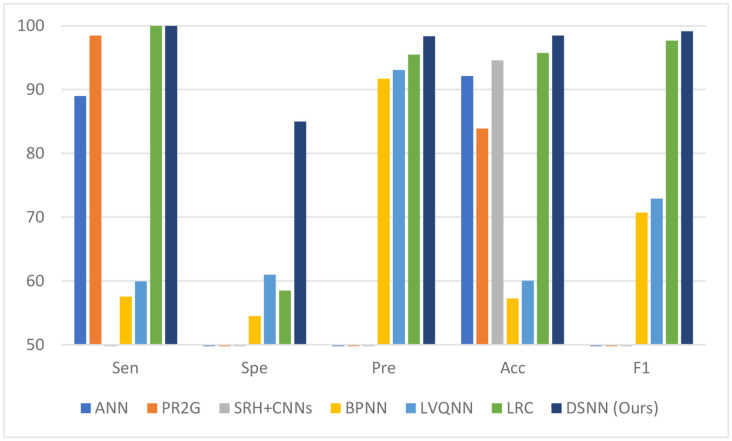
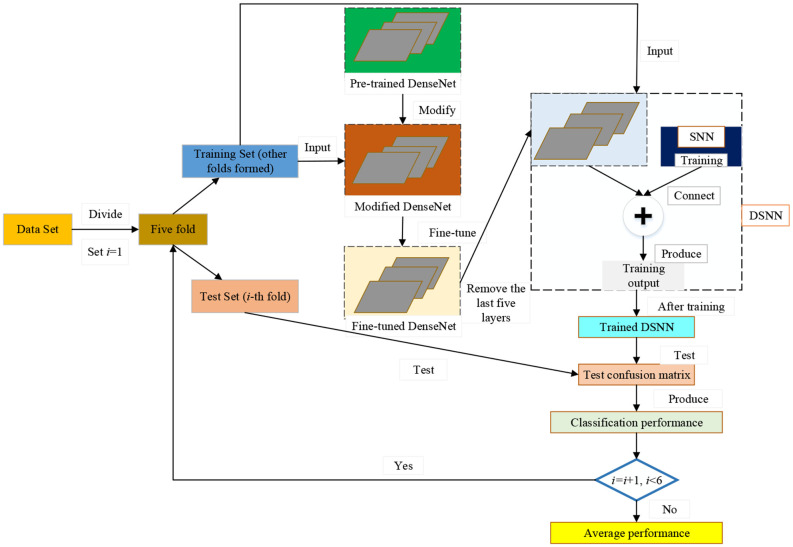
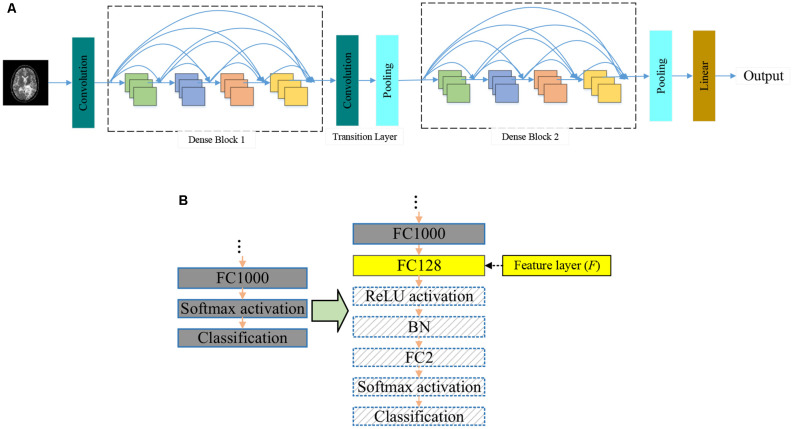
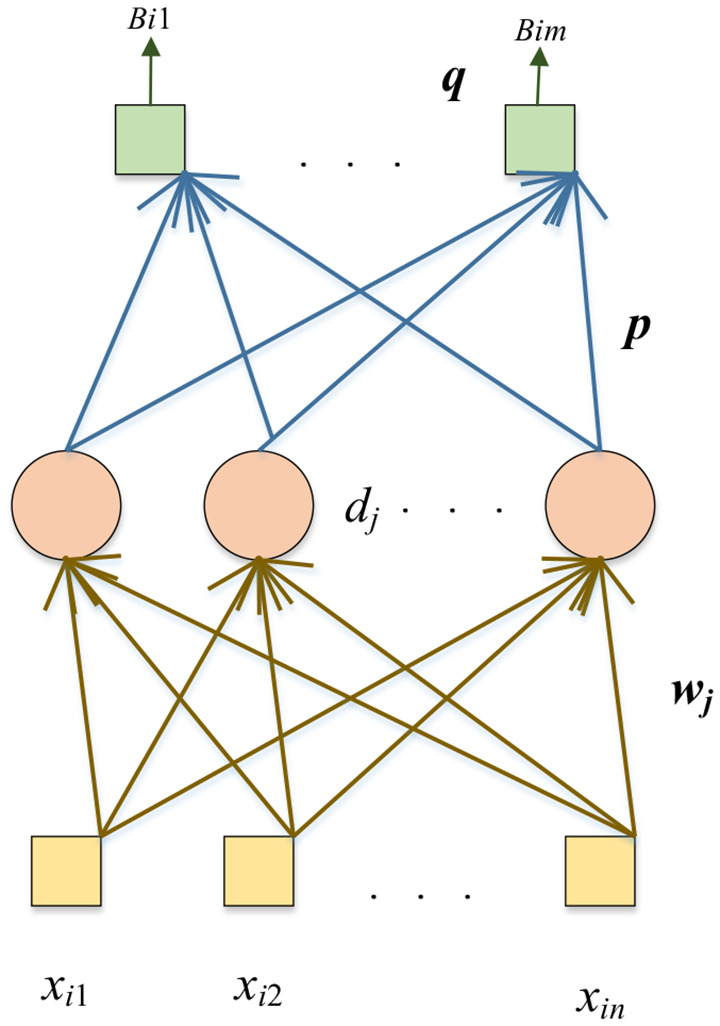
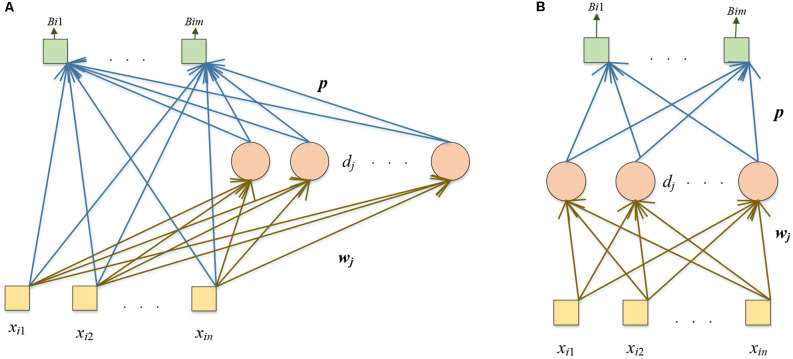
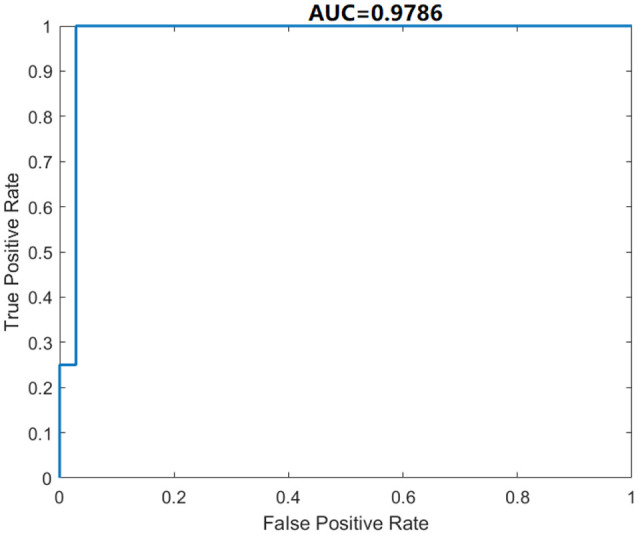
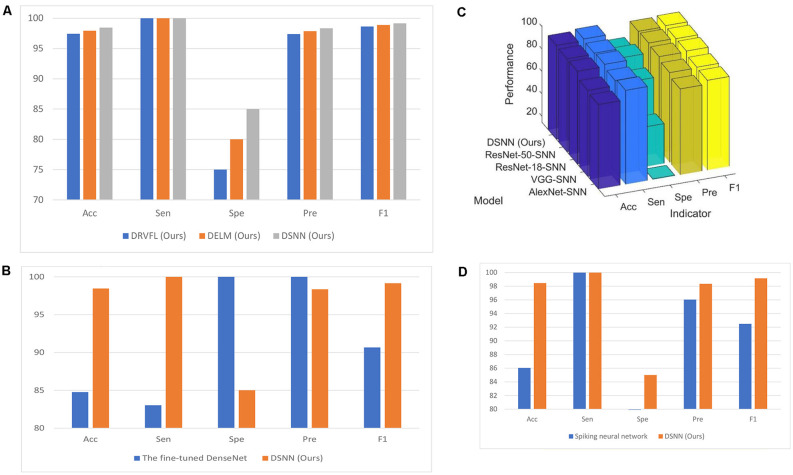
: Brain diseases refer to intracranial tissue and organ inflammation, vascular diseases, tumors, degeneration, malformations, genetic diseases, immune diseases, nutritional and metabolic diseases, poisoning, trauma, parasitic diseases, etc. Taking Alzheimer's disease (AD) as an example, the number of patients dramatically increases in developed countries. By 2025, the number of elderly patients with AD aged 65 and over will reach 7.1 million, an increase of nearly 29% over the 5.5 million patients of the same age in 2018. Unless medical breakthroughs are made, AD patients may increase from 5.5 million to 13.8 million by 2050, almost three times the original. Researchers have focused on developing complex machine learning (ML) algorithms, i.e., convolutional neural networks (CNNs), containing millions of parameters. However, CNN models need many training samples. A small number of training samples in CNN models may lead to overfitting problems. With the continuous research of CNN, other networks have been proposed, such as randomized neural networks (RNNs). Schmidt neural network (SNN), random vector functional link (RVFL), and extreme learning machine (ELM) are three types of RNNs. : We propose three novel models to classify brain diseases to cope with these problems. The proposed models are DenseNet-based SNN (DSNN), DenseNet-based RVFL (DRVFL), and DenseNet-based ELM (DELM). The backbone of the three proposed models is the pre-trained "customize" DenseNet. The modified DenseNet is fine-tuned on the empirical dataset. Finally, the last five layers of the fine-tuned DenseNet are substituted by SNN, ELM, and RVFL, respectively. : Overall, the DSNN gets the best performance among the three proposed models in classification performance. We evaluate the proposed DSNN by five-fold cross-validation. The accuracy, sensitivity, specificity, precision, and F1-score of the proposed DSNN on the test set are 98.46% ± 2.05%, 100.00% ± 0.00%, 85.00% ± 20.00%, 98.36% ± 2.17%, and 99.16% ± 1.11%, respectively. The proposed DSNN is compared with restricted DenseNet, spiking neural network, and other state-of-the-art methods. Finally, our model obtains the best results among all models. : DSNN is an effective model for classifying brain diseases.
脑部疾病是指颅内组织和器官的炎症、血管疾病、肿瘤、变性、畸形、遗传疾病、免疫疾病、营养和代谢疾病、中毒、创伤、寄生虫病等。以阿尔茨海默病(AD)为例,发达国家的患者数量急剧增加。到2025年,65岁及以上的老年AD患者数量将达到710万,比2018年的550万同龄患者增加近29%。除非取得医学突破,否则到2050年AD患者可能从550万增加到1380万,几乎是原来的三倍。研究人员专注于开发复杂的机器学习(ML)算法,即包含数百万参数的卷积神经网络(CNN)。然而,CNN模型需要大量训练样本。CNN模型中少量的训练样本可能会导致过拟合问题。随着对CNN的不断研究,人们提出了其他网络,如随机神经网络(RNN)。施密特神经网络(SNN)、随机向量功能链接(RVFL)和极限学习机(ELM)是三种类型的RNN。
我们提出了三种新颖的模型来对脑部疾病进行分类以应对这些问题。所提出的模型是基于DenseNet的SNN(DSNN)、基于DenseNet的RVFL(DRVFL)和基于DenseNet的ELM(DELM)。所提出的三种模型的主干是预训练的“定制”DenseNet。对修改后的DenseNet在经验数据集上进行微调。最后,分别用SNN、ELM和RVFL替换微调后的DenseNet的最后五层。
总体而言,在分类性能方面,DSNN在所提出的三种模型中表现最佳。我们通过五折交叉验证对所提出的DSNN进行评估。所提出的DSNN在测试集上的准确率、灵敏度、特异性、精确率和F1分数分别为98.46%±2.05%、100.00%±0.00%、85.00%±20.00%、98.36%±2.17%和99.16%±1.11%。将所提出的DSNN与受限DenseNet、脉冲神经网络和其他先进方法进行比较。最后,我们的模型在所有模型中获得了最佳结果。
DSNN是一种用于脑部疾病分类的有效模型。