Laboratory of Comparative and Environmental Virology, Oswaldo Cruz Institute, Oswaldo Cruz Foundation, Rio de Janeiro, RJ, CEP 21045-900, Brazil.
Sci Rep. 2022 Jul 2;12(1):11220. doi: 10.1038/s41598-022-15413-1.
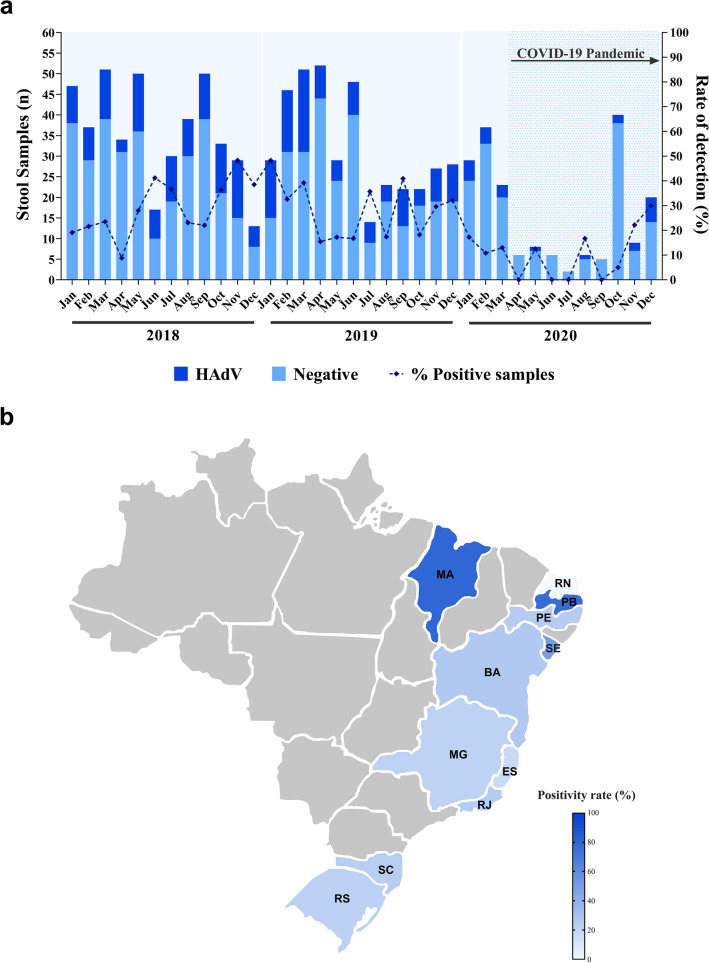
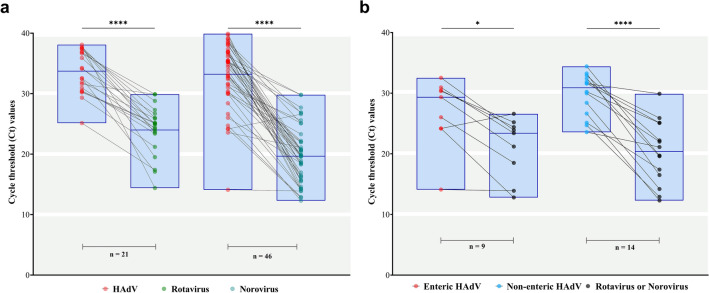
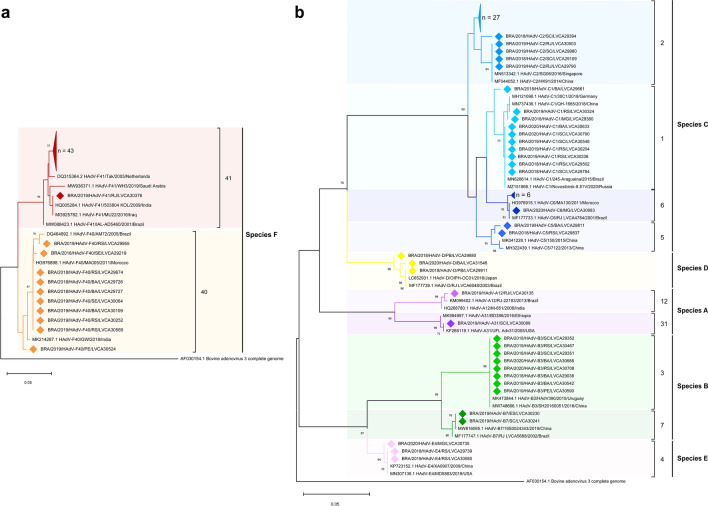
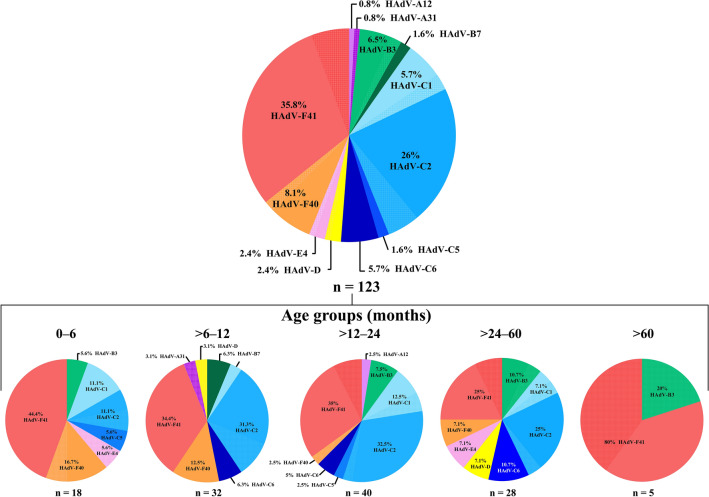
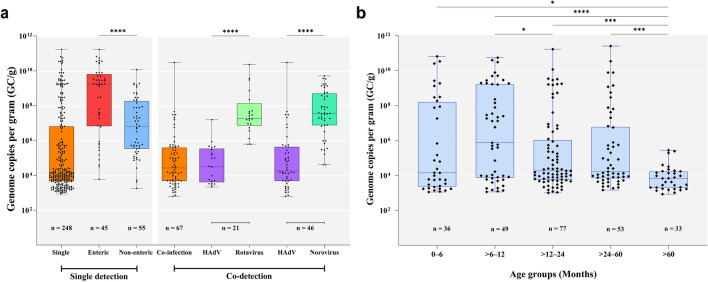
Human adenovirus (HAdV) types F40/41 have long been recognized as major viral agents of acute gastroenteritis (AGE) in children. Despite this, studies on HAdV molecular epidemiology are sparse, and their real impact is likely under-estimated. Thus, our goal was to investigate HAdV incidence, enteric and non-enteric types circulation, co-detections with rotavirus and norovirus and DNA shedding in stool samples from inpatients and outpatients from eleven Brazilian states. During the three-year study, 1012 AGE stool samples were analysed by TaqMan-based qPCR, to detect and quantify HAdV. Positive samples were genotyped by partial sequencing of the hexon gene followed by phylogenetic analysis. Co-detections were accessed by screening for rotavirus and norovirus. Overall, we detected HAdV in 24.5% of single-detected samples (n = 248), with a prevalence of type F41 (35.8%). We observed a higher incidence in children between 6 to 24 months, without marked seasonality. Additionally, we observed a statistically higher median viral load among single-detections between enteric and non-enteric types and a significantly lower HAdV viral load compared to rotavirus and norovirus in co-detections (p < 0.0001). Our study contributes to the knowledge of HAdV epidemiology and reinforces the need for the inclusion of enteric types F40/41 in molecular surveillance programs.
人腺病毒(HAdV)型 F40/41 长期以来一直被认为是儿童急性胃肠炎(AGE)的主要病毒病原体。尽管如此,关于 HAdV 分子流行病学的研究很少,其实际影响可能被低估了。因此,我们的目标是调查 11 个巴西州住院和门诊患者粪便样本中 HAdV 的发病率、肠型和非肠型的流行情况、与轮状病毒和诺如病毒的共同检出以及 DNA 脱落情况。在这项为期三年的研究中,通过 TaqMan 实时 qPCR 分析了 1012 份 AGE 粪便样本,以检测和定量 HAdV。阳性样本通过对六邻体基因的部分测序进行基因分型,然后进行系统进化分析。通过筛查轮状病毒和诺如病毒来评估共同检出情况。总的来说,我们在 248 份单一检测样本中检测到 24.5%(n=248)的 HAdV,其中 F41 型(35.8%)的检出率最高。我们观察到 6 至 24 个月儿童的发病率较高,且无明显季节性。此外,我们观察到在肠型和非肠型的单一检测中,病毒载量中位数具有统计学差异,且与轮状病毒和诺如病毒的共同检测相比,HAdV 的病毒载量明显较低(p<0.0001)。本研究有助于了解 HAdV 的流行病学,并强调需要将肠型 F40/41 纳入分子监测计划。