Romieu Isabelle, Khandpur Neha, Katsikari Aikaterini, Biessy Carine, Torres-Mejía Gabriela, Ángeles-Llerenas Angélica, Alvarado-Cabrero Isabel, Sánchez Gloria Inés, Maldonado Maria Elena, Porras Carolina, Rodriguez Ana Cecilia, Garmendia Maria Luisa, Chajés Vèronique, Aglago Elom K, Porter Peggy L, Lin MingGang, His Mathilde, Gunter Marc J, Huybrechts Inge, Rinaldi Sabina
Centre for Population Health Research, National Institute of Public Health, Cuernavaca, Morelos, Mexico.
Hubert Department of Global Health, Emory University, Atlanta, Georgia, USA.
BMJ Nutr Prev Health. 2022 Jan 4;5(1):1-9. doi: 10.1136/bmjnph-2021-000335. eCollection 2022.
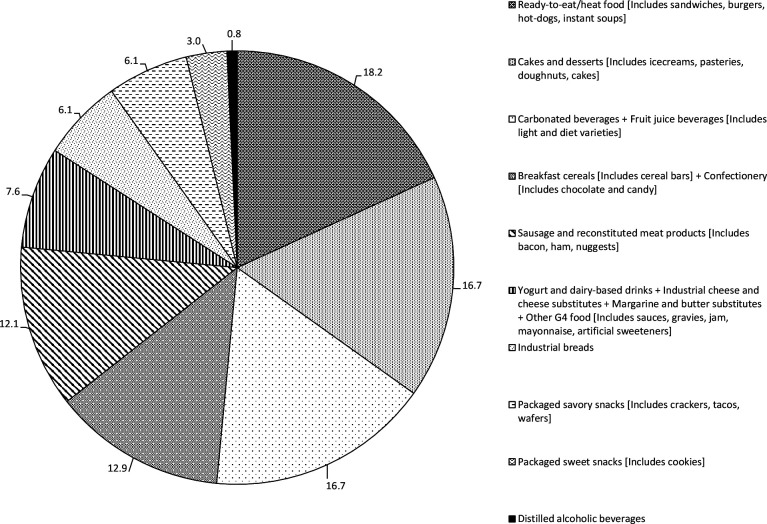
Ultra-processed food intake has been linked to an increased risk of breast cancer in Western populations. No data are available in the Latin American population although the consumption of ultra-processed foods is increasing rapidly in this region. We evaluated the association of ultra-processed food intake to breast cancer risk in a case-control study including 525 cases (women aged 20-45 years) and 525 matched population-based controls from Chile, Colombia, Costa Rica and Mexico. The degree of processing of foods was classified according to the NOVA classification. Overall, the major contributors to ultra-processed food intake were ready-to-eat/heat foods (18.2%), cakes and desserts (16.7%), carbonated and industrial fruit juice beverages (16.7%), breakfast cereals (12.9%), sausages and reconstituted meat products (12.1%), industrial bread (6.1%), dairy products and derivatives (7.6%) and package savoury snacks (6.1%). Ultra-processed food intake was positively associated with the risk of breast cancer in adjusted models (OR =1.93; 95% CI=1.11 to 3.35). Specifically, a higher risk was observed with oestrogen receptor positive breast cancer (OR=2.44, (95% CI=1.01 to 5.90, P-trend=0.049), while no significant association was observed with oestrogen receptor negative breast cancer (OR=1.87, 95% CI=0.43 to 8.13, P-trend=0.36). Our findings suggest that the consumption of ultra-processed foods might increase the risk of breast cancer in young women in Latin America. Further studies should confirm these findings and disentangle specific mechanisms relating ultra-processed food intake and carcinogenic processes in the breast.
在西方人群中,超加工食品的摄入与患乳腺癌风险增加有关。尽管拉丁美洲地区超加工食品的消费量正在迅速增长,但该地区尚无相关数据。我们在一项病例对照研究中评估了超加工食品摄入量与乳腺癌风险之间的关联,该研究纳入了来自智利、哥伦比亚、哥斯达黎加和墨西哥的525例病例(年龄在20至45岁之间的女性)以及525名匹配的基于人群的对照。食品的加工程度根据NOVA分类法进行分类。总体而言,超加工食品摄入的主要贡献者是即食/即热食品(18.2%)、蛋糕和甜点(16.7%)、碳酸饮料和工业果汁饮料(16.7%)、早餐谷物(12.9%)、香肠和重组肉制品(12.1%)、工业面包(6.1%)、乳制品及衍生物(7.6%)和包装咸味小吃(6.1%)。在调整模型中,超加工食品的摄入与乳腺癌风险呈正相关(OR = 1.93;95% CI = 1.11至3.35)。具体而言,雌激素受体阳性乳腺癌的风险更高(OR = 2.44,(95% CI = 1.01至5.90,P趋势 = 0.049),而雌激素受体阴性乳腺癌未观察到显著关联(OR = 1.87,95% CI = 0.43至8.13,P趋势 = 0.36)。我们的研究结果表明,超加工食品的消费可能会增加拉丁美洲年轻女性患乳腺癌的风险。进一步的研究应证实这些发现,并阐明超加工食品摄入与乳腺致癌过程之间的具体机制。