Yahya Reham, Al-Rajhi Aisha M H, Alzaid Saleh Zaid, Al Abboud Mohamed A, Almuhayawi Mohammed S, Al Jaouni Soad K, Selim Samy, Ismail Khatib Sayeed, Abdelghany Tarek M
Basic Sciences Department, College of Science and Health Professions, King Saud Bin Abdulaziz University for Health Sciences, Riyadh 11671, Saudi Arabia.
King Abduallah International Medical Research Center, P.O. Box 3661, Riyadh 11481, Saudi Arabia.
Polymers (Basel). 2022 Jul 24;14(15):2994. doi: 10.3390/polym14152994.
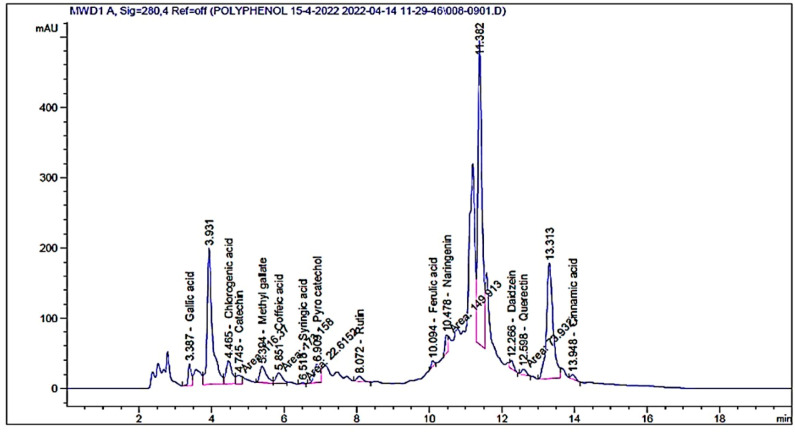
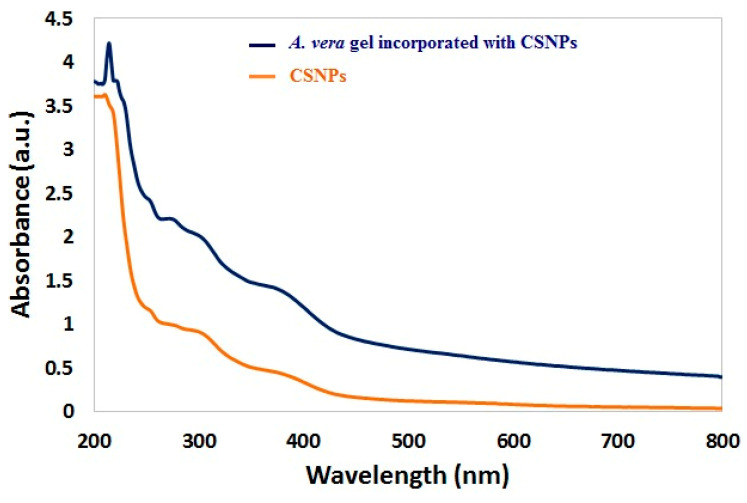
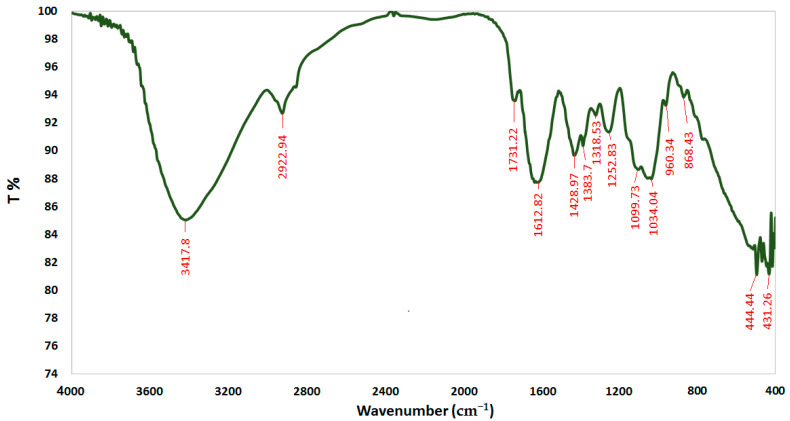
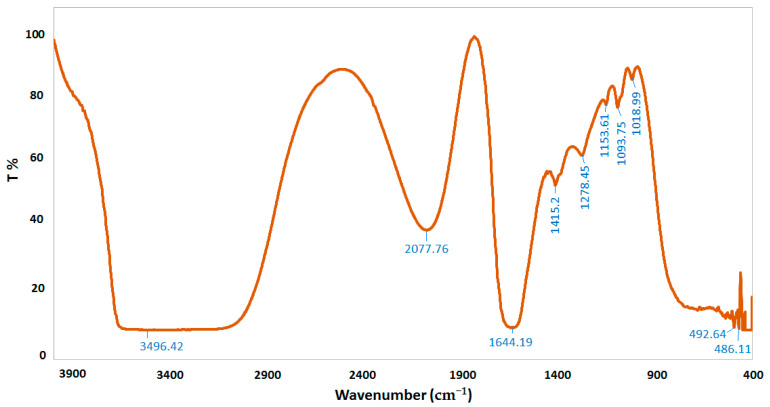
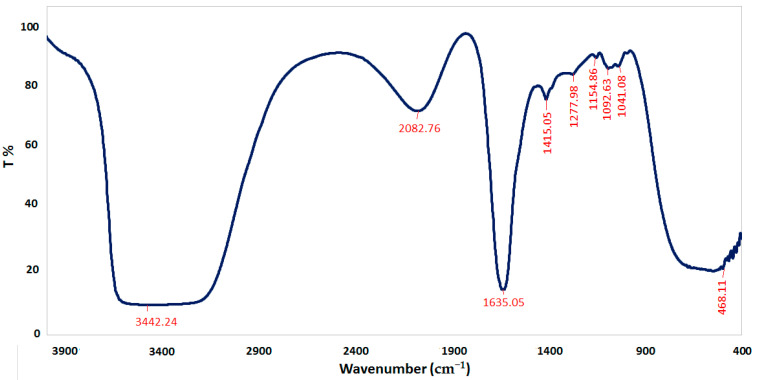
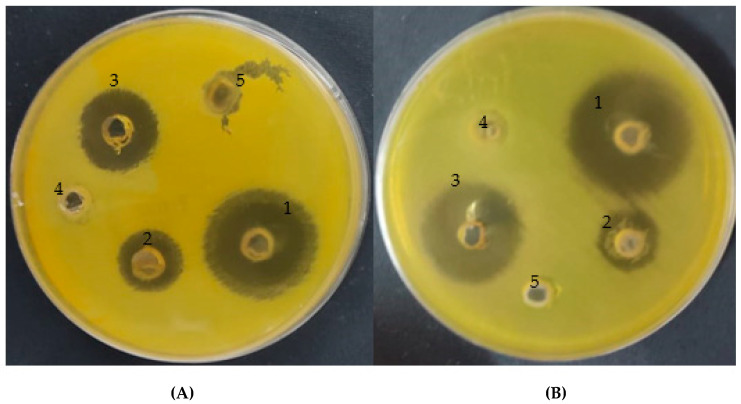
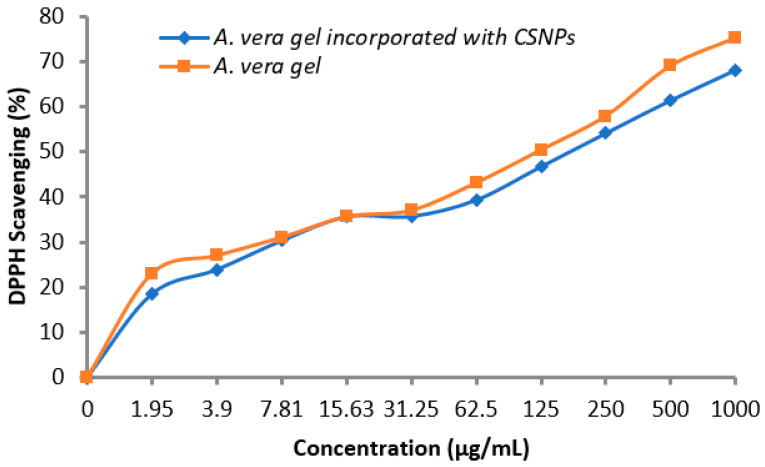
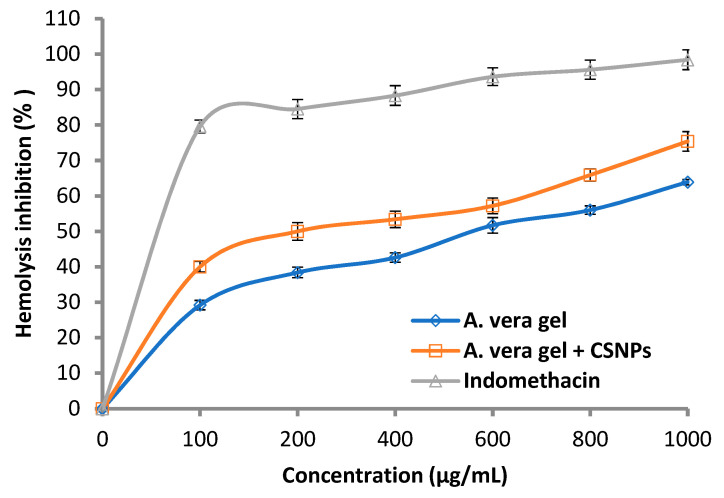
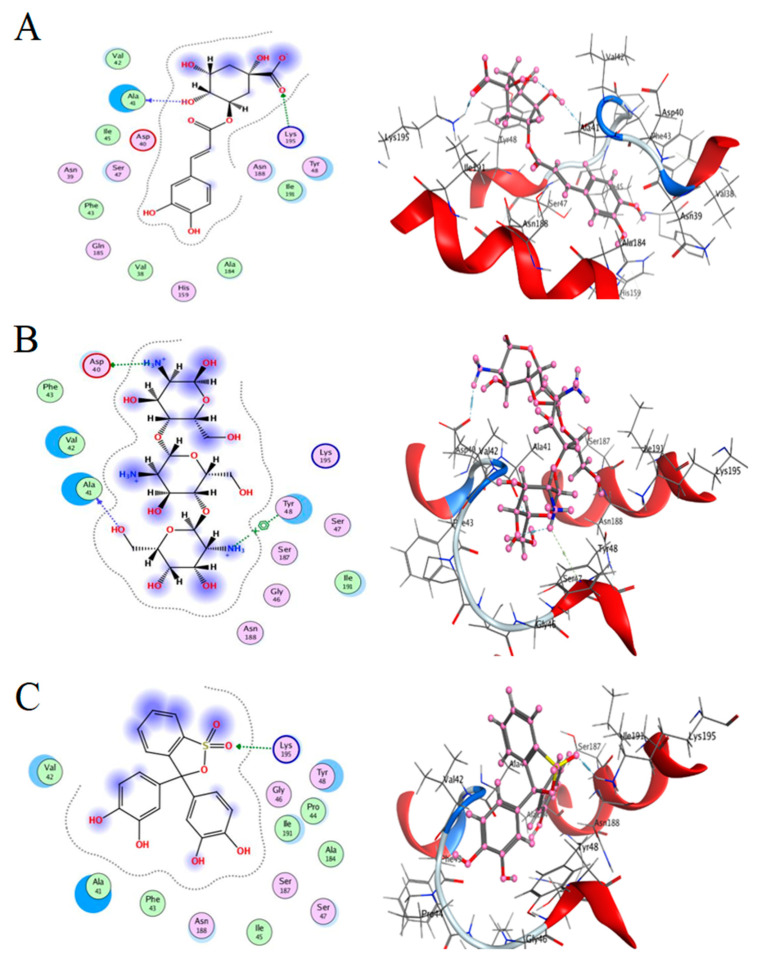
The medicinal administration of gel has become promising in pharmaceutical and cosmetic applications particularly with the development of the nanotechnology concept. Nowadays, effective treatment is a global problem; therefore, the development of natural products with nanopolymers such as chitosan nanoparticles (CSNPs) could represent a novel strategy for the treatment of gastric infection of . HPLC analysis of gel indicated the presence of chlorogenic acid as the main constituent (1637.09 µg/mL) with other compounds pyrocatechol (1637.09 µg/mL), catechin (1552.92 µg/mL), naringenin (528.78 µg/mL), rutin (194.39 µg/mL), quercetin (295.25 µg/mL), and cinnamic acid (37.50 µg/mL). CSNPs and gel incorporated with CSNPs were examined via TEM, indicating mean sizes of 83.46 nm and 36.54 nm, respectively. FTIR spectra showed various and different functional groups in CSNPs, gel, and gel incorporated with CSNPs. Two strains of were inhibited using gel with inhibition zones of 16 and 16.5 mm, while gel incorporated with CSNPs exhibited the highest inhibition zones of 28 and 30 nm with resistant and sensitive strains, respectively. The minimal inhibitory concentration (MIC) was 15.62 and 3.9 µg/mL, while the minimal bactericidal concentration (MBC) was 15.60 and 7.8 µg/mL with MBC/MIC 1 and 2 indexes using gel and gel incorporated with CSNPs, respectively, against the resistance strain. DPPH Scavenging (%) of the antioxidant activity exhibited an IC of 138.82 μg/mL using gel extract, and 81.7 μg/mL when gel was incorporated with CSNPs. gel incorporated with CSNPs enhanced the hemolysis inhibition (%) compared to using gel alone. Molecular docking studies through the interaction of chlorogenic acid and pyrocatechol as the main components of gel and CSNPs with the crystal structure of the (4HI0) protein supported the results of anti- activity.
随着纳米技术概念的发展,凝胶的药物给药在制药和化妆品应用中已变得很有前景。如今,有效治疗是一个全球性问题;因此,开发含有壳聚糖纳米颗粒(CSNPs)等纳米聚合物的天然产物可能是治疗[具体疾病名称]胃部感染的一种新策略。凝胶的高效液相色谱分析表明,绿原酸是主要成分(1637.09μg/mL),还有其他化合物如邻苯二酚(1637.09μg/mL)、儿茶素(1552.92μg/mL)、柚皮素(528.78μg/mL)、芦丁(194.39μg/mL)、槲皮素(295.25μg/mL)和肉桂酸(37.50μg/mL)。通过透射电子显微镜(TEM)检测了CSNPs以及含有CSNPs的凝胶,其平均粒径分别为83.46nm和36.54nm。傅里叶变换红外光谱(FTIR)显示CSNPs、凝胶以及含有CSNPs的凝胶中有各种不同的官能团。使用凝胶对两株[具体菌株名称]进行抑制,抑菌圈直径分别为16mm和16.5mm,而含有CSNPs的凝胶对耐药菌株和敏感菌株的抑菌圈直径分别高达28nm和30nm。最低抑菌浓度(MIC)分别为15.62μg/mL和3.9μg/mL,最低杀菌浓度(MBC)分别为15.60μg/mL和7.8μg/mL,使用凝胶和含有CSNPs的凝胶针对耐药菌株的MBC/MIC指数分别为1和2。凝胶提取物的抗氧化活性的二苯基苦味酰基自由基(DPPH)清除率(%)的半数抑制浓度(IC)为138.82μg/mL,当凝胶与CSNPs结合时为81.7μg/mL。与单独使用凝胶相比,含有CSNPs的凝胶增强了溶血抑制率(%)。通过凝胶和CSNPs的主要成分绿原酸和邻苯二酚与[具体蛋白质名称](4HI0)的晶体结构的相互作用进行的分子对接研究支持了抗[具体疾病名称]活性的结果。