Vuorre Matti, Johannes Niklas, Magnusson Kristoffer, Przybylski Andrew K
Oxford Internet Institute, University of Oxford, Oxford, Oxfordshire OX1 3JS, UK.
Centre for Psychiatry Research, Department of Clinical Neuroscience, Karolinska Institutet, and Stockholm Health Care Services, Region Stockholm, Stockholm, Sweden.
R Soc Open Sci. 2022 Jul 27;9(7):220411. doi: 10.1098/rsos.220411. eCollection 2022 Jul.
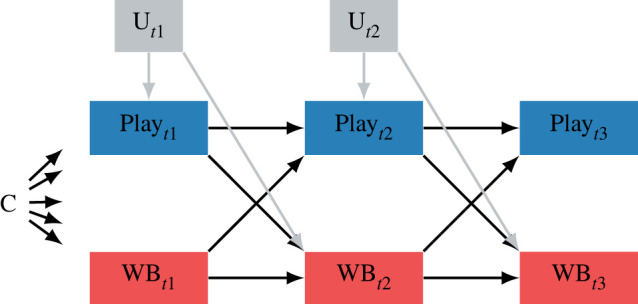
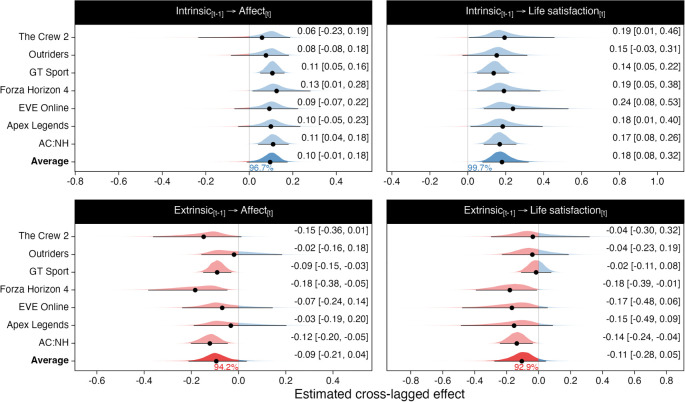
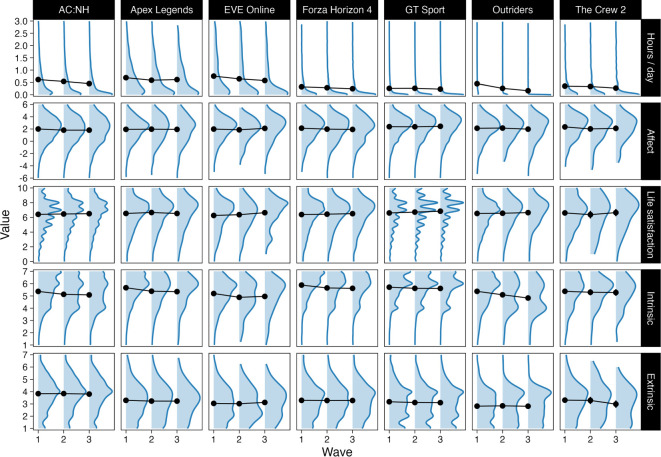
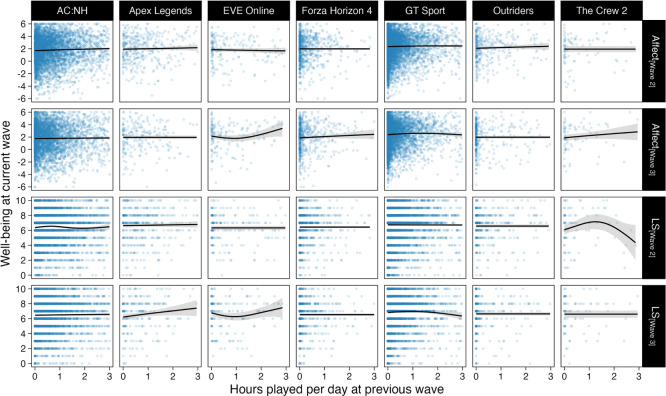
Video games are a massively popular form of entertainment, socializing, cooperation and competition. Games' ubiquity fuels fears that they cause poor mental health, and major health bodies and national governments have made far-reaching policy decisions to address games' potential risks, despite lacking adequate supporting data. The concern-evidence mismatch underscores that we know too little about games' impacts on well-being. We addressed this disconnect by linking six weeks of 38 935 players' objective game-behaviour data, provided by seven global game publishers, with three waves of their self-reported well-being that we collected. We found little to no evidence for a causal connection between game play and well-being. However, results suggested that motivations play a role in players' well-being. For good or ill, the average effects of time spent playing video games on players' well-being are probably very small, and further industry data are required to determine potential risks and supportive factors to health.
电子游戏是一种极其流行的娱乐、社交、合作与竞争形式。游戏的普及引发了人们对其导致心理健康不佳的担忧,尽管缺乏充分的支持数据,但主要健康机构和各国政府已做出了影响深远的政策决定,以应对游戏的潜在风险。这种担忧与证据不匹配的情况凸显出,我们对游戏对幸福感的影响知之甚少。我们通过将七家全球游戏发行商提供的38935名玩家为期六周的客观游戏行为数据,与我们收集的他们三次自我报告的幸福感数据相联系,解决了这一脱节问题。我们几乎没有发现游戏玩法与幸福感之间存在因果关系的证据。然而,结果表明动机在玩家的幸福感中起作用。无论好坏,玩电子游戏所花费的时间对玩家幸福感的平均影响可能非常小,需要更多的行业数据来确定潜在风险和对健康的支持因素。