Kong Linglian, Wang Zhenhua, Xiao Chuanpi, Zhu Qidong, Song Zhigang
Department of Animal Science and Technology, Shandong Agricultural University, Tai'an, Shandong 271018, China.
Center for Mitochondria and Healthy Ageing, College of Life Sciences, Yantai University, Yantai, Shandong 264005, China.
Anim Nutr. 2022 Jun 19;10:347-359. doi: 10.1016/j.aninu.2022.06.005. eCollection 2022 Sep.
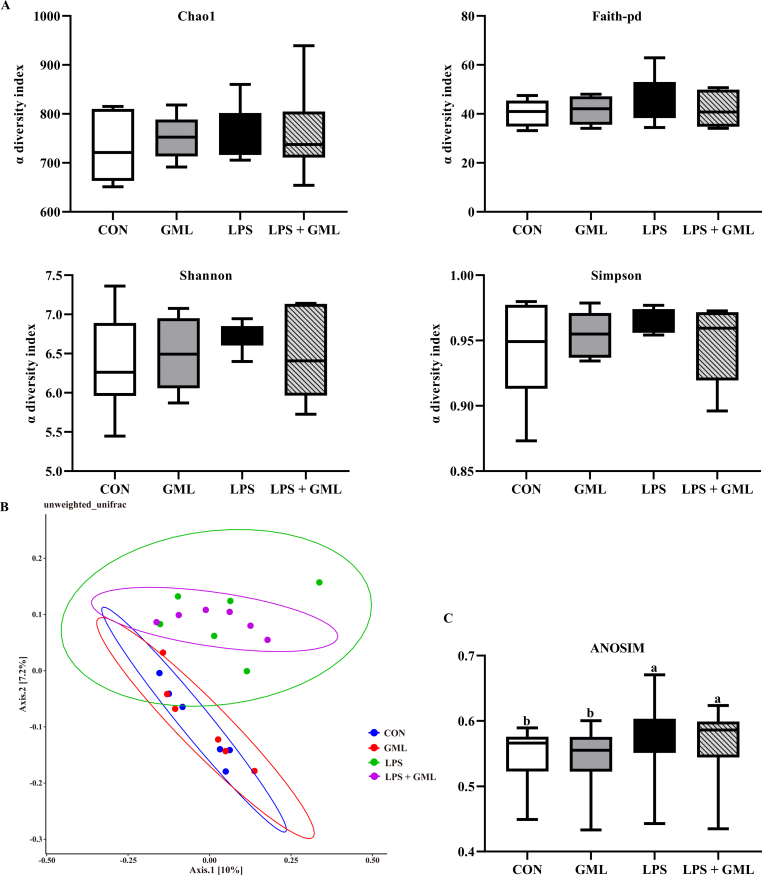
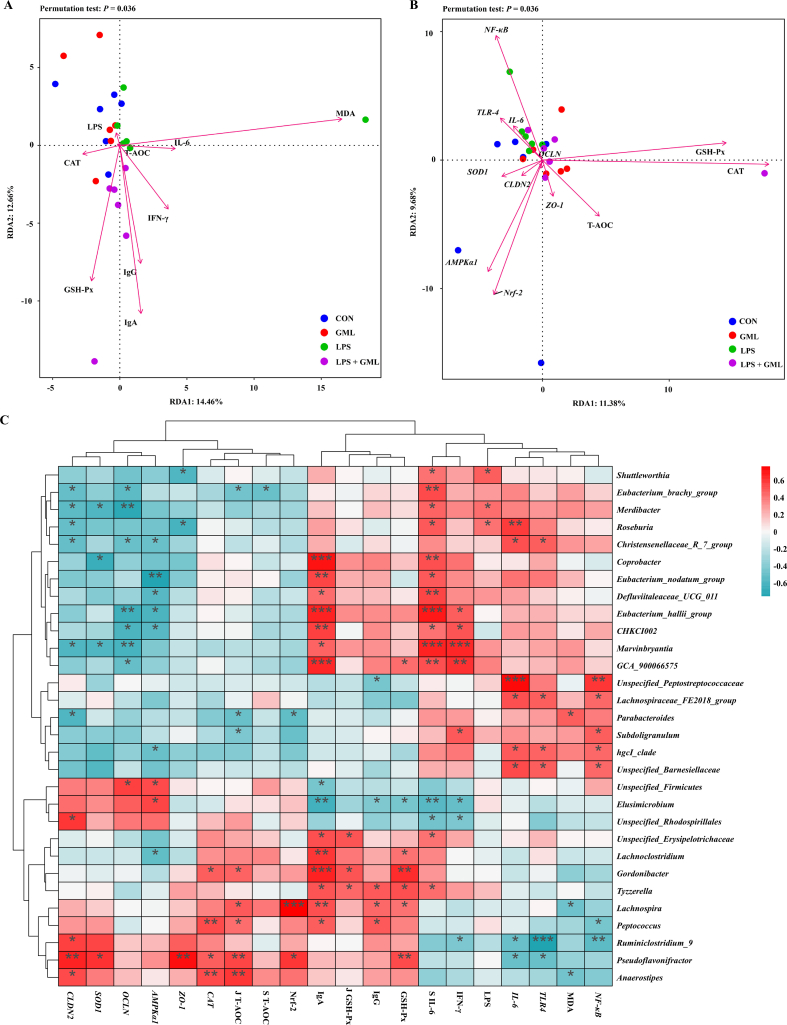
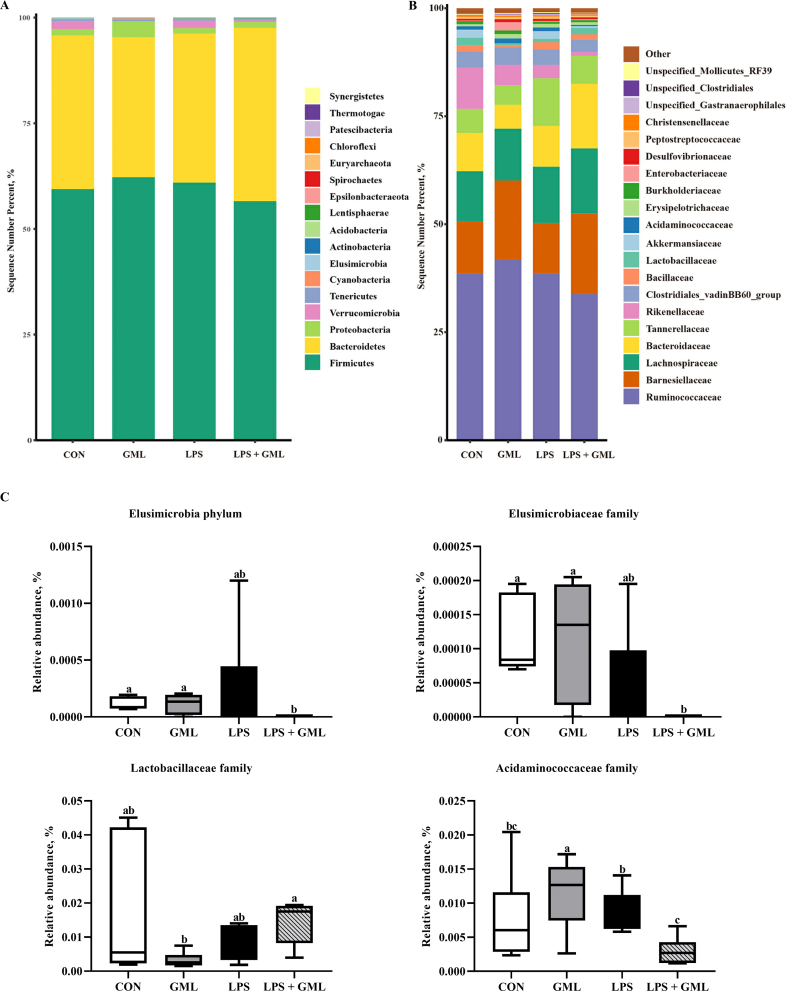
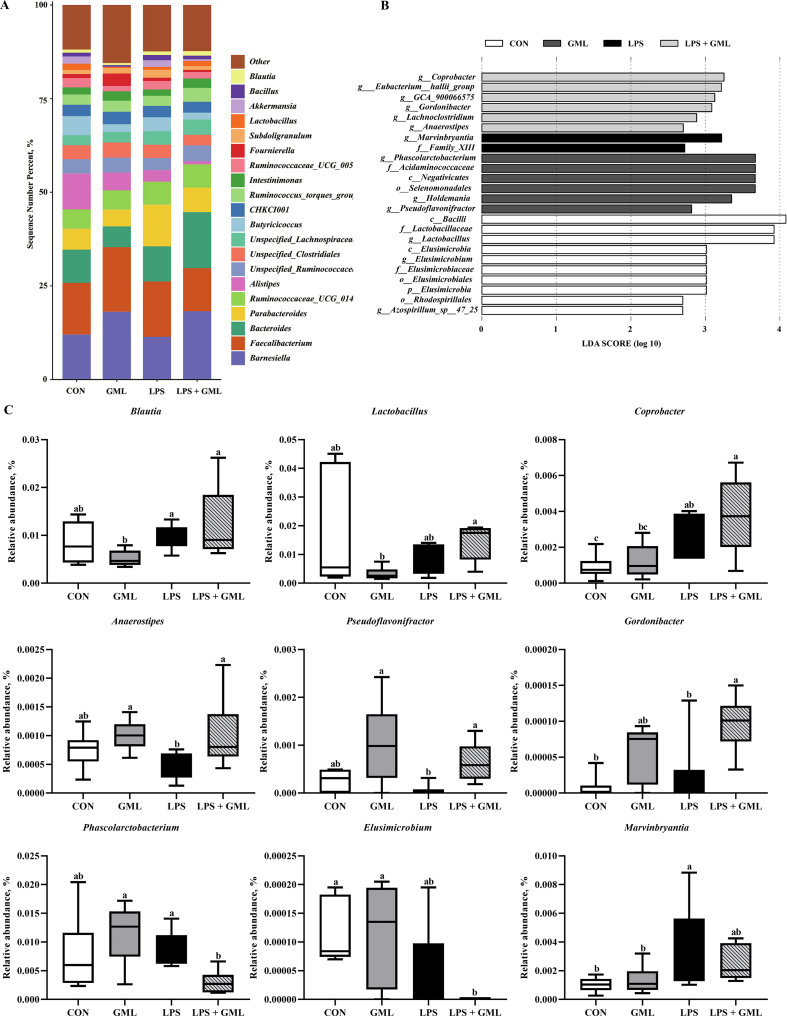
This study was conducted to investigate the effects of glycerol monolaurate (GML) on lipopolysaccharide (LPS)-induced immunological stress and intestinal mucosal injury in broilers and its underlying mechanisms. A total of 144 one-d-old Arbor Acres broilers were allocated to a 2 × 2 factorial arrangement involving dietary treatment (0 or 1,200 mg/kg dietary GML) and LPS challenge (injected with saline or LPS on d 16, 18, and 20). Samples were collected on d 21. The results revealed that dietary GML augmented serum immunoglobulin A ( = 0.009) and immunoglobulin G ( < 0.001) levels in challenged birds. Dietary GML normalized LPS-induced variations in serum interleukin-6, interferon-gamma, and LPS levels ( < 0.05), jejunal villus height ( = 0.030), and gene expression of interleukin-6, macrophage inflammatory protein-3 alpha, Toll-like receptor 4, nuclear factor kappa-B, caspase-1, tight junction proteins, adenosine monophosphate-activated protein kinase alpha 1 (), nuclear factor-erythroid 2-related factor 2 (), and superoxide dismutase-1 ( < 0.05). GML supplementation ameliorated LPS-induced peroxidation by reducing malondialdehyde content and increasing antioxidant enzyme activity ( < 0.05). Dietary GML enhanced the abundances of , , and and reduced the proportion of in challenged birds. Dietary GML was positively correlated with alterations in antioxidant enzyme activities and , , and zonula occludens-1 expressions. The genera , , , , , , and were linked to attenuated inflammation and improved antioxidant capacity of challenged birds. In conclusion, dietary GML alleviated LPS-induced immunological stress and intestinal injury of broilers by suppressing inflammation and oxidative stress. Dietary GML regulated cecal microbiota and activated the AMPK/Nrf2 pathway in LPS-challenged broilers.
本研究旨在探讨月桂酸甘油单酯(GML)对肉仔鸡脂多糖(LPS)诱导的免疫应激和肠道黏膜损伤的影响及其潜在机制。将144只1日龄的艾维茵肉仔鸡按2×2析因设计进行分组,涉及日粮处理(0或1200 mg/kg日粮GML)和LPS攻毒(在第16、18和20天注射生理盐水或LPS)。在第21天采集样本。结果显示,日粮GML提高了攻毒鸡血清免疫球蛋白A(P = 0.009)和免疫球蛋白G(P < 0.001)水平。日粮GML使LPS诱导的血清白细胞介素-6、干扰素-γ和LPS水平(P < 0.05)、空肠绒毛高度(P = 0.030)以及白细胞介素-6、巨噬细胞炎性蛋白-3α、Toll样受体4、核因子κB、半胱天冬酶-1、紧密连接蛋白、腺苷单磷酸活化蛋白激酶α1(AMPKα1)、核因子红细胞2相关因子2(Nrf2)和超氧化物歧化酶-1的基因表达恢复正常(P < 0.05)。添加GML通过降低丙二醛含量和提高抗氧化酶活性减轻了LPS诱导的过氧化反应(P < 0.05)。日粮GML增加了攻毒鸡中有益菌的丰度,并降低了有害菌的比例。日粮GML与抗氧化酶活性以及紧密连接蛋白Occludin、Claudin-1和闭合蛋白-1的表达变化呈正相关。有益菌属,如乳杆菌属、双歧杆菌属、拟杆菌属、阿克曼菌属、普雷沃菌属、瘤胃球菌属和粪杆菌属与攻毒鸡炎症减轻和抗氧化能力提高有关。总之,日粮GML通过抑制炎症和氧化应激减轻了LPS诱导的肉仔鸡免疫应激和肠道损伤。日粮GML调节了盲肠微生物群,并激活了LPS攻毒肉仔鸡的AMPK/Nrf2通路。