Centro de Investigaciones en Microbiología y Biotecnología-UR (CIMBIUR), Facultad de Ciencias Naturales, Universidad del Rosario, Bogotá, Colombia.
Grupo de Investigación en Ciencias Básicas (NÚCLEO) Facultad de Ciencias e Ingeniería, Universidad de Boyacá, Tunja, Colombia.
Parasit Vectors. 2022 Aug 9;15(1):287. doi: 10.1186/s13071-022-05401-9.
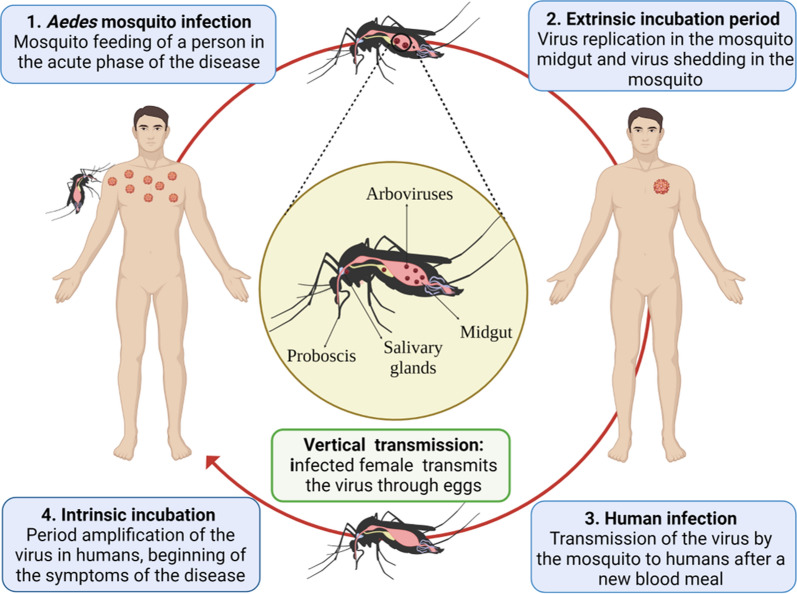
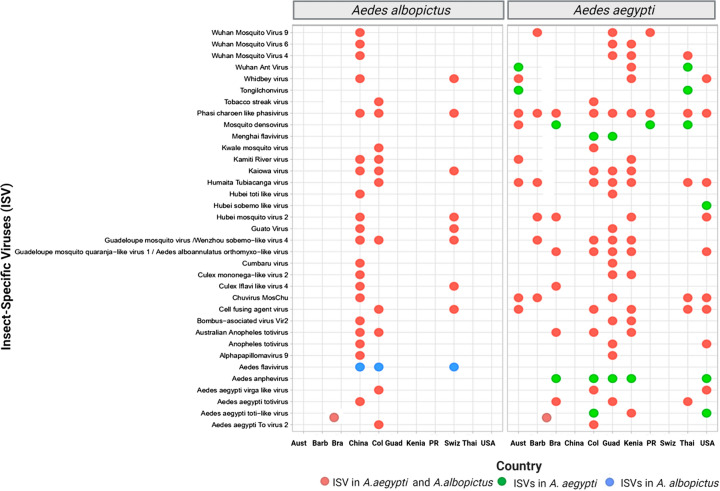
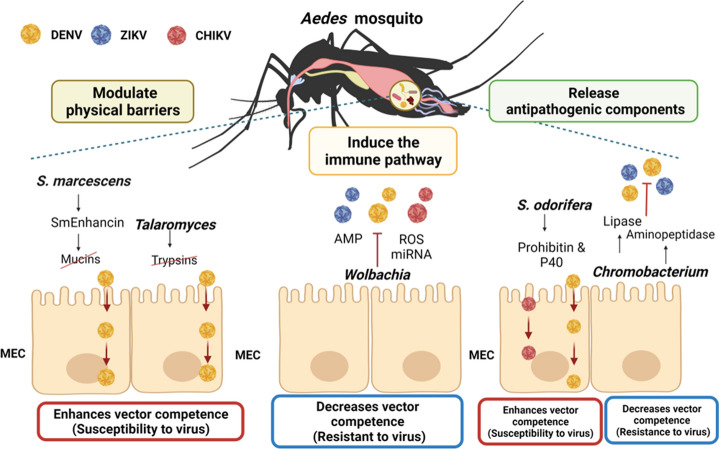
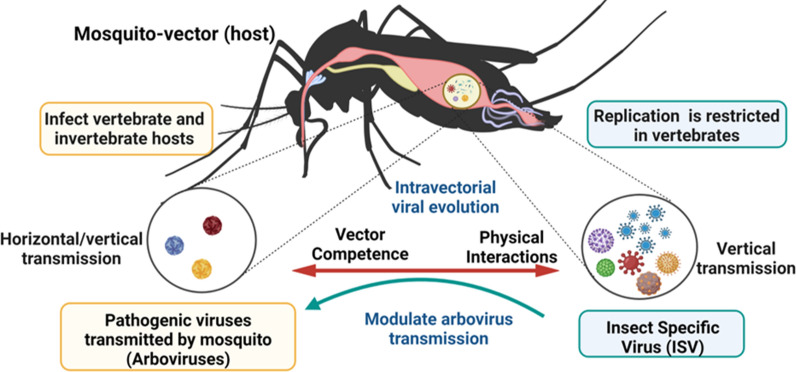
Aedes aegypti and Aedes albopictus are the main vectors of highly pathogenic viruses for humans, such as dengue (DENV), chikungunya (CHIKV), and Zika (ZIKV), which cause febrile, hemorrhagic, and neurological diseases and remain a major threat to global public health. The high ecological plasticity, opportunistic feeding patterns, and versatility in the use of urban and natural breeding sites of these vectors have favored their dispersal and adaptation in tropical, subtropical, and even temperate zones. Due to the lack of available treatments and vaccines, mosquito population control is the most effective way to prevent arboviral diseases. Resident microorganisms play a crucial role in host fitness by preventing or enhancing its vectorial ability to transmit viral pathogens. High-throughput sequencing and metagenomic analyses have advanced our understanding of the composition and functionality of the microbiota of Aedes spp. Interestingly, shotgun metagenomics studies have established that mosquito vectors harbor a highly conserved virome composed of insect-specific viruses (ISV). Although ISVs are not infectious to vertebrates, they can alter different phases of the arboviral cycle, interfering with transmission to the human host. Therefore, this review focuses on the description of Ae. aegypti and Ae. albopictus as vectors susceptible to infection by viral pathogens, highlighting the role of the microbiota-virome in vectorial competence and its potential in control strategies for new emerging and re-emerging arboviruses.
埃及伊蚊和白纹伊蚊是对人类具有高度致病性的病毒的主要传播媒介,例如登革热(DENV)、基孔肯雅热(CHIKV)和寨卡病毒(ZIKV),这些病毒会导致发热、出血和神经系统疾病,仍然是全球公共卫生的主要威胁。这些媒介具有高度的生态可塑性、机会性的取食模式以及在城市和自然滋生地中使用的多功能性,这有利于它们在热带、亚热带甚至温带地区的传播和适应。由于缺乏有效的治疗方法和疫苗,控制蚊虫种群是预防虫媒病毒病的最有效方法。常驻微生物通过防止或增强其传播病毒病原体的能力,在宿主适应性方面发挥着至关重要的作用。高通量测序和宏基因组分析提高了我们对埃及伊蚊和白纹伊蚊微生物组的组成和功能的理解。有趣的是,鸟枪法宏基因组学研究表明,蚊子载体携带有高度保守的病毒组,由昆虫特异性病毒(ISV)组成。虽然 ISV 对脊椎动物没有感染力,但它们可以改变虫媒病毒循环的不同阶段,干扰对人类宿主的传播。因此,本综述重点描述了易受病毒病原体感染的埃及伊蚊和白纹伊蚊作为传播媒介,强调了微生物组-病毒组在媒介适应性中的作用及其在控制新出现和再现的虫媒病毒方面的潜力。