Grover Vishakha, Kumar Ashish, Jain Ashish, Chatterjee Anirban, Grover Harpreet Singh, Pandit Nymphea, Satpathy Anurag, Madhavan Pillai Baiju Radhamoni, Melath Anil, Dhruvakumar Deepa, Thakur Roshani, Joshi Nilesh V, Deshpande Neeraj, Dadlani Himanshu, Meenakshi A Archana, Ashok K P, Reddy K Vinathi, Bhasin Meenu Taneja, Salaria Sanjeev Kumar, Verma Abhishek, Gaikwad Rajesh Prabhakar, Darekar Hemant, Amirisetty Ramesh, Phadnaik Mangesh, Karemore Vaibhav, Dhulipalla Ravindranath, Mody Dhawal, Rao Tushar Shri, Chakarpani Swarna, Ranganath V
Department of Periodontology, Dr. H. S. J. Institute of Dental Sciences, Panjab University, Chandigarh, India.
Department of Periodontology, Dental College, Regional Institute of Medical Sciences, Imphal, Manipur, India.
J Indian Soc Periodontol. 2022 Jul-Aug;26(4):307-333. doi: 10.4103/jisp.jisp_233_22. Epub 2022 Jul 2.
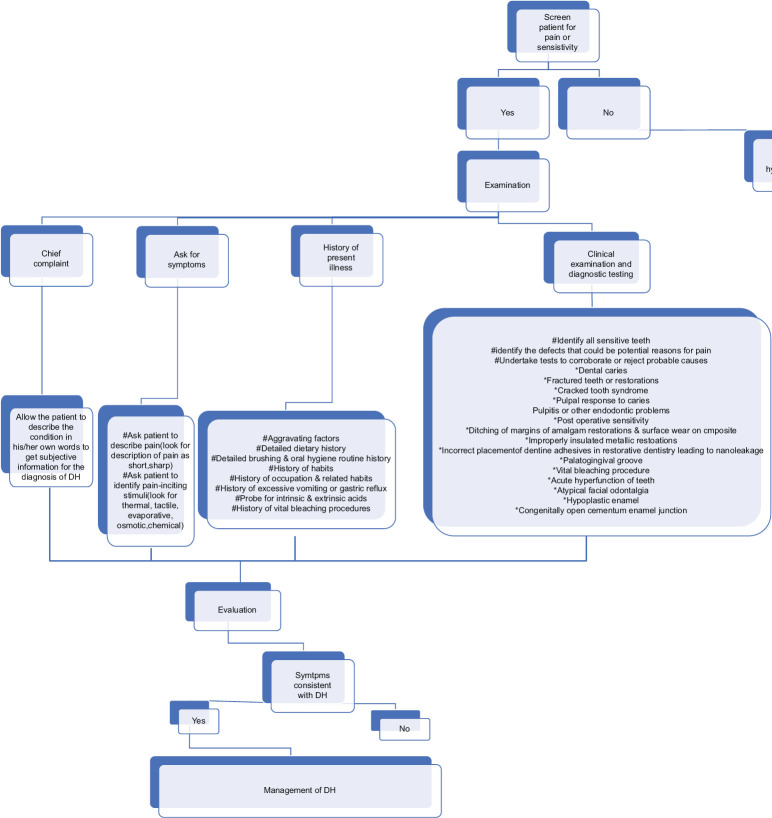
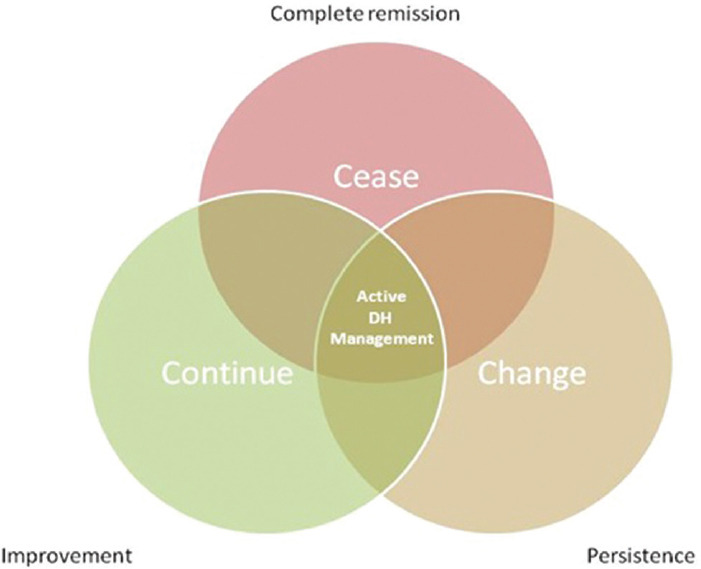
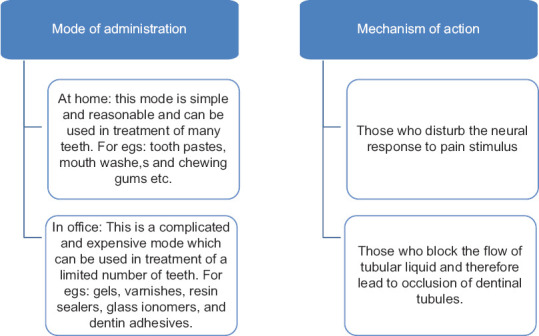
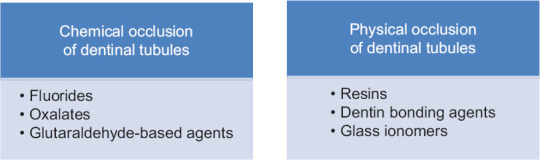
Dentin hypersensitivity (DH) is a rising concern in clinical dentistry that causes pain and discomfort and negatively affects the quality of life of patients. Indian Society of Periodontology conducted a nationwide survey, involving 3000 dentists in December 2020, which revealed significant knowledge gaps regarding DH, viz., under-diagnosis, incorrect differential diagnosis, and treatment strategies/recommendations for the management of DH patients in daily clinical practice. The current paper has been envisioned and conceptualized to update the practicing Indian dentists regarding the so-called enigma of dentistry "Dentin Hypersensitivity," based on the best available contemporary evidence. An expert panel was constituted comprising 30 subject experts from across the country, which after extensive literature review and group discussions formulated these recommendations. The panel advocated routine screening of all dentate patients for exposed dentin areas and DH to avoid under-diagnosis of the condition and suggested an early preventive management. Consensus guidelines/recommendations for the use of desensitizing agents (DAs) at home, including the use of herbal agents, are also provided within the backdrop of the Indian context. The guidelines recommend that active management of DH shall be accomplished by a combination of at home and in-office therapies, starting with the simplest and cost-effective home use of desensitizing toothpastes. A diagnostic decision tree and a flowchart for application in daily practice are designed to manage the patients suffering from DH or presenting with exposed dentin areas in dentition. Various treatment methods to manage DH have been discussed in the paper, including the insights from previously published treatment guidelines. Further, a novel system of classification of DH patients based on specific case definitions has been developed for the first time. Explicit charts regarding the available treatment options and the chronology of institution of the agent, for the management in different case categories of DH, have been provided for quick reference. The management strategy takes into account a decision algorithm based on hierarchy of complexity of treatment options and intends to improve the quality of life of the patient by long-term maintenance with an innovatively defined triple C's or 3Cs approach.
牙本质过敏症(DH)是临床牙科领域日益受到关注的问题,它会引起疼痛和不适,并对患者的生活质量产生负面影响。印度牙周病学会在2020年12月对3000名牙医进行了一项全国性调查,结果显示在牙本质过敏症方面存在重大知识差距,即诊断不足、鉴别诊断错误以及日常临床实践中牙本质过敏症患者的治疗策略/建议。本文旨在根据现有最佳当代证据,为印度执业牙医更新有关牙科领域所谓谜团“牙本质过敏症”的知识。为此成立了一个专家小组,由来自全国各地的30位专家组成,他们在广泛的文献综述和小组讨论后制定了这些建议。该小组主张对所有有牙患者的暴露牙本质区域和牙本质过敏症进行常规筛查,以避免对该病症的诊断不足,并建议早期进行预防性管理。在印度背景下,还提供了在家中使用脱敏剂(包括草药制剂)的共识指南/建议。这些指南建议,牙本质过敏症的积极管理应通过家庭治疗和诊所治疗相结合来实现,首先从最简单且经济有效的家用脱敏牙膏开始。设计了一个诊断决策树和一个日常实践应用流程图,用于管理患有牙本质过敏症或牙列中有暴露牙本质区域的患者。本文讨论了多种治疗牙本质过敏症的方法,包括对先前发布的治疗指南的见解。此外,首次开发了一种基于特定病例定义的牙本质过敏症患者新分类系统。提供了关于不同病例类型牙本质过敏症管理的可用治疗选项和用药时间顺序的明确图表,以供快速参考。该管理策略考虑了基于治疗选项复杂程度层次的决策算法,并旨在通过创新定义的“三C”方法进行长期维护,从而提高患者的生活质量。