Bioseparation Engineering Group, School of Engineering and Design, Technical University of Munich, Boltzmannstraße 15, 85748 Garching bei München, Germany.
Division of Medicinal Chemistry, Otto Loewi Research Center, Medical University of Graz, Neue Stiftingtalstraße 6, 8010 Graz, Austria.
Int J Mol Sci. 2022 Aug 12;23(16):9004. doi: 10.3390/ijms23169004.
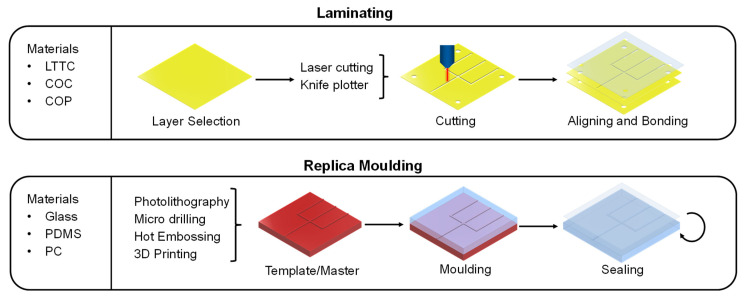
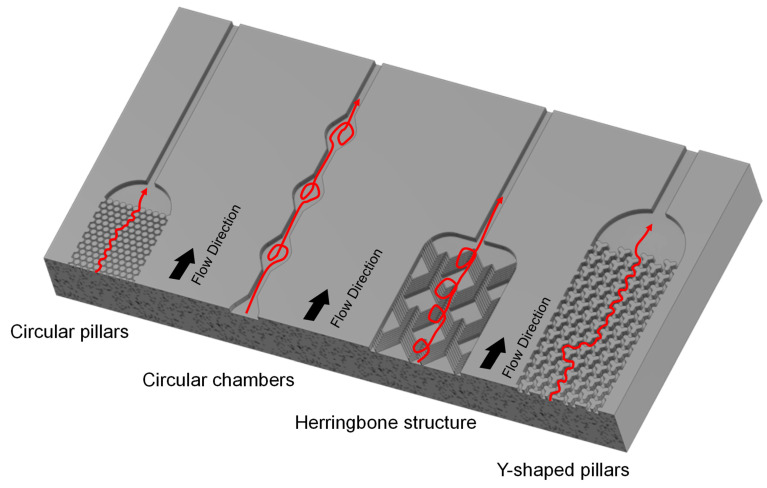
As a subspecies of extracellular vesicles (EVs), exosomes have provided promising results in diagnostic and theranostic applications in recent years. The nanometer-sized exosomes can be extracted by liquid biopsy from almost all body fluids, making them especially suitable for mainly non-invasive point-of-care (POC) applications. To achieve this, exosomes must first be separated from the respective biofluid. Impurities with similar properties, heterogeneity of exosome characteristics, and time-related biofouling complicate the separation. This practical review presents the state-of-the-art methods available for the separation of exosomes. Furthermore, it is shown how new separation methods can be developed. A particular focus lies on the fabrication and design of microfluidic devices using highly selective affinity separation. Due to their compactness, quick analysis time and portable form factor, these microfluidic devices are particularly suitable to deliver fast and reliable results for POC applications. For these devices, new manufacturing methods (e.g., laminating, replica molding and 3D printing) that use low-cost materials and do not require clean rooms are presented. Additionally, special flow routes and patterns that increase contact surfaces, as well as residence time, and thus improve affinity purification are displayed. Finally, various analyses are shown that can be used to evaluate the separation results of a newly developed device. Overall, this review paper provides a toolbox for developing new microfluidic affinity devices for exosome separation.
作为细胞外囊泡 (EVs) 的一个亚种,外泌体近年来在诊断和治疗应用方面取得了有前景的成果。纳米级的外泌体可以通过液体活检从几乎所有体液中提取,这使它们特别适合主要的非侵入性即时护理 (POC) 应用。为了实现这一目标,首先必须将外泌体从各自的生物流体中分离出来。具有相似性质的杂质、外泌体特征的异质性以及与时间相关的生物污垢使分离变得复杂。本实践综述介绍了目前可用于分离外泌体的最新方法。此外,还展示了如何开发新的分离方法。特别关注的是使用高度选择性亲和分离制造和设计微流控装置。由于其紧凑性、快速分析时间和便携式外形,这些微流控装置特别适合为 POC 应用提供快速可靠的结果。对于这些设备,展示了使用低成本材料且不需要洁净室的新制造方法(例如层压、复制成型和 3D 打印)。此外,展示了特殊的流动路径和模式,这些路径和模式可以增加接触面积、延长停留时间,从而提高亲和纯化效果。最后,展示了各种可用于评估新开发设备分离结果的分析方法。总的来说,这篇综述文章为开发用于外泌体分离的新型微流控亲和设备提供了一个工具包。