Lin Guang-Xun, Kim Jin-Sung, Kotheeranurak Vit, Chen Chien-Min, Hu Bao-Shan, Rui Gang
Department of Orthopedics, The First Affiliated Hospital of Xiamen University, School of Medicine, Xiamen University, Xiamen, China.
The Third Clinical Medical College, Fujian Medical University, Fuzhou, China.
Front Surg. 2022 Aug 10;9:949938. doi: 10.3389/fsurg.2022.949938. eCollection 2022.
This study aimed to provide a direct meta-analysis of the evidence comparing outcomes between expandable cages and static cages in patients with transforaminal lumbar interbody fusion (TLIF).
A search of relevant materials from databases was performed from inception to March 7, 2022. Clinical and radiological outcomes were included.
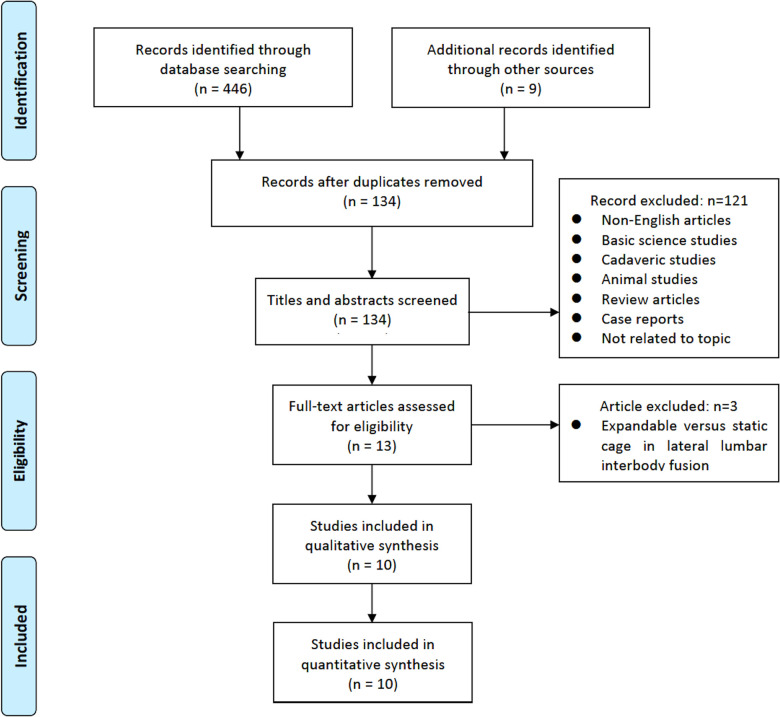
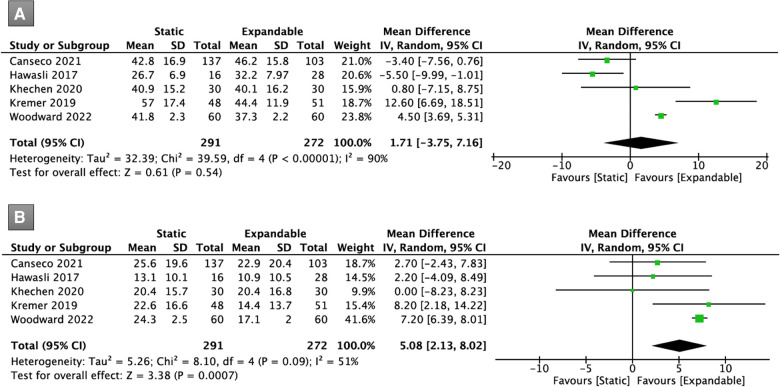
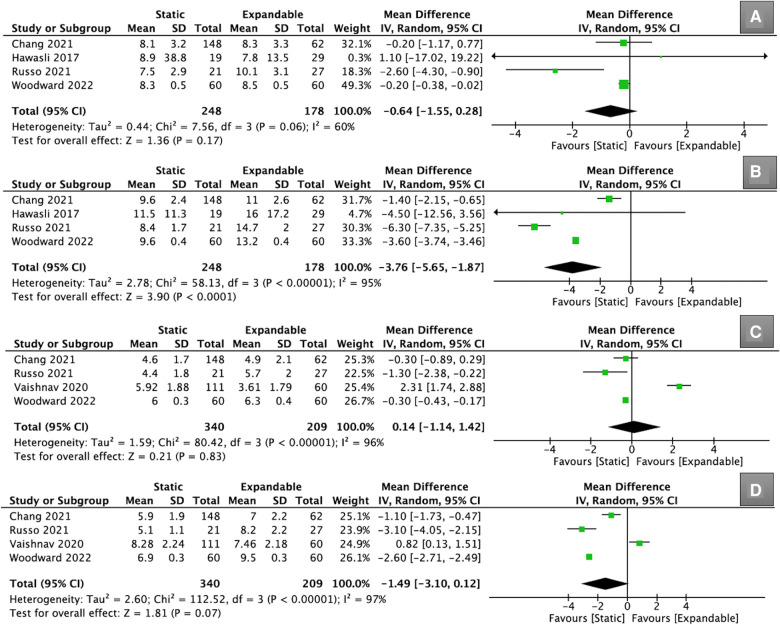
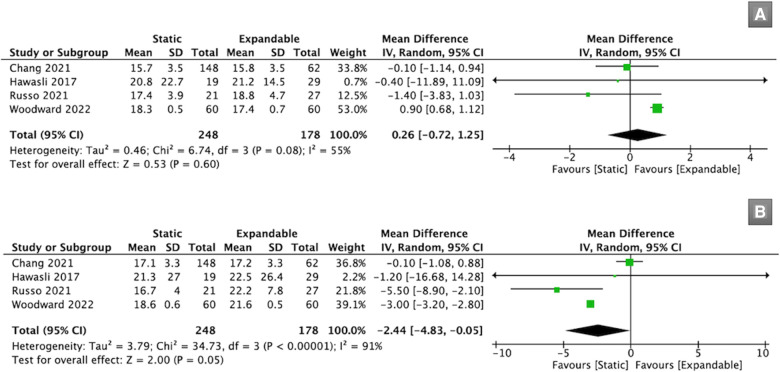
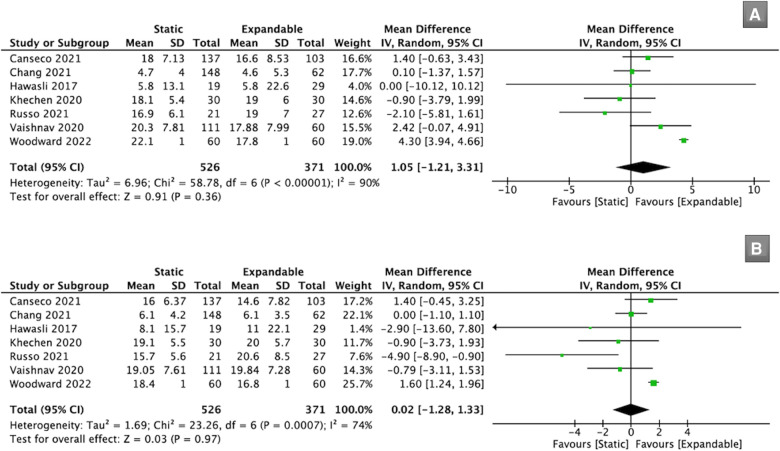
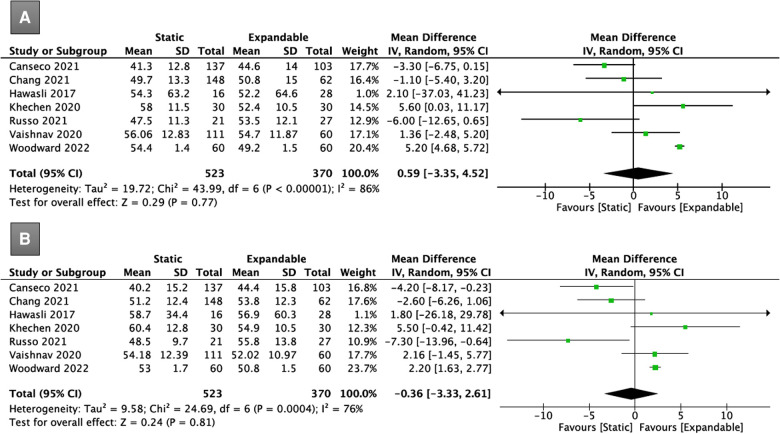
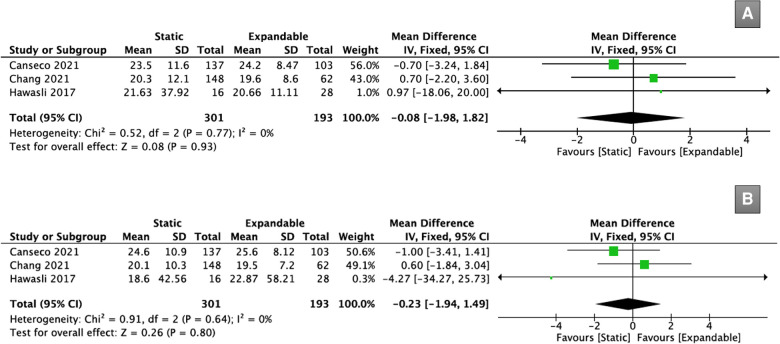
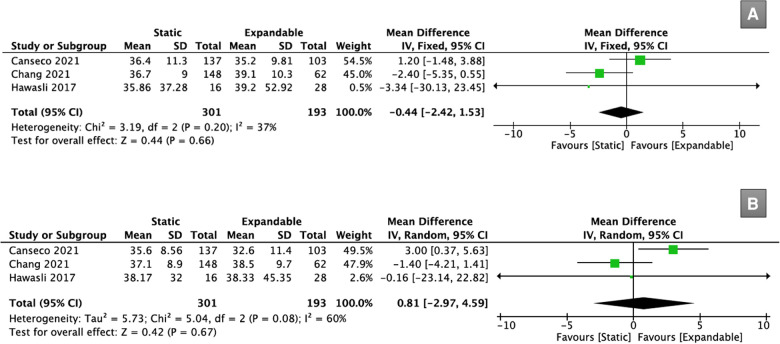
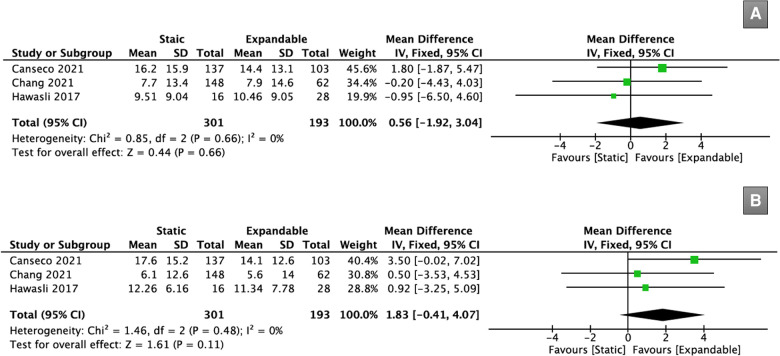
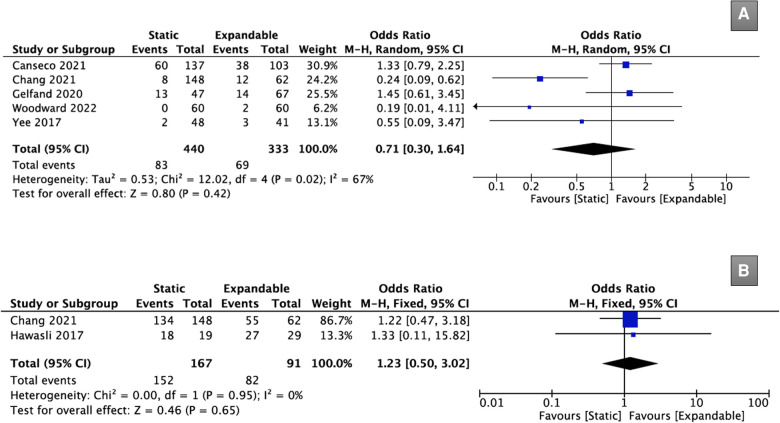
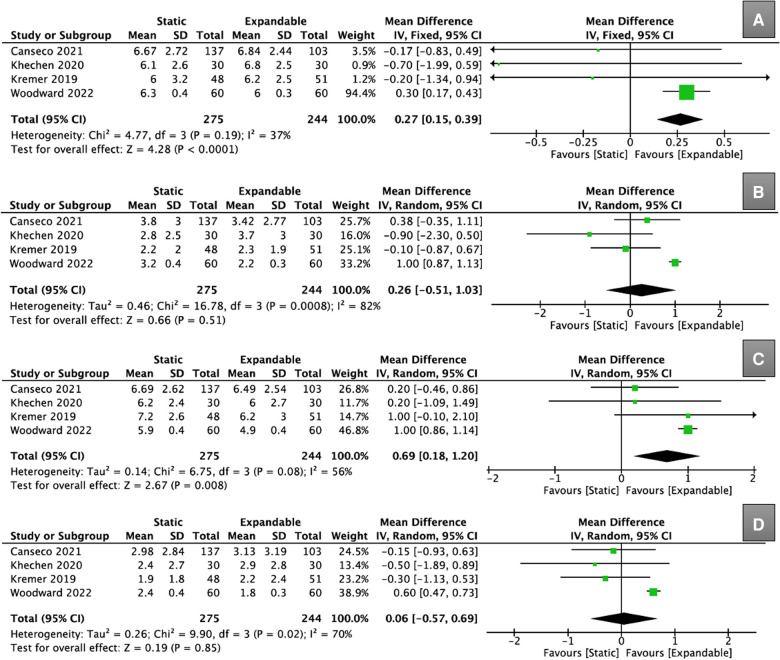
Ten studies (1,440 patients) were included. The anterior disc height and foraminal height for expandable cages were substantially higher than those for static cages at the final follow-up ( < 0.0001; = 0.05). In comparison with static cages, although not statistically significant, expandable cages showed beneficial results, including an increase in posterior disc height and segmental lordosis. There were no statistically significant differences in segmental lordosis, lumbar lordosis, pelvic parameters, cage subsidence, or fusion rates ( > 0.05). Oswestry disability index scores for expandable cages were substantially lower than those for static cages at the final follow-up ( = 0.0007). Interestingly, although the preoperative visual analog scores for back and leg pain were significantly higher in the expandable group than in the static group ( < 0.0001; = 0.008), there was no significant difference between the static and expandable groups during the final follow-up ( = 0.51; = 0.85).
Expandable cages are associated with improved functional outcomes and restored postoperative disc and foraminal heights in patients with TLIF. In addition, no statistically significant differences were observed in segmental lordosis, lumbar lordosis, pelvic parameters, cage subsidence, or fusion rate.
本研究旨在对经椎间孔腰椎椎间融合术(TLIF)患者中可扩张椎间融合器与静态椎间融合器的疗效比较证据进行直接荟萃分析。
从数据库建立之初至2022年3月7日检索相关资料。纳入临床和影像学结果。
纳入10项研究(1440例患者)。在末次随访时,可扩张椎间融合器的前间隙高度和椎间孔高度显著高于静态椎间融合器(<0.0001;=0.05)。与静态椎间融合器相比,可扩张椎间融合器虽无统计学显著差异,但显示出有益结果,包括后间隙高度增加和节段性前凸增加。在节段性前凸、腰椎前凸、骨盆参数、椎间融合器下沉或融合率方面无统计学显著差异(>0.05)。在末次随访时,可扩张椎间融合器的奥斯维斯特里功能障碍指数评分显著低于静态椎间融合器(=0.0007)。有趣的是,尽管可扩张组术前背部和腿部疼痛的视觉模拟评分显著高于静态组(<0.0001;=0.008),但在末次随访时静态组和可扩张组之间无显著差异(=0.51;=0.85)。
对于TLIF患者,可扩张椎间融合器与改善功能结局以及术后间隙和椎间孔高度恢复相关。此外,在节段性前凸、腰椎前凸、骨盆参数、椎间融合器下沉或融合率方面未观察到统计学显著差异。