Department of Ophthalmology, Universitäts-Augenklinik Bonn, University of Bonn, Ernst-Abbe-Straße 2, D-53127 Bonn, Germany.
Wellcome─MRC Cambridge Stem Cell Institute, Jeffrey Cheah Biomedical Centre, Cambridge Biomedical Campus, University of Cambridge, Cambridge CB2 0AW, United Kingdom.
Chem Rev. 2022 Sep 28;122(18):14842-14880. doi: 10.1021/acs.chemrev.2c00212. Epub 2022 Sep 7.
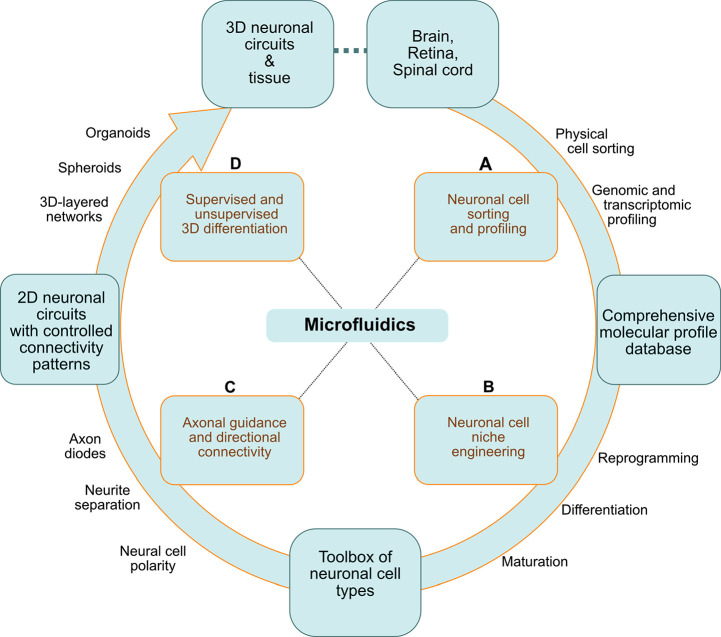
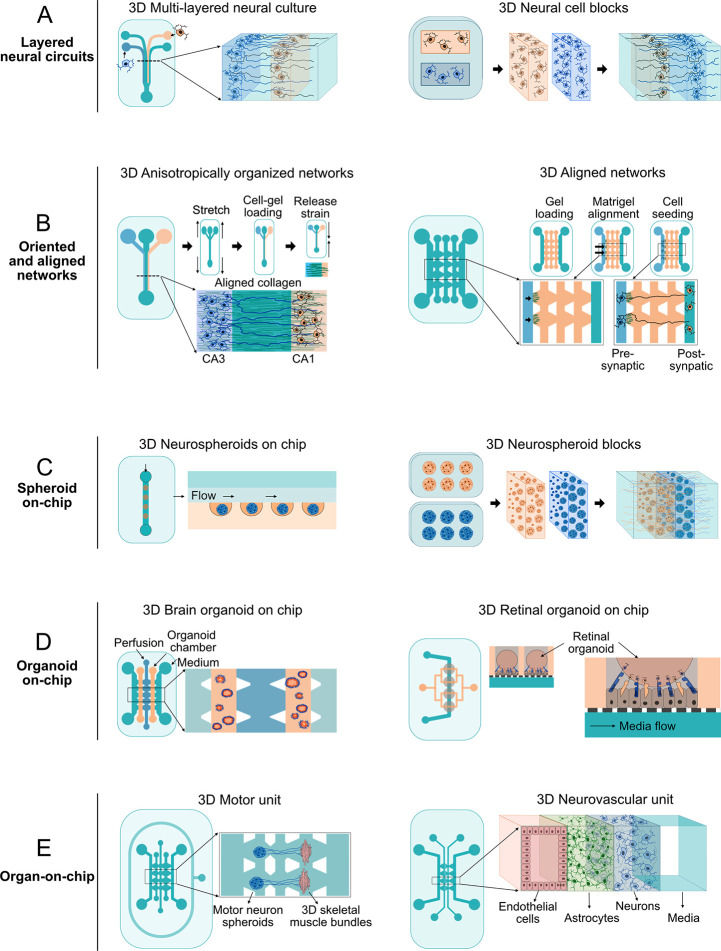
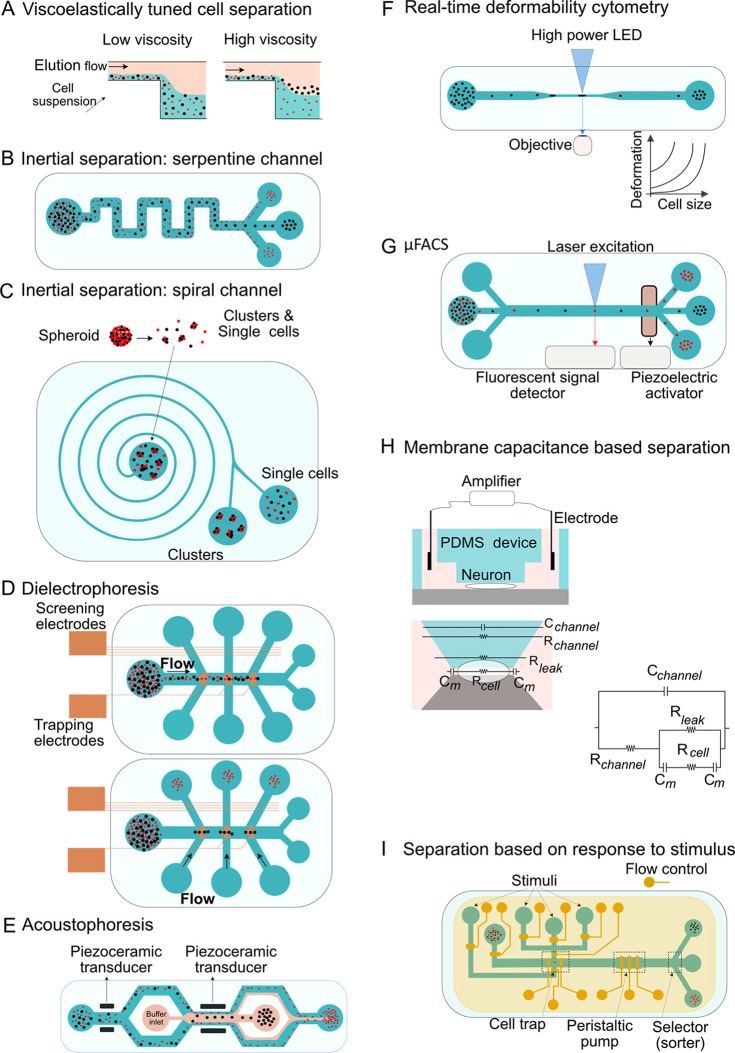
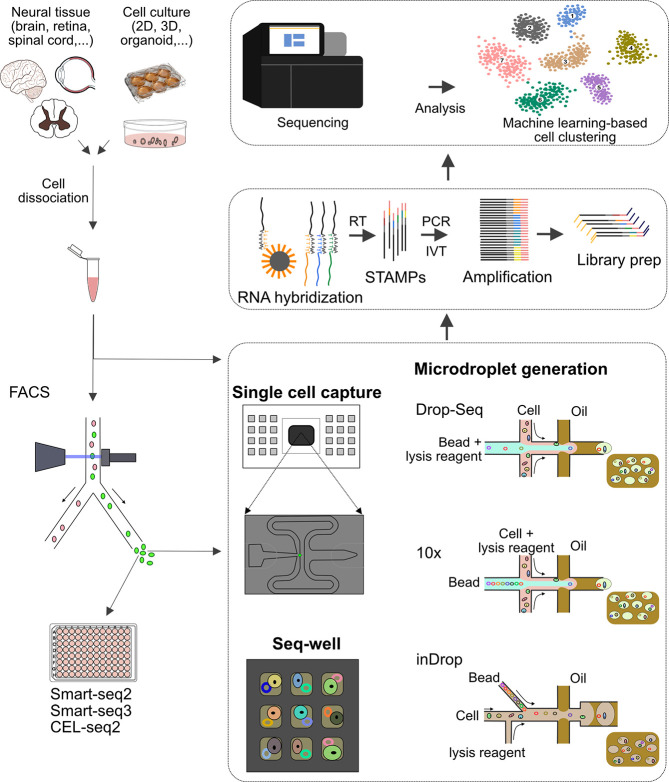
The widespread adoption of microfluidic devices among the neuroscience and neurobiology communities has enabled addressing a broad range of questions at the molecular, cellular, circuit, and system levels. Here, we review biomedical engineering approaches that harness the power of microfluidics for bottom-up generation of neuronal cell types and for the assembly and analysis of neural circuits. Microfluidics-based approaches are instrumental to generate the knowledge necessary for the derivation of diverse neuronal cell types from human pluripotent stem cells, as they enable the isolation and subsequent examination of individual neurons of interest. Moreover, microfluidic devices allow to engineer neural circuits with specific orientations and directionality by providing control over neuronal cell polarity and permitting the isolation of axons in individual microchannels. Similarly, the use of microfluidic chips enables the construction not only of 2D but also of 3D brain, retinal, and peripheral nervous system model circuits. Such brain-on-a-chip and organoid-on-a-chip technologies are promising platforms for studying these organs as they closely recapitulate some aspects of in vivo biological processes. Microfluidic 3D neuronal models, together with 2D in vitro systems, are widely used in many applications ranging from drug development and toxicology studies to neurological disease modeling and personalized medicine. Altogether, microfluidics provide researchers with powerful systems that complement and partially replace animal models.
微流控技术在神经科学和神经生物学领域的广泛应用,使我们能够在分子、细胞、回路和系统等多个层面上解决广泛的问题。在这里,我们回顾了生物医学工程方法,这些方法利用微流控技术的优势,从底部向上生成神经元细胞类型,并组装和分析神经回路。基于微流控的方法对于从人类多能干细胞中衍生出各种神经元细胞类型的知识的获取至关重要,因为它们能够实现对感兴趣的单个神经元的分离和后续检测。此外,微流控设备通过控制神经元细胞极性并允许在单个微通道中分离轴突,为具有特定取向和方向性的神经回路的设计提供了可能。同样,微流控芯片的使用不仅能够构建 2D 模型,还能够构建 3D 脑、视网膜和周围神经系统模型电路。这些类脑和类器官芯片技术是研究这些器官的有前途的平台,因为它们可以很好地模拟体内生物过程的某些方面。微流控 3D 神经元模型与 2D 体外系统一起,广泛应用于许多领域,包括药物开发和毒理学研究、神经疾病建模和个性化医疗等。总之,微流控为研究人员提供了强大的系统,这些系统补充并部分取代了动物模型。