Khan Md Saikat Islam, Rahman Anichur, Debnath Tanoy, Karim Md Razaul, Nasir Mostofa Kamal, Band Shahab S, Mosavi Amir, Dehzangi Iman
Department of CSE, Mawlana Bhashani Science and Technology University, Tangail, Bangladesh.
Department of CSE, National Institute of Textile Engineering and Research (NITER), Constituent Institute of the University of Dhaka, Savar, Dhaka 1350, Bangladesh.
Comput Struct Biotechnol J. 2022 Aug 27;20:4733-4745. doi: 10.1016/j.csbj.2022.08.039. eCollection 2022.
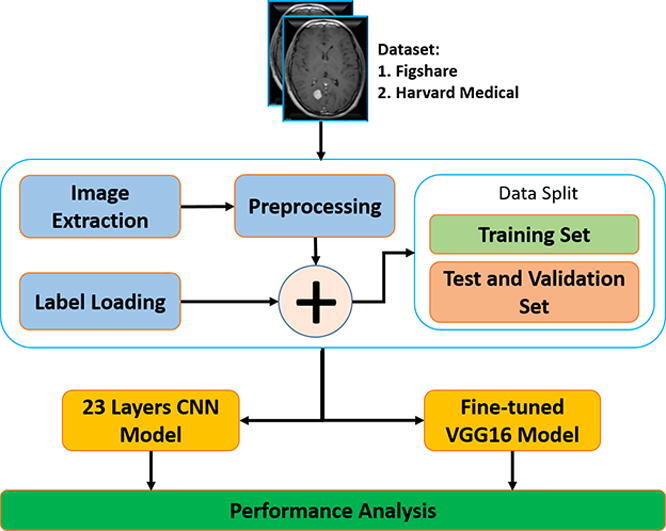
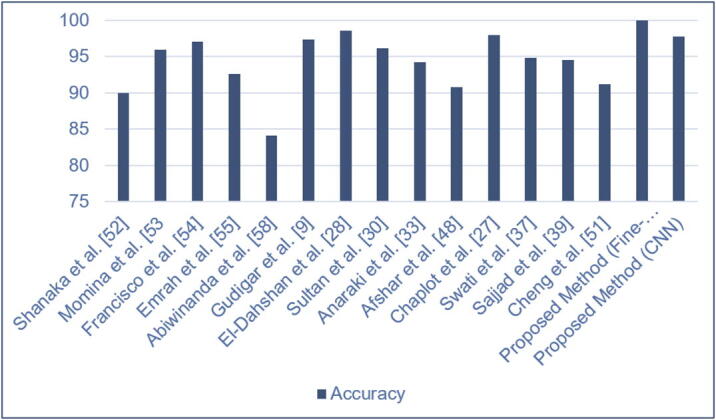
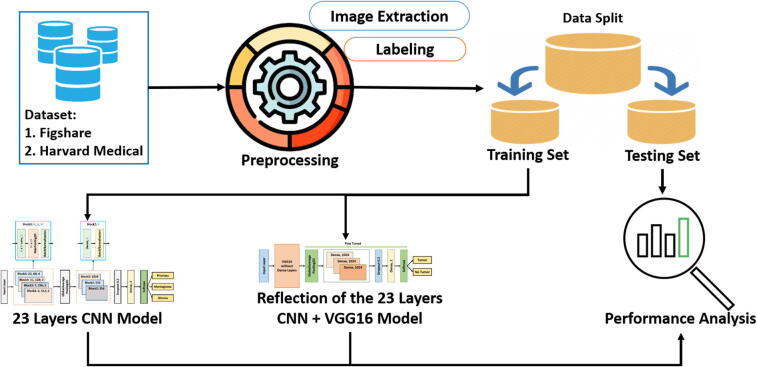
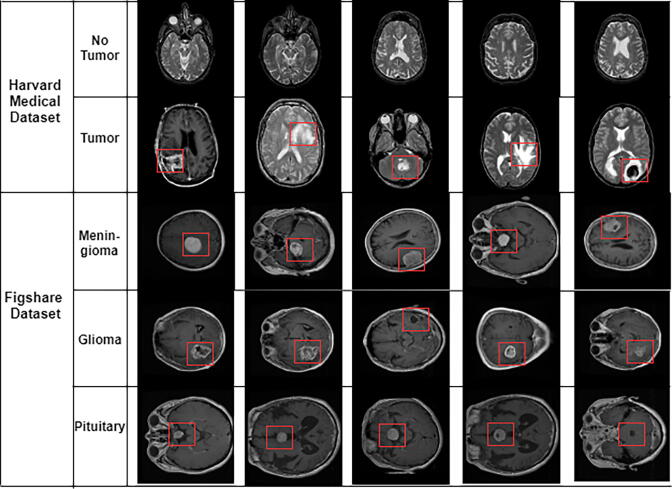
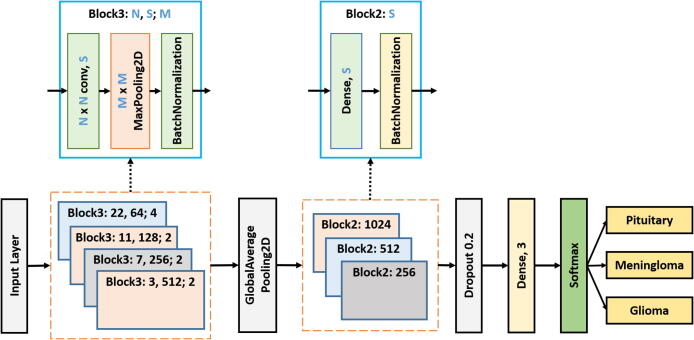
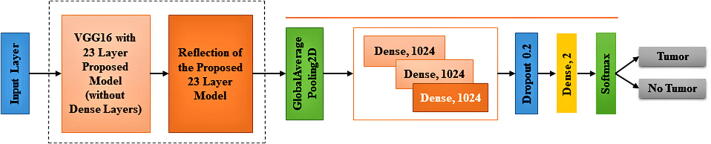
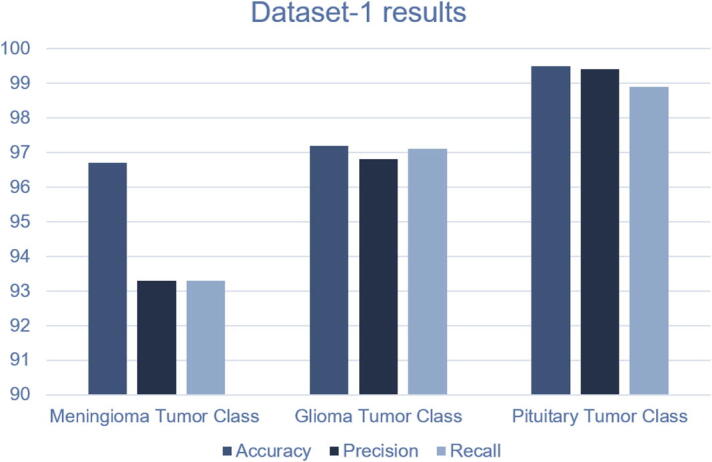
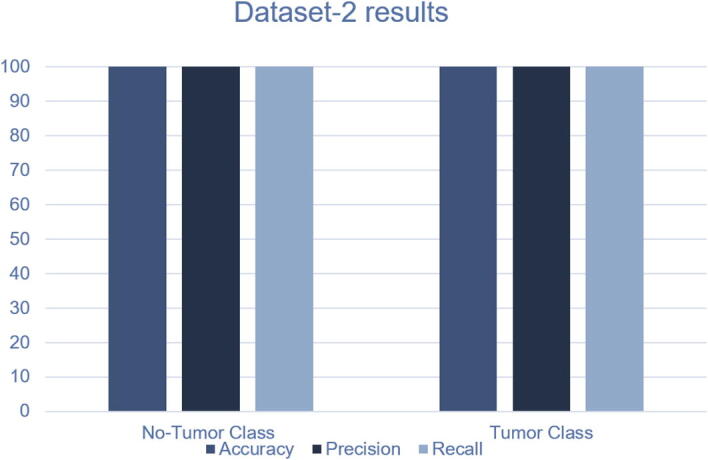
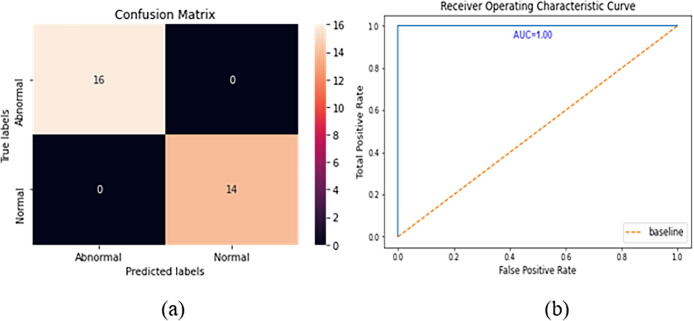
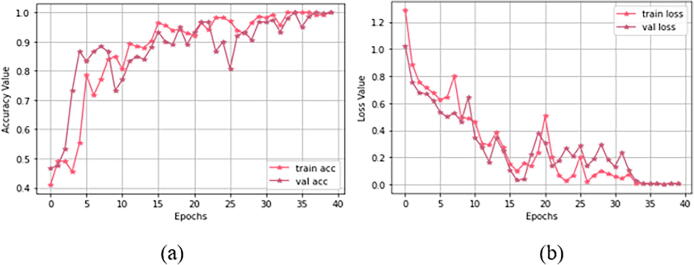
Detection and Classification of a brain tumor is an important step to better understanding its mechanism. Magnetic Reasoning Imaging (MRI) is an experimental medical imaging technique that helps the radiologist find the tumor region. However, it is a time taking process and requires expertise to test the MRI images, manually. Nowadays, the advancement of Computer-assisted Diagnosis (CAD), machine learning, and deep learning in specific allow the radiologist to more reliably identify brain tumors. The traditional machine learning methods used to tackle this problem require a handcrafted feature for classification purposes. Whereas deep learning methods can be designed in a way to not require any handcrafted feature extraction while achieving accurate classification results. This paper proposes two deep learning models to identify both binary (normal and abnormal) and multiclass (meningioma, glioma, and pituitary) brain tumors. We use two publicly available datasets that include 3064 and 152 MRI images, respectively. To build our models, we first apply a 23-layers convolution neural network (CNN) to the first dataset since there is a large number of MRI images for the training purpose. However, when dealing with limited volumes of data, which is the case in the second dataset, our proposed "23-layers CNN" architecture faces overfitting problem. To address this issue, we use transfer learning and combine VGG16 architecture along with the reflection of our proposed "23 layers CNN" architecture. Finally, we compare our proposed models with those reported in the literature. Our experimental results indicate that our models achieve up to 97.8% and 100% classification accuracy for our employed datasets, respectively, exceeding all other state-of-the-art models. Our proposed models, employed datasets, and all the source codes are publicly available at: (https://github.com/saikat15010/Brain-Tumor-Detection).
脑肿瘤的检测与分类是更好地理解其发病机制的重要一步。磁共振成像(MRI)是一种实验性医学成像技术,可帮助放射科医生找到肿瘤区域。然而,这是一个耗时的过程,并且需要专业知识来手动检测MRI图像。如今,计算机辅助诊断(CAD)、机器学习和深度学习的发展尤其使放射科医生能够更可靠地识别脑肿瘤。用于解决此问题的传统机器学习方法需要手工制作的特征用于分类目的。而深度学习方法可以设计成无需任何手工特征提取就能获得准确的分类结果。本文提出了两种深度学习模型来识别二元(正常和异常)和多类(脑膜瘤、胶质瘤和垂体瘤)脑肿瘤。我们使用了两个公开可用的数据集,分别包含3064张和152张MRI图像。为了构建我们的模型,由于有大量用于训练目的的MRI图像,我们首先将一个23层卷积神经网络(CNN)应用于第一个数据集。然而,在处理数据量有限的情况时,也就是第二个数据集的情况,我们提出的“23层CNN”架构面临过拟合问题。为了解决这个问题,我们使用迁移学习并将VGG16架构与我们提出的“23层CNN”架构的改进相结合。最后,我们将我们提出的模型与文献中报道的模型进行比较。我们的实验结果表明,我们的模型在所使用的数据集上分别达到了高达97.8%和100%的分类准确率,超过了所有其他现有最先进的模型。我们提出的模型、所使用的数据集以及所有源代码均可在以下网址公开获取:(https://github.com/saikat15010/Brain-Tumor-Detection)