Department of Radiology, New York University Grossman School of Medicine, New York, NY 10016, USA.
Center for Advanced Imaging Innovation and Research, New York University, New York, NY 10016, USA.
Sci Transl Med. 2022 Sep 28;14(664):eabo4802. doi: 10.1126/scitranslmed.abo4802.
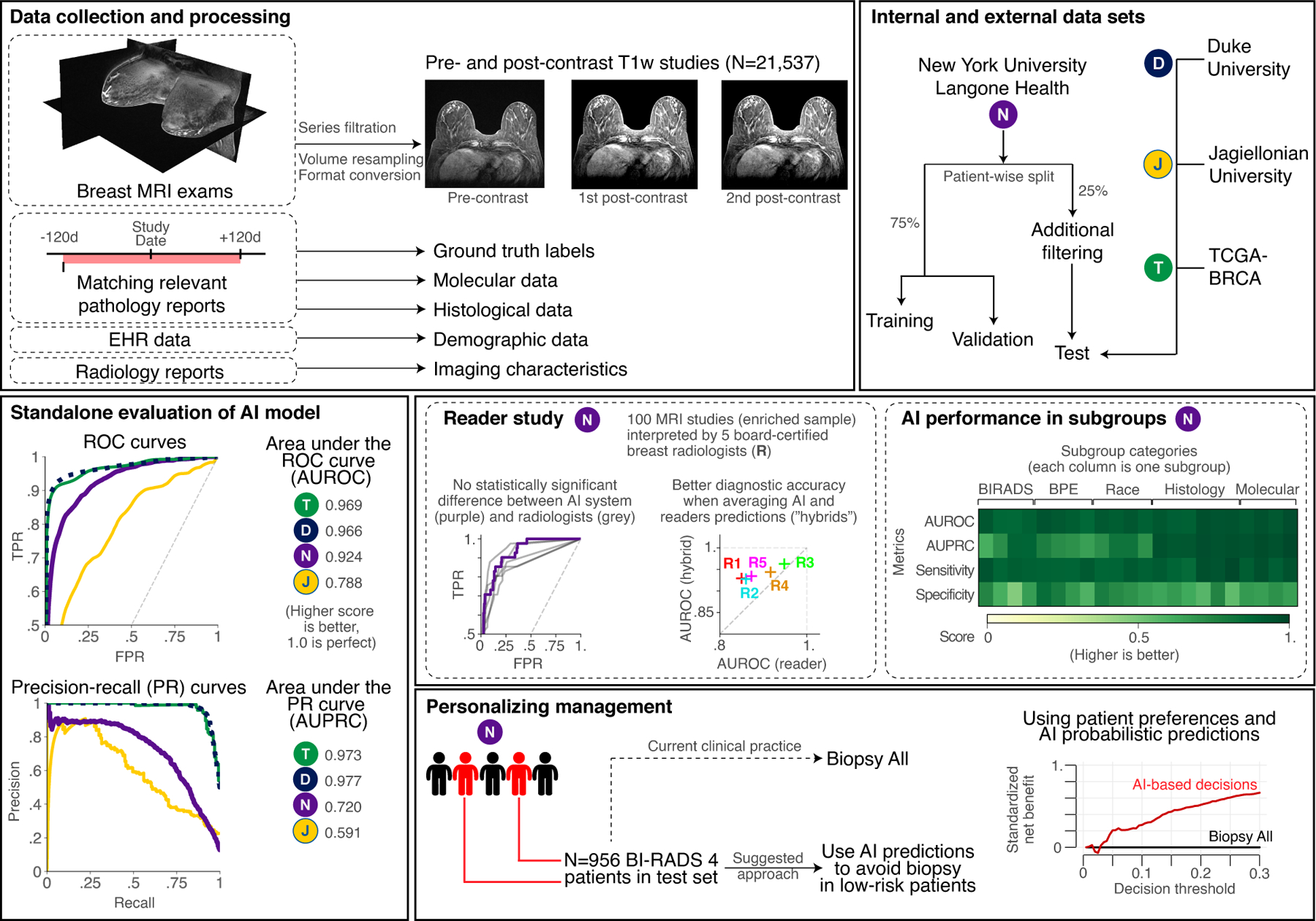
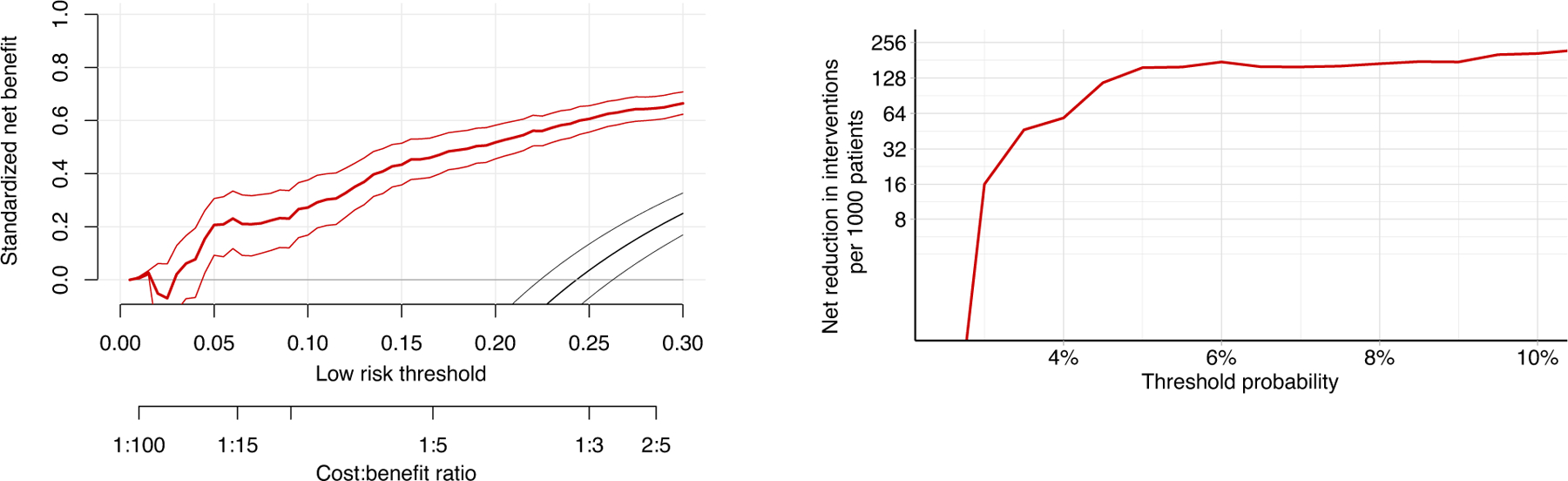
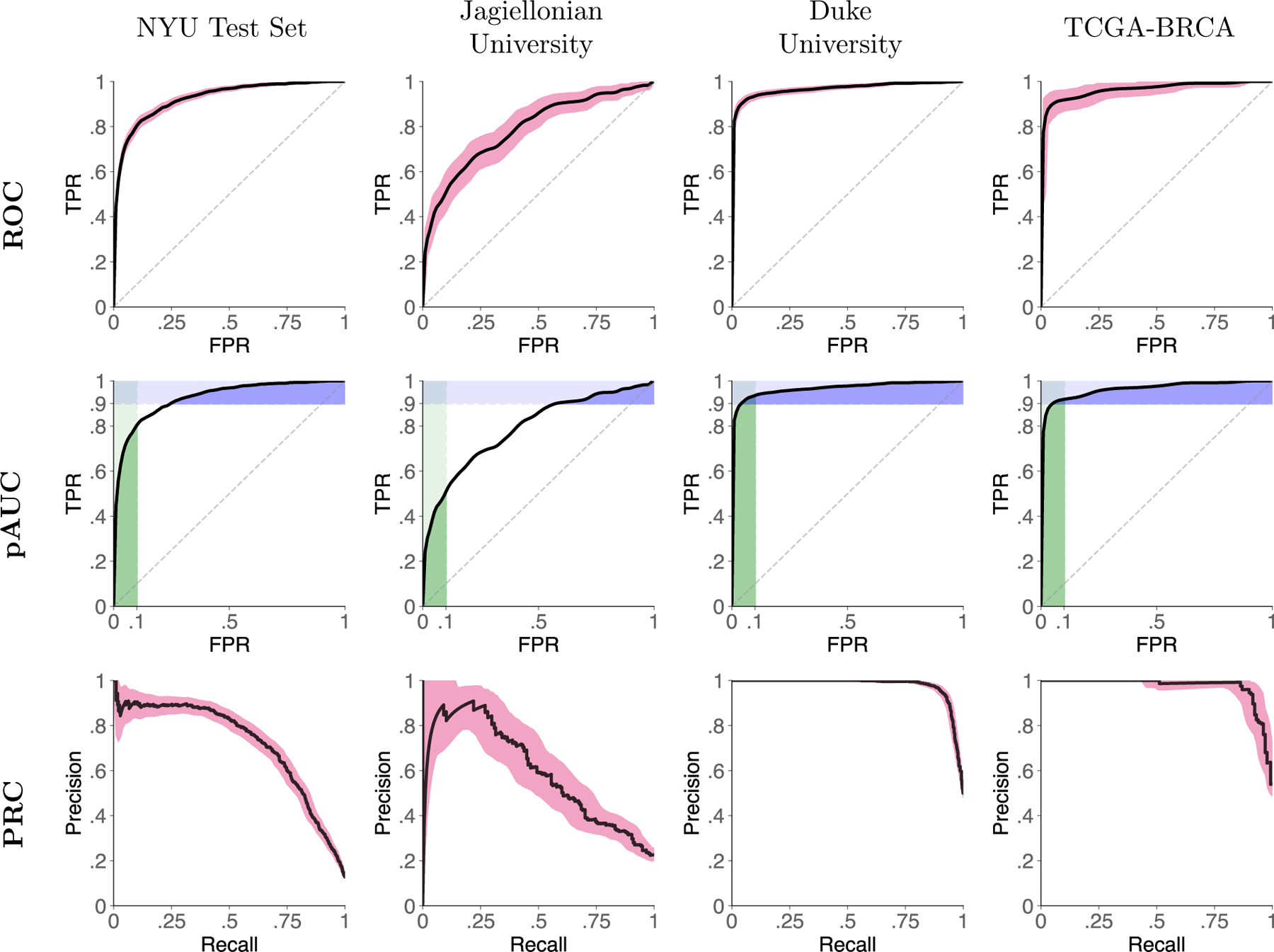
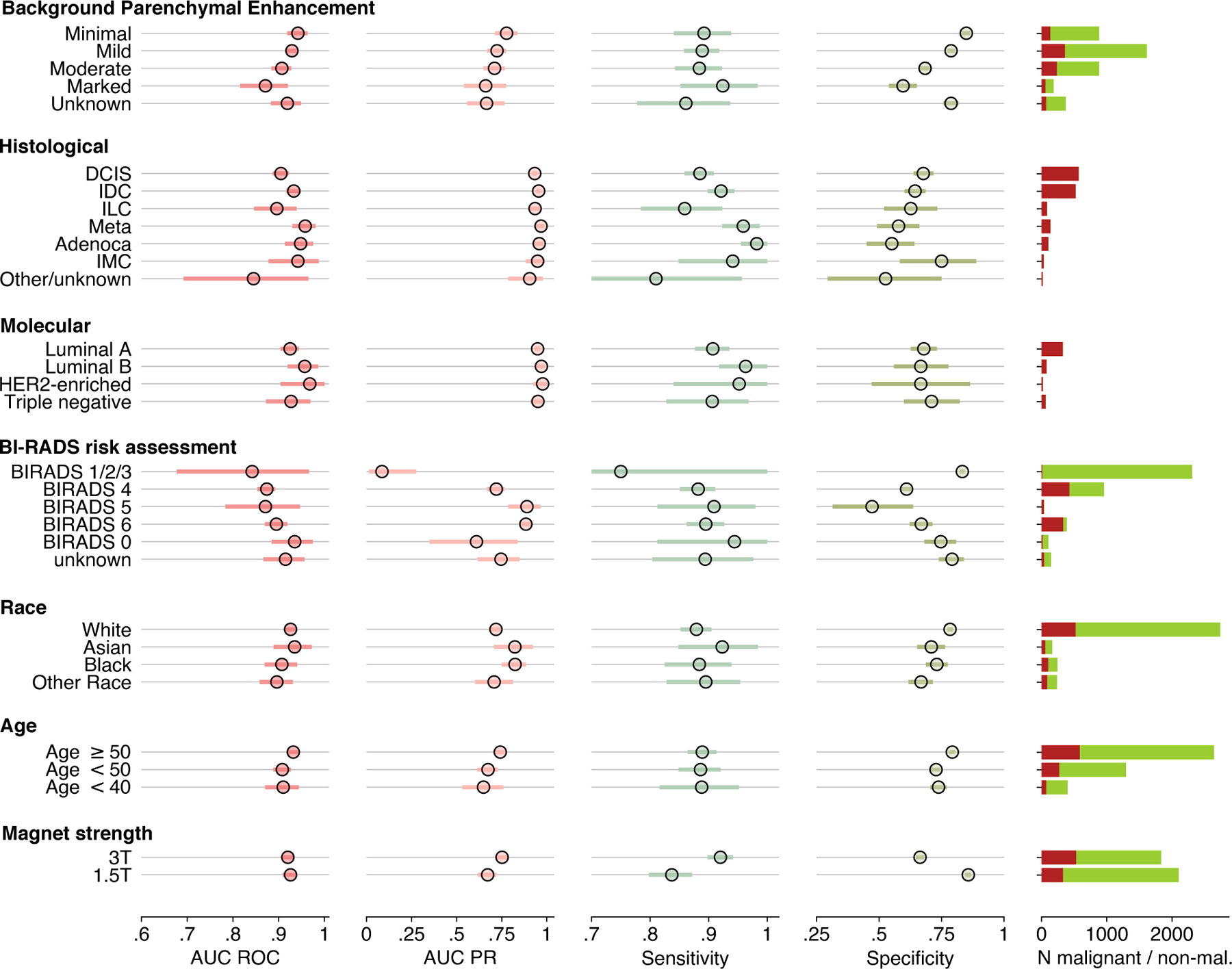
Dynamic contrast-enhanced magnetic resonance imaging (DCE-MRI) has a high sensitivity in detecting breast cancer but often leads to unnecessary biopsies and patient workup. We used a deep learning (DL) system to improve the overall accuracy of breast cancer diagnosis and personalize management of patients undergoing DCE-MRI. On the internal test set ( = 3936 exams), our system achieved an area under the receiver operating characteristic curve (AUROC) of 0.92 (95% CI: 0.92 to 0.93). In a retrospective reader study, there was no statistically significant difference ( = 0.19) between five board-certified breast radiologists and the DL system (mean ΔAUROC, +0.04 in favor of the DL system). Radiologists' performance improved when their predictions were averaged with DL's predictions [mean ΔAUPRC (area under the precision-recall curve), +0.07]. We demonstrated the generalizability of the DL system using multiple datasets from Poland and the United States. An additional reader study on a Polish dataset showed that the DL system was as robust to distribution shift as radiologists. In subgroup analysis, we observed consistent results across different cancer subtypes and patient demographics. Using decision curve analysis, we showed that the DL system can reduce unnecessary biopsies in the range of clinically relevant risk thresholds. This would lead to avoiding biopsies yielding benign results in up to 20% of all patients with BI-RADS category 4 lesions. Last, we performed an error analysis, investigating situations where DL predictions were mostly incorrect. This exploratory work creates a foundation for deployment and prospective analysis of DL-based models for breast MRI.
动态对比增强磁共振成像(DCE-MRI)在检测乳腺癌方面具有较高的敏感性,但通常会导致不必要的活检和患者检查。我们使用深度学习(DL)系统来提高乳腺癌诊断的整体准确性,并对接受 DCE-MRI 检查的患者进行个性化管理。在内部测试集(=3936 例检查)中,我们的系统获得了 0.92(95%CI:0.92 至 0.93)的受试者工作特征曲线下面积(AUROC)。在回顾性读者研究中,五位经过认证的乳腺放射科医生和 DL 系统之间没有统计学上的显著差异(=0.19)(平均ΔAUROC,DL 系统倾向于 0.04)。当放射科医生的预测与 DL 的预测进行平均时,他们的表现有所提高[平均ΔAUPRC(精准召回曲线下面积),增加 0.07]。我们使用来自波兰和美国的多个数据集证明了 DL 系统的泛化能力。在波兰数据集上进行的额外读者研究表明,DL 系统对分布转移的稳健性与放射科医生相当。在亚组分析中,我们观察到不同癌症亚型和患者人群中存在一致的结果。使用决策曲线分析,我们表明 DL 系统可以在临床相关风险阈值范围内减少不必要的活检。这将导致在 BI-RADS 类别 4 病变的所有患者中,避免活检得出良性结果的比例高达 20%。最后,我们进行了错误分析,研究了 DL 预测错误较多的情况。这项探索性工作为部署和前瞻性分析基于 DL 的乳腺 MRI 模型奠定了基础。