Fels Cancer Institute for Personalized Medicine, Lewis Katz School of Medicine, Temple University, Philadelphia, Pennsylvania.
Bioinformatics and Computational Genomics Laboratory, Hunter College, City University of New York, New York, New York.
Cancer Prev Res (Phila). 2022 Nov 1;15(11):755-766. doi: 10.1158/1940-6207.CAPR-22-0258.
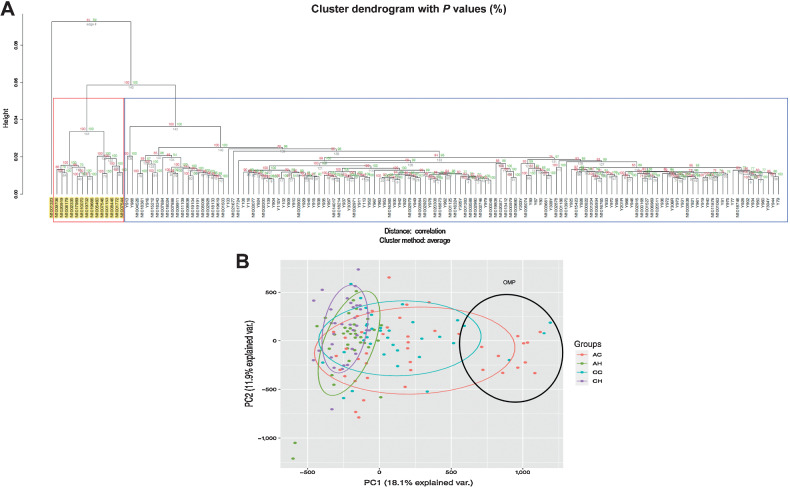
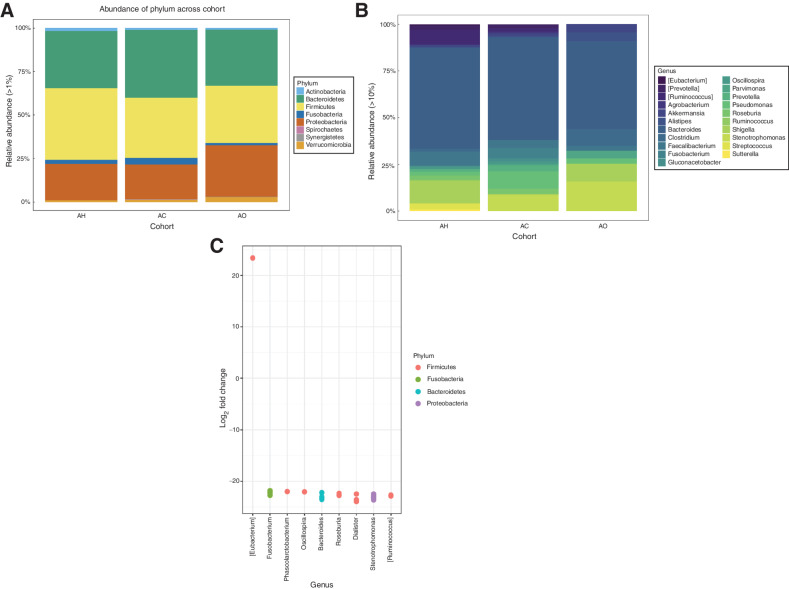
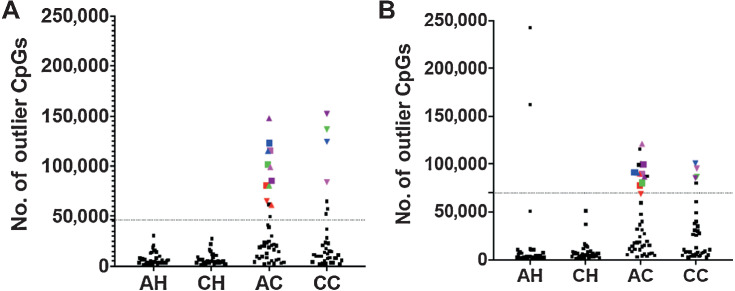
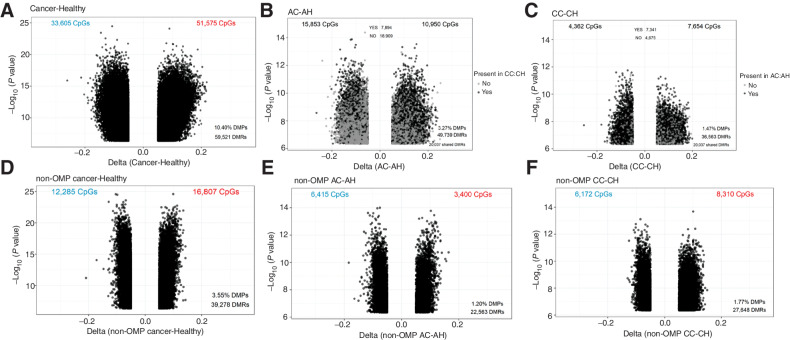
Nongenetic predisposition to colorectal cancer continues to be difficult to measure precisely, hampering efforts in targeted prevention and screening. Epigenetic changes in the normal mucosa of patients with colorectal cancer can serve as a tool in predicting colorectal cancer outcomes. We identified epigenetic changes affecting the normal mucosa of patients with colorectal cancer. DNA methylation profiling on normal colon mucosa from 77 patients with colorectal cancer and 68 controls identified a distinct subgroup of normally-appearing mucosa with markedly disrupted DNA methylation at a large number of CpGs, termed as "Outlier Methylation Phenotype" (OMP) and are present in 15 of 77 patients with cancer versus 0 of 68 controls (P < 0.001). Similar findings were also seen in publicly available datasets. Comparison of normal colon mucosa transcription profiles of patients with OMP cancer with those of patients with non-OMP cancer indicates genes whose promoters are hypermethylated in the OMP patients are also transcriptionally downregulated, and that many of the genes most affected are involved in interactions between epithelial cells, the mucus layer, and the microbiome. Analysis of 16S rRNA profiles suggests that normal colon mucosa of OMPs are enriched in bacterial genera associated with colorectal cancer risk, advanced tumor stage, chronic intestinal inflammation, malignant transformation, nosocomial infections, and KRAS mutations. In conclusion, our study identifies an epigenetically distinct OMP group in the normal mucosa of patients with colorectal cancer that is characterized by a disrupted methylome, altered gene expression, and microbial dysbiosis. Prospective studies are needed to determine whether OMP could serve as a biomarker for an elevated epigenetic risk for colorectal cancer development.
Our study identifies an epigenetically distinct OMP group in the normal mucosa of patients with colorectal cancer that is characterized by a disrupted methylome, altered gene expression, and microbial dysbiosis. Identification of OMPs in healthy controls and patients with colorectal cancer will lead to prevention and better prognosis, respectively.
结直肠癌的非遗传易感性仍然难以准确测量,这阻碍了有针对性的预防和筛查工作。结直肠癌患者正常黏膜中的表观遗传变化可用作预测结直肠癌结果的工具。我们确定了影响结直肠癌患者正常黏膜的表观遗传变化。对 77 例结直肠癌患者和 68 例对照者的正常结肠黏膜进行 DNA 甲基化分析,确定了一种具有明显特征的正常黏膜亚群,即“离群甲基化表型(OMP)”,在 77 例癌症患者中有 15 例存在这种现象,而在 68 例对照者中没有 0 例存在(P < 0.001)。在公开可用的数据集也观察到了类似的发现。对 OMP 癌症患者和非 OMP 癌症患者的正常结肠黏膜转录谱进行比较,表明 OMP 患者中启动子超甲基化的基因也转录下调,受影响最大的许多基因都参与上皮细胞、黏液层和微生物组之间的相互作用。16S rRNA 谱分析表明,OMP 的正常结肠黏膜富含与结直肠癌风险、肿瘤晚期、慢性肠道炎症、恶性转化、医院感染和 KRAS 突变相关的细菌属。总之,我们的研究在结直肠癌患者的正常黏膜中确定了一个具有独特表观遗传特征的 OMP 群体,其特征是甲基化组紊乱、基因表达改变和微生物失调。需要前瞻性研究来确定 OMP 是否可以作为结直肠癌发生的表观遗传风险升高的生物标志物。
我们的研究在结直肠癌患者的正常黏膜中确定了一个具有独特表观遗传特征的 OMP 群体,其特征是甲基化组紊乱、基因表达改变和微生物失调。在健康对照者和结直肠癌患者中识别 OMP 将分别导致预防和更好的预后。