College of Horticulture, South China Agricultural University, Guangzhou 510640, China.
Int J Mol Sci. 2022 Sep 30;23(19):11569. doi: 10.3390/ijms231911569.
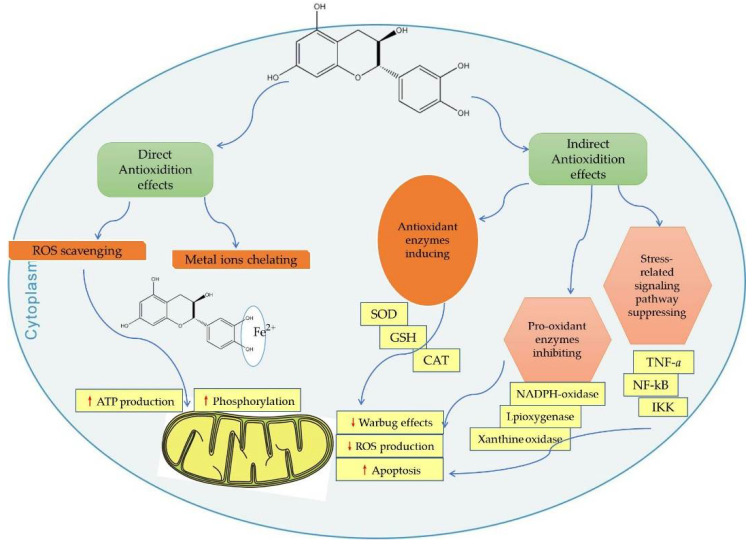
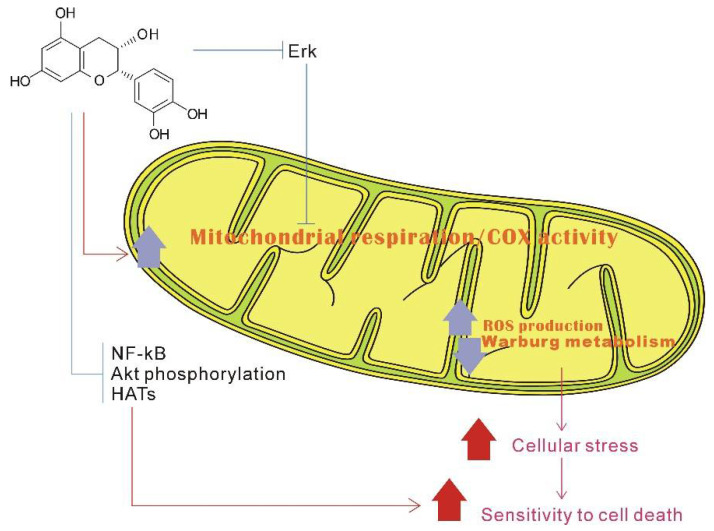
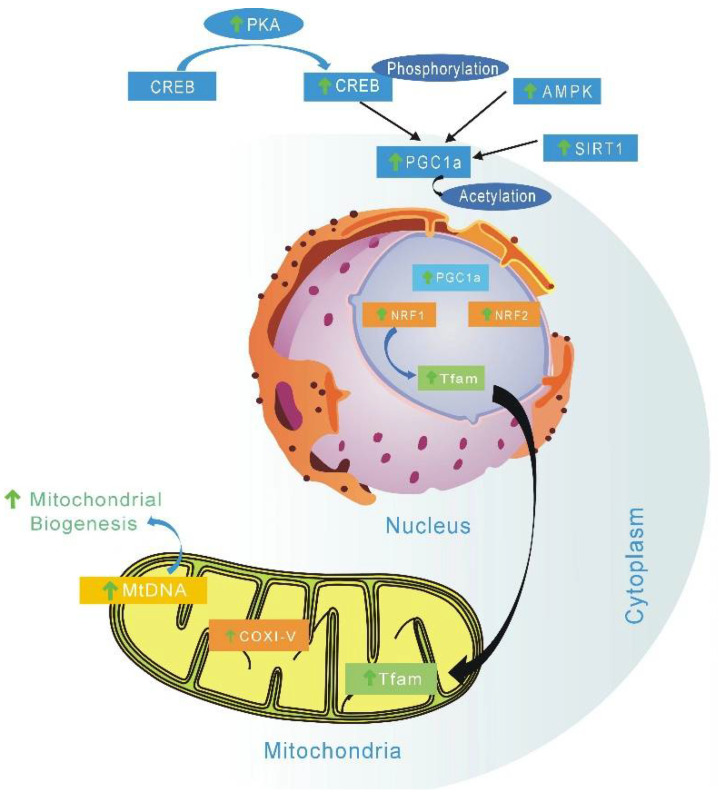
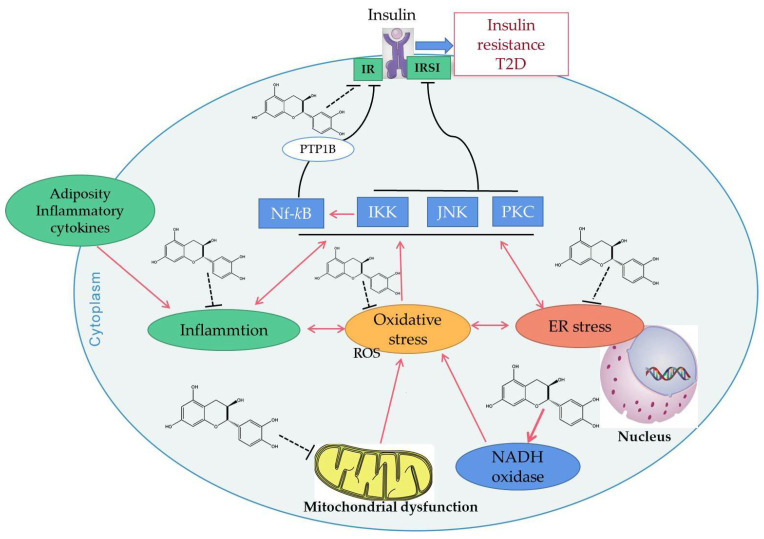
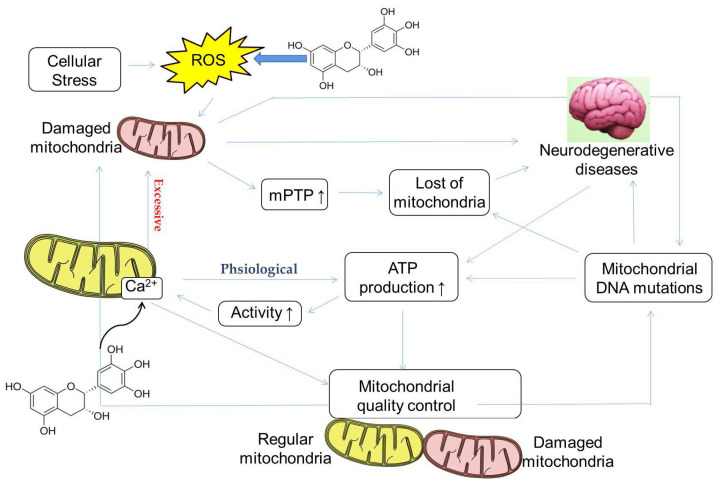
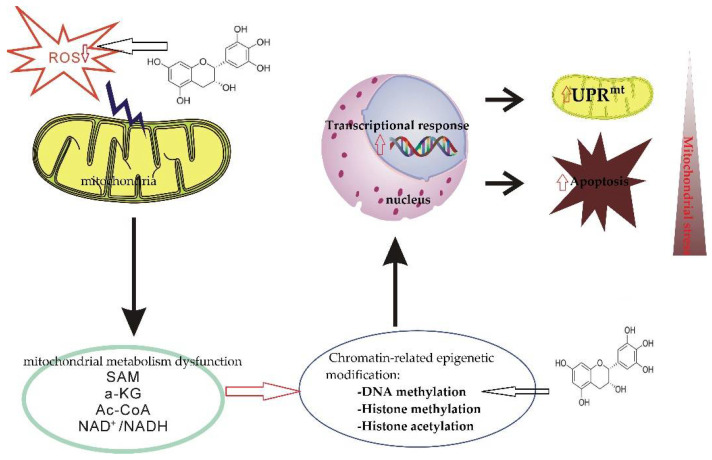
Mitochondria are the main sites for oxidative phosphorylation and synthesis of adenosine triphosphate in cells, and are known as cellular power factories. The phrase "secondary mitochondrial diseases" essentially refers to any abnormal mitochondrial function other than primary mitochondrial diseases, i.e., the process caused by the genes encoding the electron transport chain (ETC) proteins directly or impacting the production of the machinery needed for ETC. Mitochondrial diseases can cause adenosine triphosphate (ATP) synthesis disorder, an increase in oxygen free radicals, and intracellular redox imbalance. It can also induce apoptosis and, eventually, multi-system damage, which leads to neurodegenerative disease. The catechin compounds rich in tea have attracted much attention due to their effective antioxidant activity. Catechins, especially acetylated catechins such as epicatechin gallate (ECG) and epigallocatechin gallate (EGCG), are able to protect mitochondria from reactive oxygen species. This review focuses on the role of catechins in regulating cell homeostasis, in which catechins act as a free radical scavenger and metal ion chelator, their protective mechanism on mitochondria, and the protective effect of catechins on mitochondrial deoxyribonucleic acid (DNA). This review highlights catechins and their effects on mitochondrial functional metabolic networks: regulating mitochondrial function and biogenesis, improving insulin resistance, regulating intracellular calcium homeostasis, and regulating epigenetic processes. Finally, the indirect beneficial effects of catechins on mitochondrial diseases are also illustrated by the warburg and the apoptosis effect. Some possible mechanisms are shown graphically. In addition, the bioavailability of catechins and peracetylated-catechins, free radical scavenging activity, mitochondrial activation ability of the high-molecular-weight polyphenol, and the mitochondrial activation factor were also discussed.
线粒体是细胞内氧化磷酸化和三磷酸腺苷合成的主要场所,被称为细胞动力工厂。“次级线粒体疾病”一词主要是指除原发性线粒体疾病以外的任何异常线粒体功能,即直接编码电子传递链(ETC)蛋白的基因或影响 ETC 所需机器生产的过程。线粒体疾病可导致三磷酸腺苷(ATP)合成障碍、氧自由基增加和细胞内氧化还原失衡。它还可以诱导细胞凋亡,最终导致多系统损伤,从而导致神经退行性疾病。茶叶中富含的儿茶素化合物因其有效的抗氧化活性而备受关注。儿茶素,特别是乙酰化儿茶素,如表没食子儿茶素没食子酸酯(EGCG)和表没食子儿茶素没食子酸酯(ECG),能够保护线粒体免受活性氧的侵害。本综述重点介绍了儿茶素在调节细胞内稳态中的作用,儿茶素作为自由基清除剂和金属离子螯合剂,其对线粒体的保护机制,以及儿茶素对线粒体脱氧核糖核酸(DNA)的保护作用。本综述强调了儿茶素及其对线粒体功能代谢网络的影响:调节线粒体功能和生物发生、改善胰岛素抵抗、调节细胞内钙稳态和调节表观遗传过程。最后,还通过沃伯格效应和细胞凋亡作用说明了儿茶素对线粒体疾病的间接有益作用。一些可能的机制以图形方式显示。此外,还讨论了儿茶素和乙酰化儿茶素的生物利用度、清除自由基活性、高分子量多酚的线粒体激活能力和线粒体激活因子。