Cardeira Martim, Bernardo Ana, Leonardo Inês C, Gaspar Frédéric B, Marques Marta, Melgosa Rodrigo, Paiva Alexandre, Simões Pedro, Fernández Naiara, Serra Ana Teresa
IBET-Instituto de Biologia Experimental e Tecnológica, Apartado 12, 2781-901 Oeiras, Portugal.
Instituto de Tecnologia Química e Biológica António Xavier, Universidade Nova de Lisboa (ITQB NOVA), Av. da República, 2780-157 Oeiras, Portugal.
Antioxidants (Basel). 2022 Sep 28;11(10):1925. doi: 10.3390/antiox11101925.
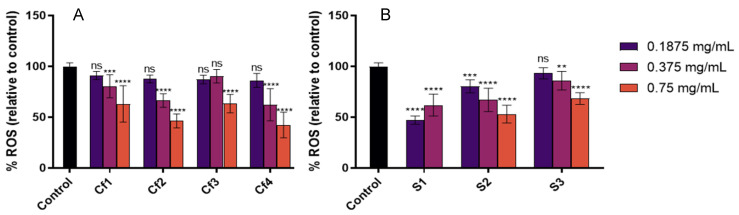
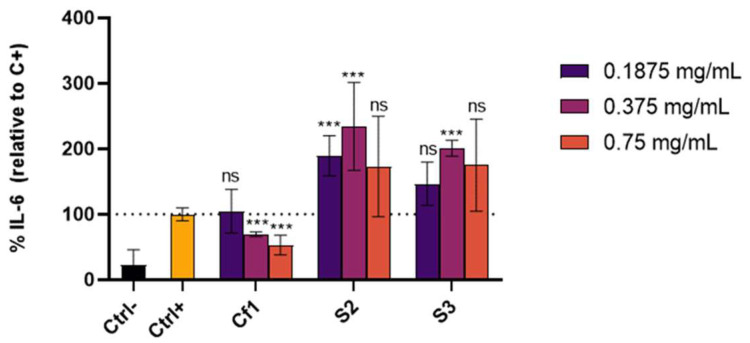
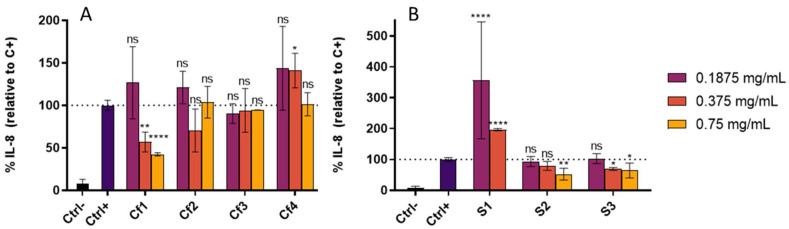
The fishery industry generates large amounts of waste (20-75% (/) of the total caught fish weight). The recovery of bioactive compounds from residues and their incorporation in cosmetics represents a promising market opportunity and may contribute to a sustainable valorisation of the sector. In this work, protein-rich extracts obtained by high-pressure technologies (supercritical CO and subcritical water) from sardine () waste and codfish () frames were characterized regarding their cosmeceutical potential. Antioxidant, anti-inflammatory and antibacterial activities were evaluated through chemical (ORAC assay), enzymatic (inhibition of elastase and tyrosinase), antimicrobial susceptibility (, and ) and cell-based (in keratinocytes-HaCaT) assays. Sardine extracts presented the highest antibacterial activity, and the extract obtained using higher extraction temperatures (250 °C) and without the defatting step demonstrated the lowest minimum inhibitory concentration (MIC) values (1.17; 4.6; 0.59 mg/mL for , and , respectively). Codfish samples extracted at lower temperatures (90 °C) were the most effective anti-inflammatory agents (a concentration of 0.75 mg/mL reduced IL-8 and IL-6 levels by 58% and 47%, respectively, relative to the positive control). Threonine, valine, leucine, arginine and total protein content in the extracts were highlighted to present a high correlation with the reported bioactivities (R ≥ 0.7). These results support the potential application of extracts obtained from fishery industry wastes in cosmeceutical products with bioactive activities.
渔业产生大量废弃物(占捕获鱼总重量的20 - 75%)。从这些残渣中回收生物活性化合物并将其应用于化妆品中,代表着一个前景广阔的市场机遇,且有助于该行业的可持续增值。在这项研究中,对通过高压技术(超临界CO₂和亚临界水)从沙丁鱼废弃物和鳕鱼鱼骨中获得的富含蛋白质的提取物进行了皮肤药妆潜力表征。通过化学方法(氧自由基吸收能力测定)、酶法(抑制弹性蛋白酶和酪氨酸酶)、抗菌药敏试验(金黄色葡萄球菌、大肠杆菌和白色念珠菌)以及细胞试验(角质形成细胞-HaCaT)评估了其抗氧化、抗炎和抗菌活性。沙丁鱼提取物表现出最高的抗菌活性,使用较高提取温度(250℃)且未经过脱脂步骤获得的提取物显示出最低的最低抑菌浓度(MIC)值(对金黄色葡萄球菌、大肠杆菌和白色念珠菌的MIC值分别为1.17、4.6、0.59mg/mL)。在较低温度(90℃)下提取的鳕鱼样品是最有效的抗炎剂(浓度为0.75mg/mL时,相对于阳性对照,IL - 8和IL - 6水平分别降低了58%和47%)。提取物中的苏氨酸、缬氨酸、亮氨酸、精氨酸和总蛋白含量与所报道的生物活性呈现出高度相关性(R≥0.7)。这些结果支持了从渔业废弃物中获得的提取物在具有生物活性的皮肤药妆产品中的潜在应用。