• 文献检索
  • 文档翻译
  • 深度研究
  • 学术资讯
  • Suppr Zotero 插件Zotero 插件
  • 邀请有礼
  • 套餐&价格
  • 历史记录
应用&插件
Suppr Zotero 插件Zotero 插件浏览器插件Mac 客户端Windows 客户端微信小程序
定价
高级版会员购买积分包购买API积分包
服务
文献检索文档翻译深度研究API 文档MCP 服务
关于我们
关于 Suppr公司介绍联系我们用户协议隐私条款
关注我们

Suppr 超能文献

核心技术专利:CN118964589B侵权必究
粤ICP备2023148730 号-1Suppr @ 2026

文献检索

告别复杂PubMed语法,用中文像聊天一样搜索,搜遍4000万医学文献。AI智能推荐,让科研检索更轻松。

立即免费搜索

文件翻译

保留排版,准确专业,支持PDF/Word/PPT等文件格式,支持 12+语言互译。

免费翻译文档

深度研究

AI帮你快速写综述,25分钟生成高质量综述,智能提取关键信息,辅助科研写作。

立即免费体验

2021 年配体模型挑战赛:利用冷冻电镜数据、模板和深度学习改进蛋白质-配体相互作用建模。

Improving Protein-Ligand Interaction Modeling with cryo-EM Data, Templates, and Deep Learning in 2021 Ligand Model Challenge.

机构信息

Department of Electrical Engineering and Computer Science, University of Missouri, Columbia, MO 65211, USA.

出版信息

Biomolecules. 2023 Jan 9;13(1):132. doi: 10.3390/biom13010132.

DOI:10.3390/biom13010132
PMID:36671518
原文链接:https://pmc.ncbi.nlm.nih.gov/articles/PMC9855343/
Abstract

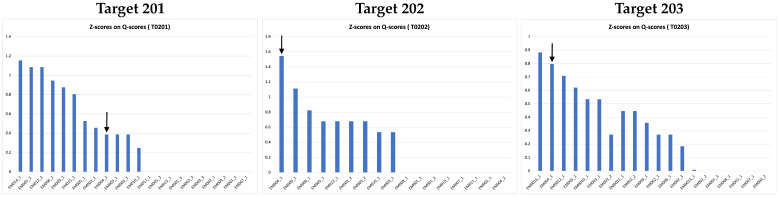
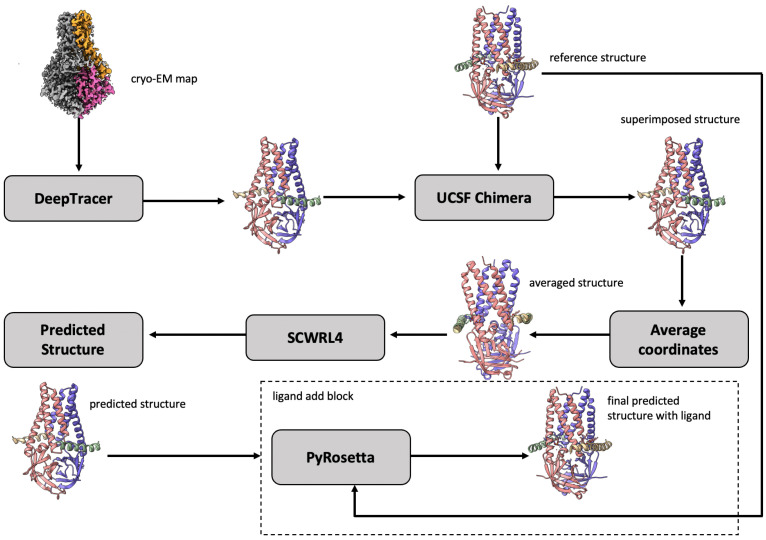
Elucidating protein-ligand interaction is crucial for studying the function of proteins and compounds in an organism and critical for drug discovery and design. The problem of protein-ligand interaction is traditionally tackled by molecular docking and simulation, which is based on physical forces and statistical potentials and cannot effectively leverage cryo-EM data and existing protein structural information in the protein-ligand modeling process. In this work, we developed a deep learning bioinformatics pipeline (DeepProLigand) to predict protein-ligand interactions from cryo-EM density maps of proteins and ligands. DeepProLigand first uses a deep learning method to predict the structure of proteins from cryo-EM maps, which is averaged with a reference (template) structure of the proteins to produce a combined structure to add ligands. The ligands are then identified and added into the structure to generate a protein-ligand complex structure, which is further refined. The method based on the deep learning prediction and template-based modeling was blindly tested in the 2021 EMDataResource Ligand Challenge and was ranked first in fitting ligands to cryo-EM density maps. These results demonstrate that the deep learning bioinformatics approach is a promising direction for modeling protein-ligand interactions on cryo-EM data using prior structural information.

摘要

阐明蛋白质-配体相互作用对于研究蛋白质和化合物在生物体中的功能至关重要,对于药物发现和设计也至关重要。传统上,蛋白质-配体相互作用的问题是通过分子对接和模拟来解决的,该方法基于物理力和统计势能,不能有效地利用低温电子显微镜(cryo-EM)数据和蛋白质-配体建模过程中的现有蛋白质结构信息。在这项工作中,我们开发了一个深度学习生物信息学管道(DeepProLigand),用于从蛋白质和配体的 cryo-EM 密度图中预测蛋白质-配体相互作用。DeepProLigand 首先使用深度学习方法从 cryo-EM 图谱中预测蛋白质的结构,然后将其与蛋白质的参考(模板)结构进行平均,生成一个组合结构以添加配体。然后识别配体并将其添加到结构中,生成蛋白质-配体复合物结构,然后对其进行进一步细化。该基于深度学习预测和基于模板建模的方法在 2021 年的 EMDataResource 配体挑战赛中进行了盲测,在拟合配体到 cryo-EM 密度图方面排名第一。这些结果表明,基于深度学习的方法是利用先前的结构信息在 cryo-EM 数据上建模蛋白质-配体相互作用的一个很有前途的方向。
https://cdn.ncbi.nlm.nih.gov/pmc/blobs/51f1/9855343/af130d21627a/biomolecules-13-00132-g009.jpg
https://cdn.ncbi.nlm.nih.gov/pmc/blobs/51f1/9855343/40c791baa449/biomolecules-13-00132-g001.jpg
https://cdn.ncbi.nlm.nih.gov/pmc/blobs/51f1/9855343/bab9c37ba93d/biomolecules-13-00132-g0A1.jpg
https://cdn.ncbi.nlm.nih.gov/pmc/blobs/51f1/9855343/7b109b879cb0/biomolecules-13-00132-g0A2.jpg
https://cdn.ncbi.nlm.nih.gov/pmc/blobs/51f1/9855343/899c5865c08b/biomolecules-13-00132-g002.jpg
https://cdn.ncbi.nlm.nih.gov/pmc/blobs/51f1/9855343/45281f79f4a8/biomolecules-13-00132-g003.jpg
https://cdn.ncbi.nlm.nih.gov/pmc/blobs/51f1/9855343/ac4a8a7e63cb/biomolecules-13-00132-g004.jpg
https://cdn.ncbi.nlm.nih.gov/pmc/blobs/51f1/9855343/452d3ffe714c/biomolecules-13-00132-g005.jpg
https://cdn.ncbi.nlm.nih.gov/pmc/blobs/51f1/9855343/f592c4814051/biomolecules-13-00132-g006.jpg
https://cdn.ncbi.nlm.nih.gov/pmc/blobs/51f1/9855343/d9bff3a85ff4/biomolecules-13-00132-g007.jpg
https://cdn.ncbi.nlm.nih.gov/pmc/blobs/51f1/9855343/5e725a4f9f35/biomolecules-13-00132-g008.jpg
https://cdn.ncbi.nlm.nih.gov/pmc/blobs/51f1/9855343/af130d21627a/biomolecules-13-00132-g009.jpg
https://cdn.ncbi.nlm.nih.gov/pmc/blobs/51f1/9855343/40c791baa449/biomolecules-13-00132-g001.jpg
https://cdn.ncbi.nlm.nih.gov/pmc/blobs/51f1/9855343/bab9c37ba93d/biomolecules-13-00132-g0A1.jpg
https://cdn.ncbi.nlm.nih.gov/pmc/blobs/51f1/9855343/7b109b879cb0/biomolecules-13-00132-g0A2.jpg
https://cdn.ncbi.nlm.nih.gov/pmc/blobs/51f1/9855343/899c5865c08b/biomolecules-13-00132-g002.jpg
https://cdn.ncbi.nlm.nih.gov/pmc/blobs/51f1/9855343/45281f79f4a8/biomolecules-13-00132-g003.jpg
https://cdn.ncbi.nlm.nih.gov/pmc/blobs/51f1/9855343/ac4a8a7e63cb/biomolecules-13-00132-g004.jpg
https://cdn.ncbi.nlm.nih.gov/pmc/blobs/51f1/9855343/452d3ffe714c/biomolecules-13-00132-g005.jpg
https://cdn.ncbi.nlm.nih.gov/pmc/blobs/51f1/9855343/f592c4814051/biomolecules-13-00132-g006.jpg
https://cdn.ncbi.nlm.nih.gov/pmc/blobs/51f1/9855343/d9bff3a85ff4/biomolecules-13-00132-g007.jpg
https://cdn.ncbi.nlm.nih.gov/pmc/blobs/51f1/9855343/5e725a4f9f35/biomolecules-13-00132-g008.jpg
https://cdn.ncbi.nlm.nih.gov/pmc/blobs/51f1/9855343/af130d21627a/biomolecules-13-00132-g009.jpg

相似文献

1
Improving Protein-Ligand Interaction Modeling with cryo-EM Data, Templates, and Deep Learning in 2021 Ligand Model Challenge.2021 年配体模型挑战赛:利用冷冻电镜数据、模板和深度学习改进蛋白质-配体相互作用建模。
Biomolecules. 2023 Jan 9;13(1):132. doi: 10.3390/biom13010132.
2
GOLEM: Automated and Robust Cryo-EM-Guided Ligand Docking with Explicit Water Molecules.GOLEM:带显式水分子的自动化、稳健的冷冻电镜引导配体对接
J Chem Inf Model. 2024 Jul 22;64(14):5680-5690. doi: 10.1021/acs.jcim.4c00917. Epub 2024 Jul 11.
3
Advancing structure modeling from cryo-EM maps with deep learning.利用深度学习从冷冻电镜图谱推进结构建模。
Biochem Soc Trans. 2025 Feb 7;53(1):BST20240784. doi: 10.1042/BST20240784.
4
DockEM: an enhanced method for atomic-scale protein-ligand docking refinement leveraging low-to-medium resolution cryo-EM density maps.DockEM:一种利用低至中等分辨率冷冻电镜密度图进行原子尺度蛋白质-配体对接优化的增强方法。
Brief Bioinform. 2025 Mar 4;26(2). doi: 10.1093/bib/bbaf091.
5
GemSpot: A Pipeline for Robust Modeling of Ligands into Cryo-EM Maps.GemSpot:用于将配体稳健建模到冷冻电镜图谱中的管道。
Structure. 2020 Jun 2;28(6):707-716.e3. doi: 10.1016/j.str.2020.04.018. Epub 2020 May 14.
6
Deep learning for reconstructing protein structures from cryo-EM density maps: Recent advances and future directions.从冷冻电镜密度图重建蛋白质结构的深度学习:最新进展和未来方向。
Curr Opin Struct Biol. 2023 Apr;79:102536. doi: 10.1016/j.sbi.2023.102536. Epub 2023 Feb 9.
7
Secondary Structure Detection and Structure Modeling for Cryo-EM.冷冻电镜的二级结构检测和结构建模。
Methods Mol Biol. 2025;2870:341-355. doi: 10.1007/978-1-0716-4213-9_17.
8
Integrating AlphaFold and deep learning for atomistic interpretation of cryo-EM maps.整合AlphaFold与深度学习用于冷冻电镜图谱的原子水平解析
Brief Bioinform. 2023 Sep 22;24(6). doi: 10.1093/bib/bbad405.
9
Smart de novo Macromolecular Structure Modeling from Cryo-EM Maps.从头开始的冷冻电镜图谱的智能大分子结构建模。
J Mol Biol. 2023 May 1;435(9):167967. doi: 10.1016/j.jmb.2023.167967. Epub 2023 Jan 18.
10
Protein-Protein Modeling Using Cryo-EM Restraints.利用冷冻电镜约束进行蛋白质-蛋白质建模。
Methods Mol Biol. 2020;2112:145-162. doi: 10.1007/978-1-0716-0270-6_11.

引用本文的文献

1
A labeled dataset for AI-based cryo-EM map enhancement.一个用于基于人工智能的冷冻电镜图谱增强的标注数据集。
Comput Struct Biotechnol J. 2025 Jun 30;27:2843-2850. doi: 10.1016/j.csbj.2025.06.041. eCollection 2025.
2
A Labeled Dataset for AI-based Cryo-EM Map Enhancement.一个用于基于人工智能的冷冻电镜图谱增强的标记数据集。
bioRxiv. 2025 Mar 17:2025.03.16.643562. doi: 10.1101/2025.03.16.643562.
3
Exploring G Protein-Coupled Receptors in Hematological Cancers.探索血液系统癌症中的G蛋白偶联受体

本文引用的文献

1
Atomic protein structure refinement using all-atom graph representations and SE(3)-equivariant graph transformer.使用全原子图表示和 SE(3)-等变图转换器进行原子蛋白质结构精修。
Bioinformatics. 2023 May 4;39(5). doi: 10.1093/bioinformatics/btad298.
2
Deep learning for reconstructing protein structures from cryo-EM density maps: Recent advances and future directions.从冷冻电镜密度图重建蛋白质结构的深度学习:最新进展和未来方向。
Curr Opin Struct Biol. 2023 Apr;79:102536. doi: 10.1016/j.sbi.2023.102536. Epub 2023 Feb 9.
3
DeepTracer-ID: De novo protein identification from cryo-EM maps.
ACS Pharmacol Transl Sci. 2024 Nov 21;7(12):4000-4009. doi: 10.1021/acsptsci.4c00473. eCollection 2024 Dec 13.
4
An outlook on structural biology after AlphaFold: tools, limits and perspectives.AlphaFold之后的结构生物学展望:工具、局限与前景
FEBS Open Bio. 2025 Feb;15(2):202-222. doi: 10.1002/2211-5463.13902. Epub 2024 Sep 23.
5
De novo atomic protein structure modeling for cryoEM density maps using 3D transformer and HMM.利用 3D 转换器和 HMM 对冷冻电镜密度图进行从头原子蛋白结构建模。
Nat Commun. 2024 Jun 29;15(1):5511. doi: 10.1038/s41467-024-49647-6.
6
Outcomes of the EMDataResource cryo-EM Ligand Modeling Challenge.EMDataResource 冷冻电镜配体建模挑战赛的结果。
Nat Methods. 2024 Jul;21(7):1340-1348. doi: 10.1038/s41592-024-02321-7. Epub 2024 Jun 25.
7
CryoSegNet: accurate cryo-EM protein particle picking by integrating the foundational AI image segmentation model and attention-gated U-Net.CryoSegNet:通过整合基础 AI 图像分割模型和注意力门控 U-Net 实现精确的冷冻电镜蛋白质粒子挑选。
Brief Bioinform. 2024 May 23;25(4). doi: 10.1093/bib/bbae282.
8
Cryo2StructData: A Large Labeled Cryo-EM Density Map Dataset for AI-based Modeling of Protein Structures.Cryo2StructData:用于基于 AI 的蛋白质结构建模的大型标记冷冻电镜密度图数据集。
Sci Data. 2024 May 6;11(1):458. doi: 10.1038/s41597-024-03299-9.
9
CryoTransformer: a transformer model for picking protein particles from cryo-EM micrographs.CryoTransformer:一种从冷冻电镜显微图中提取蛋白质颗粒的变压器模型。
Bioinformatics. 2024 Mar 4;40(3). doi: 10.1093/bioinformatics/btae109.
10
De Novo Atomic Protein Structure Modeling for Cryo-EM Density Maps Using 3D Transformer and Hidden Markov Model.使用3D变压器和隐马尔可夫模型对冷冻电镜密度图进行从头原子蛋白质结构建模
bioRxiv. 2024 Jan 2:2024.01.02.573943. doi: 10.1101/2024.01.02.573943.
DeepTracer-ID:从头开始鉴定冷冻电镜映射中的蛋白质。
Biophys J. 2022 Aug 2;121(15):2840-2848. doi: 10.1016/j.bpj.2022.06.025. Epub 2022 Jun 28.
4
Artificial intelligence in the prediction of protein-ligand interactions: recent advances and future directions.人工智能在蛋白质-配体相互作用预测中的应用:最新进展与未来方向。
Brief Bioinform. 2022 Jan 17;23(1). doi: 10.1093/bib/bbab476.
5
Binding affinity prediction for protein-ligand complex using deep attention mechanism based on intermolecular interactions.基于分子间相互作用的深度学习注意力机制的蛋白-配体复合物结合亲和力预测。
BMC Bioinformatics. 2021 Nov 8;22(1):542. doi: 10.1186/s12859-021-04466-0.
6
PUResNet: prediction of protein-ligand binding sites using deep residual neural network.PUResNet:使用深度残差神经网络预测蛋白质-配体结合位点。
J Cheminform. 2021 Sep 8;13(1):65. doi: 10.1186/s13321-021-00547-7.
7
DEELIG: A Deep Learning Approach to Predict Protein-Ligand Binding Affinity.DEELIG:一种预测蛋白质-配体结合亲和力的深度学习方法。
Bioinform Biol Insights. 2021 Jul 7;15:11779322211030364. doi: 10.1177/11779322211030364. eCollection 2021.
8
Accurate prediction of protein structures and interactions using a three-track neural network.使用三轨神经网络准确预测蛋白质结构和相互作用。
Science. 2021 Aug 20;373(6557):871-876. doi: 10.1126/science.abj8754. Epub 2021 Jul 15.
9
AutoDock Vina 1.2.0: New Docking Methods, Expanded Force Field, and Python Bindings.AutoDock Vina 1.2.0:新的对接方法、扩展的力场及Python绑定
J Chem Inf Model. 2021 Aug 23;61(8):3891-3898. doi: 10.1021/acs.jcim.1c00203. Epub 2021 Jul 19.
10
Highly accurate protein structure prediction with AlphaFold.利用 AlphaFold 进行高精度蛋白质结构预测。
Nature. 2021 Aug;596(7873):583-589. doi: 10.1038/s41586-021-03819-2. Epub 2021 Jul 15.