Casanova Livia Marques, Mendes Leonardo Brantes Bacellar, Corrêa Thamiris de Souza, da Silva Ronaldo Bernardo, Joao Rafael Richard, Macrae Andrew, Vermelho Alane Beatriz
Biotechnology Center-Bioinovar, Institute of Microbiology Paulo de Goes, Universidade Federal do Rio de Janeiro (UFRJ), Rio de Janeiro 21941-902, RJ, Brazil.
Centro de Pesquisa Leopoldo Miguez de Mello, Petrobrás, Rio de Janeiro 21941-915, RJ, Brazil.
Microorganisms. 2022 Dec 22;11(1):34. doi: 10.3390/microorganisms11010034.
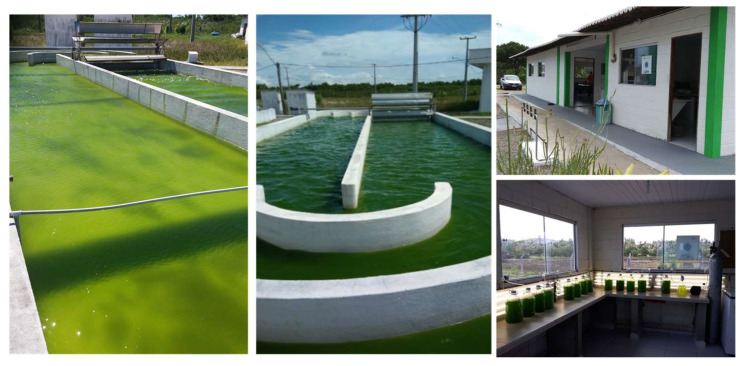
Microalgae are regarded as a promising source of biodiesel. In contrast with conventional crops currently used to produce commercial biodiesel, microalgae can be cultivated on non-arable land, besides having a higher growth rate and productivity. However, microalgal biodiesel is not yet regarded as economically competitive, compared to fossil fuels and crop-based biodiesel; therefore, it is not commercially produced. This review provides an overall perspective on technologies with the potential to increase efficiency and reduce the general costs of biodiesel production from microalgae. Opportunities and challenges for large-scale production are discussed. We present the current scenario of Brazilian research in the field and show a successful case in the research and development of microalgal biodiesel in open ponds by Petrobras. This publicly held Brazilian corporation has been investing in research in this sector for over a decade.
微藻被视为一种很有前景的生物柴油来源。与目前用于生产商业生物柴油的传统作物相比,微藻不仅生长速度更快、生产力更高,还能在非耕地上种植。然而,与化石燃料和基于作物的生物柴油相比,微藻生物柴油在经济上尚不具备竞争力;因此,它尚未进行商业化生产。本综述全面介绍了有助于提高微藻生物柴油生产效率和降低总体成本的技术。文中讨论了大规模生产面临的机遇和挑战。我们介绍了巴西在该领域的研究现状,并展示了巴西国家石油公司在开放式池塘微藻生物柴油研发方面的成功案例。这家巴西上市公司在这一领域的研究投入已超过十年。