Xu Qinglin, Xiu Weijun, Li Qiang, Zhang Yu, Li Xiaoye, Ding Meng, Yang Dongliang, Mou Yongbin, Dong Heng
Nanjing Stomatological Hospital, Medical School of Nanjing University, 30 Zhongyang Road, Nanjing, 210008 Jiangsu, PR China.
State Key Laboratory for Organic Electronics and Information Displays, Jiangsu Key Laboratory for Biosensors, Institute of Advanced Materials (IAM), Nanjing University of Posts and Telecommunications, Nanjing, Jiangsu 210023, PR China.
Mater Today Bio. 2023 Jan 21;19:100559. doi: 10.1016/j.mtbio.2023.100559. eCollection 2023 Apr.
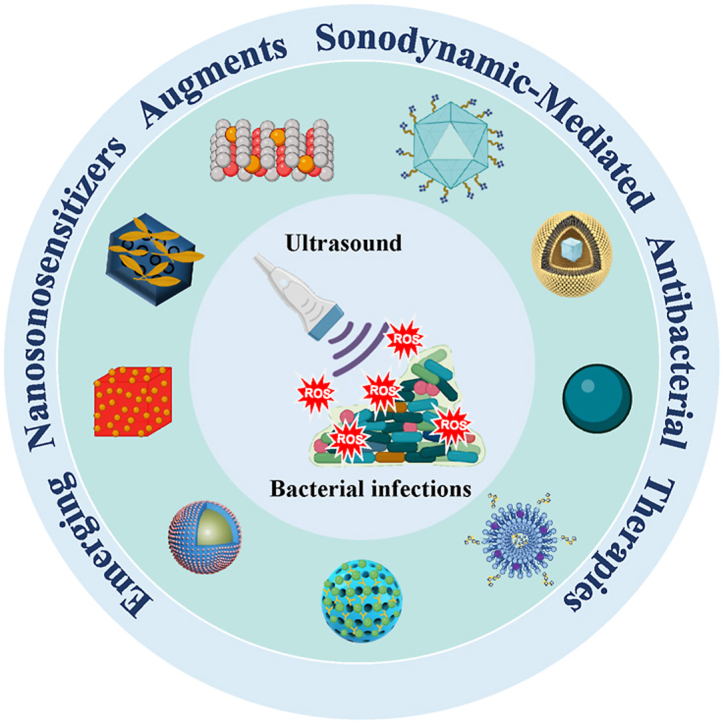
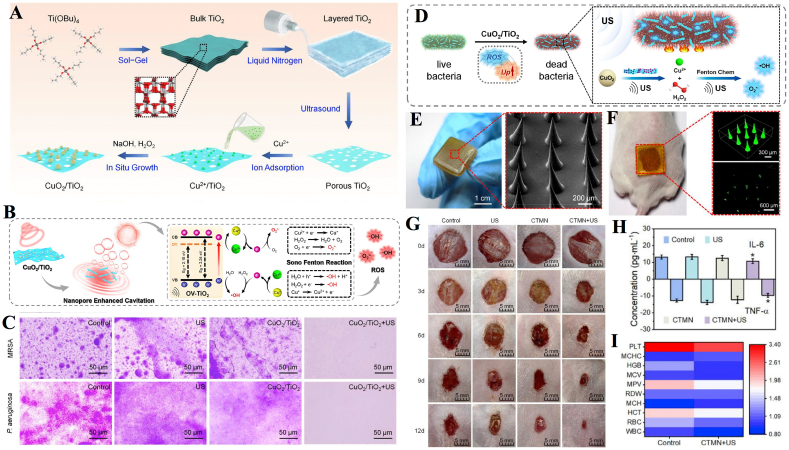
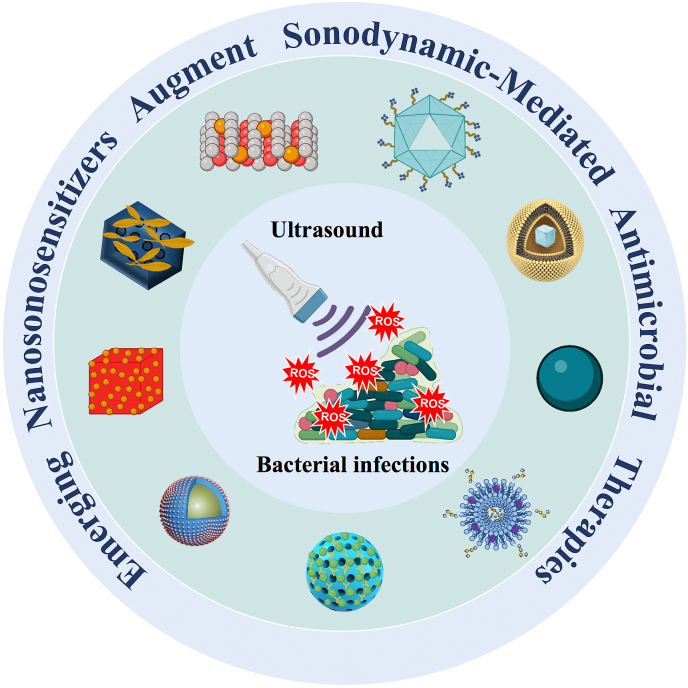
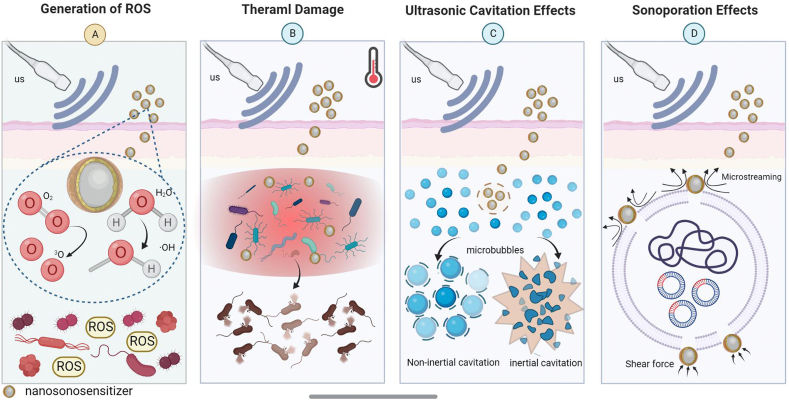
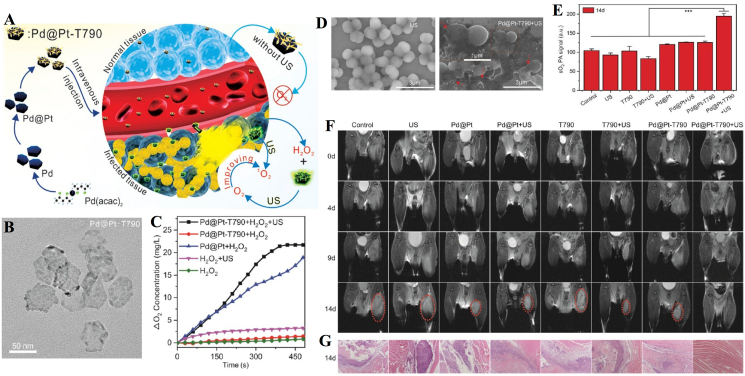
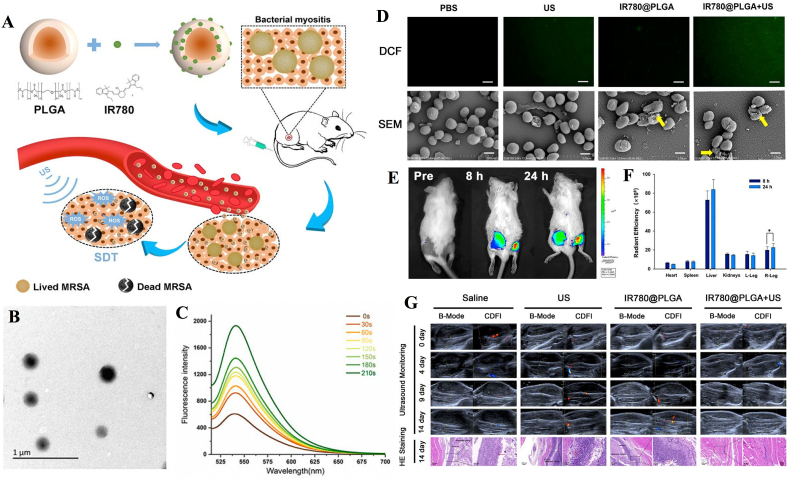
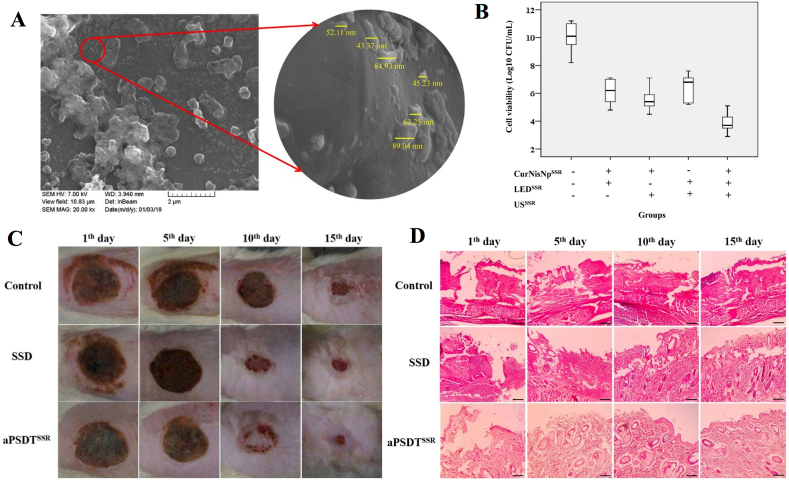
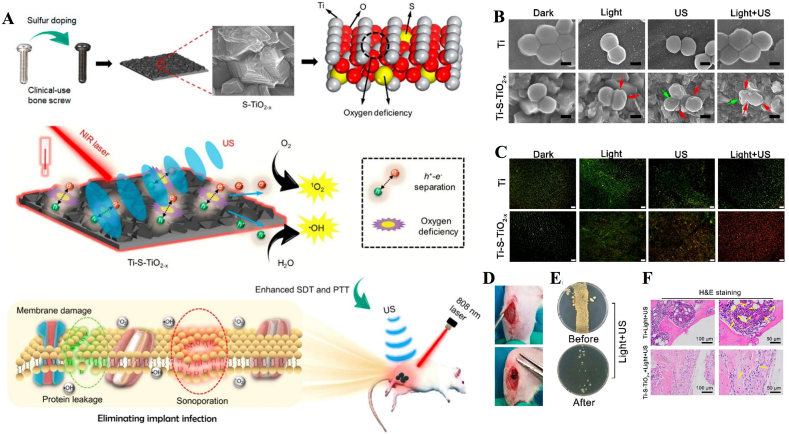
With the widespread prevalence of drug-resistant pathogens, traditional antibiotics have limited effectiveness and do not yield the desired outcomes. Recently, alternative antibacterial therapies based on ultrasound (US) have been explored to overcome the crisis of bacterial pathogens. Antimicrobial sonodynamic therapy (aSDT) offers an excellent solution that relies on US irradiation to produce reactive oxygen species (ROS) and achieve antibiotic-free mediated antimicrobial effects. In addition, aSDT possesses the advantage of superior tissue penetrability of US compared to light irradiation, demonstrating great feasibility in treating deep infections. Although existing conventional sonosensitizers can produce ROS for antimicrobial activity, some limitations, such as low penetration rate, nonspecific distribution and poor ROS production under hypoxic conditions, result in suboptimal sterilization in aSDT. Recently, emerging nanosonosensitizers have enormous advantages as high-performance agents in aSDT, which overcome the deficiencies of conventional sonosensitizers as described above. Thus, nanosonosensitizer-mediated aSDT has a bright future for the management of bacterial infections. This review classifies the current available nanosonosensitizers and provides an overview of the mechanisms, biomedical applications, recent advances and perspectives of aSDT.
随着耐药病原体的广泛流行,传统抗生素的有效性有限,无法产生预期效果。最近,人们探索了基于超声(US)的替代抗菌疗法,以克服细菌病原体危机。抗菌声动力疗法(aSDT)提供了一种出色的解决方案,它依靠超声照射产生活性氧(ROS),实现无抗生素介导的抗菌效果。此外,与光照射相比,aSDT具有超声组织穿透性优越的优势,在治疗深部感染方面显示出巨大的可行性。尽管现有的传统声敏剂可产生活性氧用于抗菌活性,但一些局限性,如低渗透率、非特异性分布以及在缺氧条件下产生活性氧能力差,导致aSDT中的杀菌效果不理想。最近,新兴的纳米声敏剂作为aSDT中的高性能制剂具有巨大优势,克服了上述传统声敏剂的不足。因此,纳米声敏剂介导的aSDT在细菌感染管理方面有着光明的前景。本综述对当前可用的纳米声敏剂进行了分类,并概述了aSDT的作用机制、生物医学应用、最新进展和前景。