Garvan-Weizmann Centre for Cellular Genomics, Garvan Institute of Medical Research, Darlinghurst, 2010, Sydney, Australia.
Graduate School of Biomedical Engineering, University of New South Wales, Kensington, 2033, Sydney, Australia.
Nat Commun. 2023 Jun 9;14(1):3240. doi: 10.1038/s41467-023-38704-1.
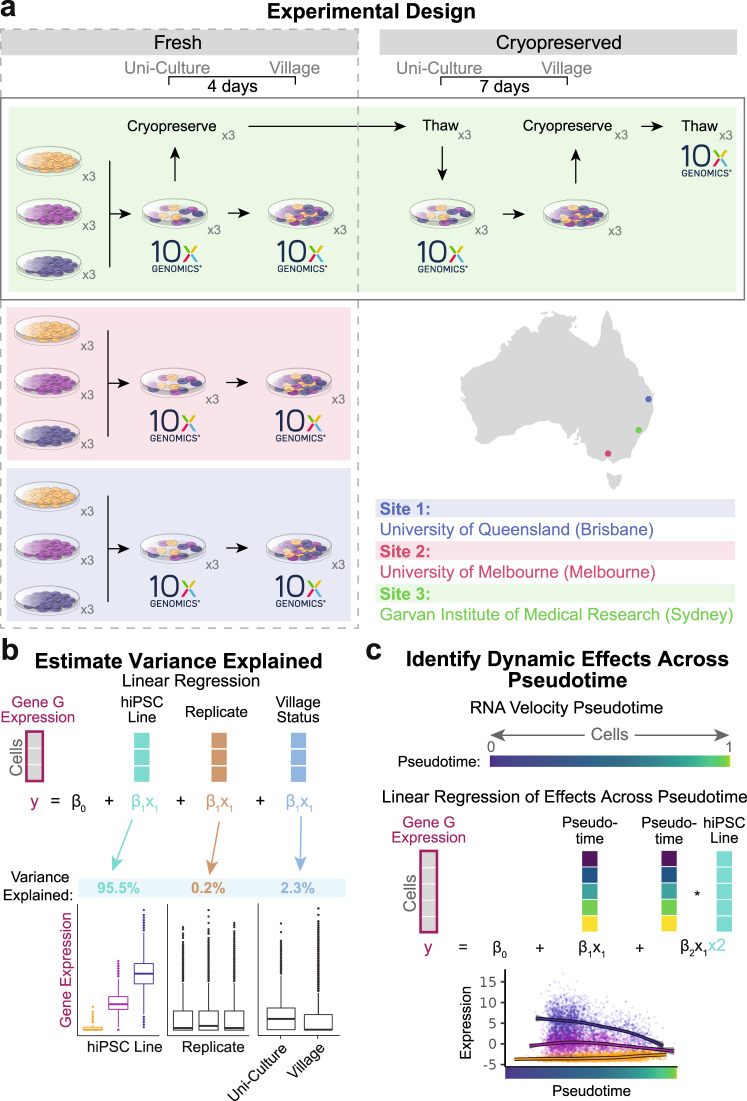
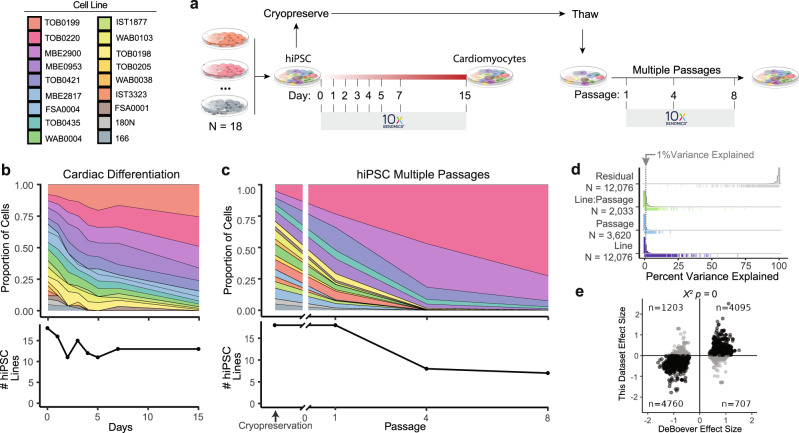
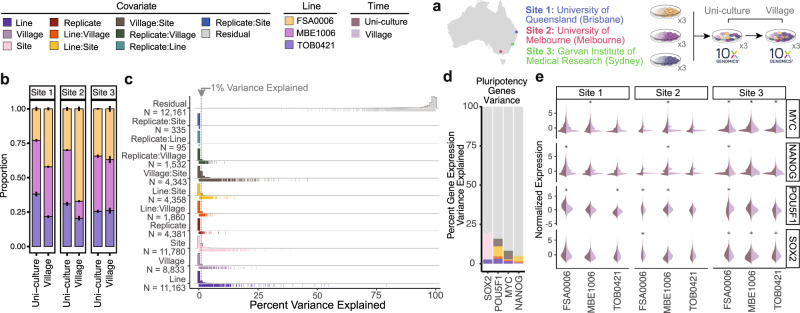
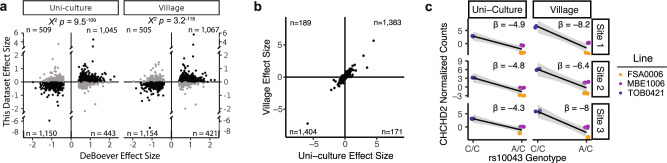
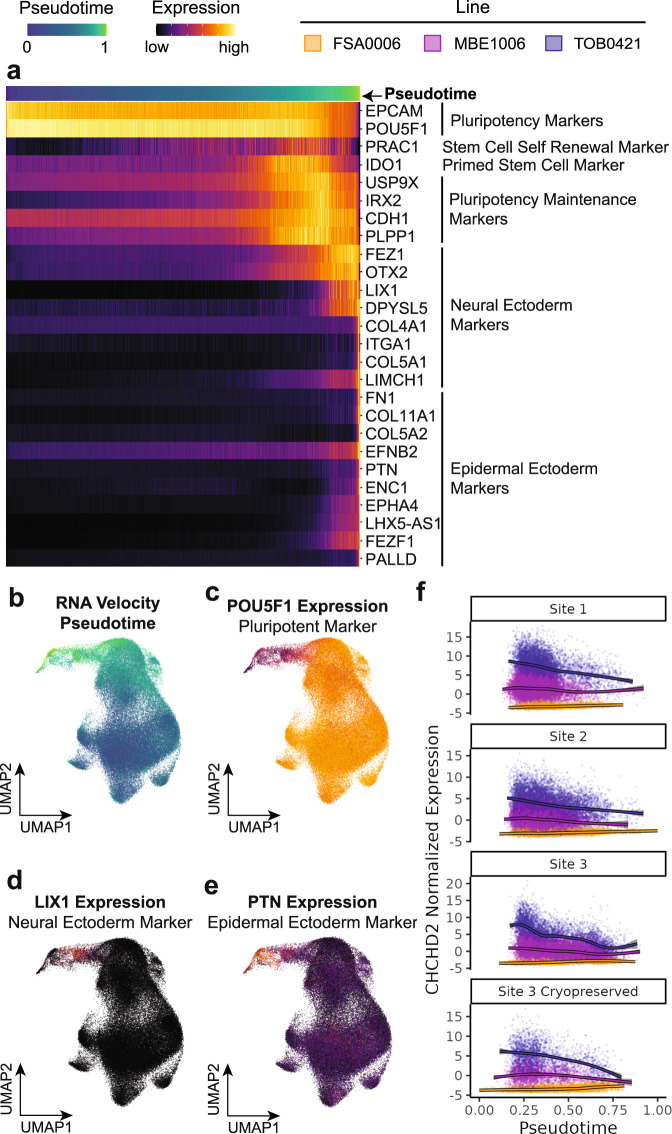
The mechanisms by which DNA alleles contribute to disease risk, drug response, and other human phenotypes are highly context-specific, varying across cell types and different conditions. Human induced pluripotent stem cells are uniquely suited to study these context-dependent effects but cell lines from hundreds or thousands of individuals are required. Village cultures, where multiple induced pluripotent stem lines are cultured and differentiated in a single dish, provide an elegant solution for scaling induced pluripotent stem experiments to the necessary sample sizes required for population-scale studies. Here, we show the utility of village models, demonstrating how cells can be assigned to an induced pluripotent stem line using single-cell sequencing and illustrating that the genetic, epigenetic or induced pluripotent stem line-specific effects explain a large percentage of gene expression variation for many genes. We demonstrate that village methods can effectively detect induced pluripotent stem line-specific effects, including sensitive dynamics of cell states.
DNA 等位基因影响疾病风险、药物反应和其他人类表型的机制高度依赖于具体情况,在不同细胞类型和不同条件下存在差异。人类诱导多能干细胞非常适合研究这些依赖于背景的影响,但需要数百或数千个人的细胞系。村文化(Village cultures)中,在单个培养皿中培养和分化多个诱导多能干细胞系,为将诱导多能干细胞实验扩展到群体研究所需的必要样本量提供了一种优雅的解决方案。在这里,我们展示了村文化模型的实用性,展示了如何使用单细胞测序将细胞分配到诱导多能干细胞系中,并说明了遗传、表观遗传或诱导多能干细胞系特异性效应解释了许多基因的大部分基因表达变异。我们证明了村文化方法可以有效地检测诱导多能干细胞系特异性效应,包括细胞状态的敏感动态。