Hossain M Khalid, Islam Md Aminul, Uddin M Shihab, Paramasivam Prabhu, Hamid Junainah Abd, Alshgari Razan A, Mishra V K, Haldhar Rajesh
Institute of Electronics, Atomic Energy Research Establishment, Bangladesh Atomic Energy Commission, Dhaka, 1349, Bangladesh.
Department of Advanced Energy Engineering Science, Interdisciplinary Graduate School of Engineering Sciences, Kyushu University, Fukuoka, 816-8580, Japan.
Sci Rep. 2024 Dec 3;14(1):30142. doi: 10.1038/s41598-024-81797-x.
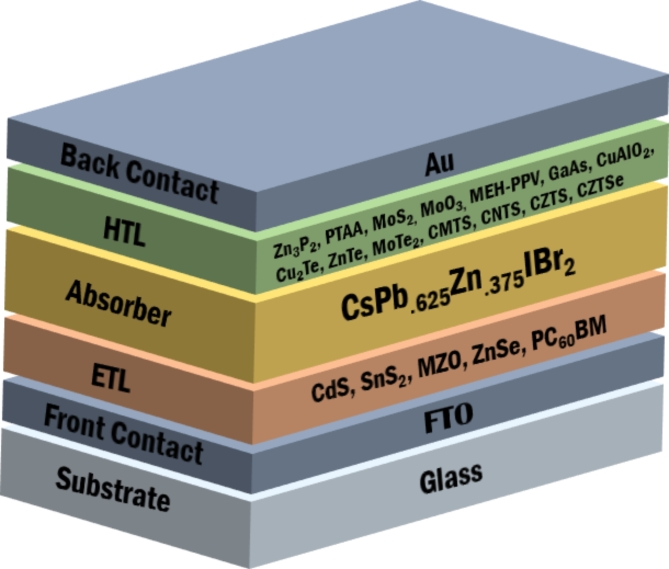
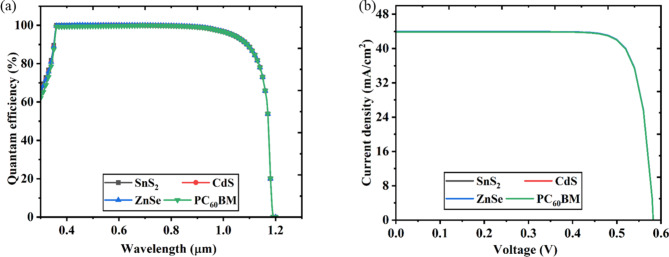
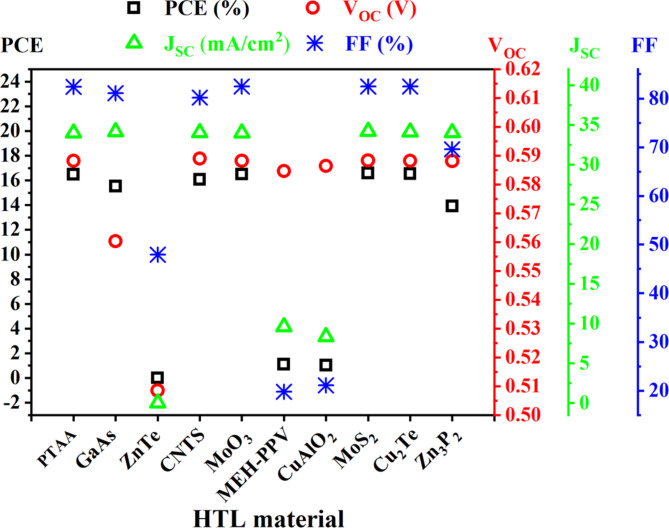
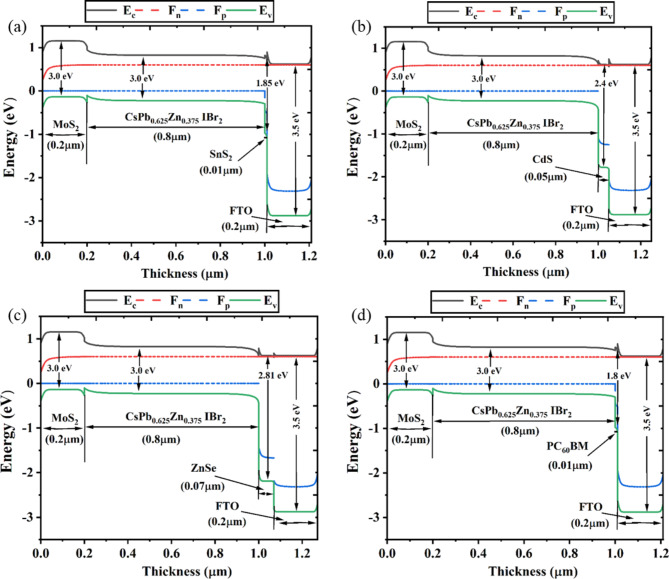
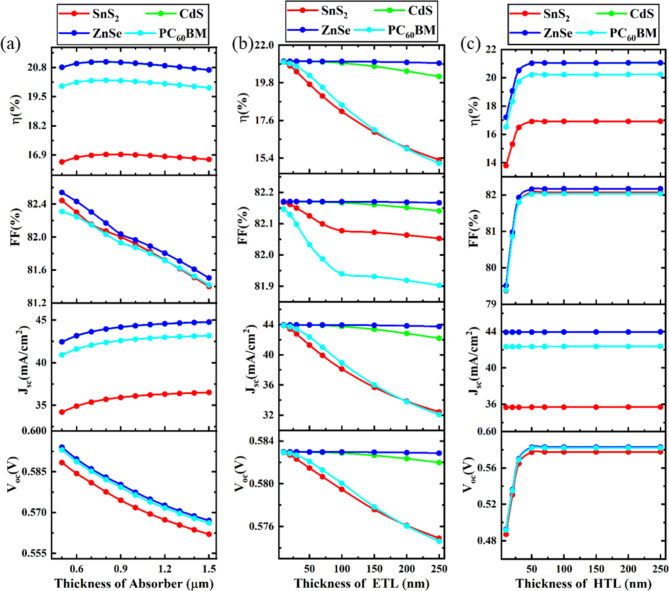
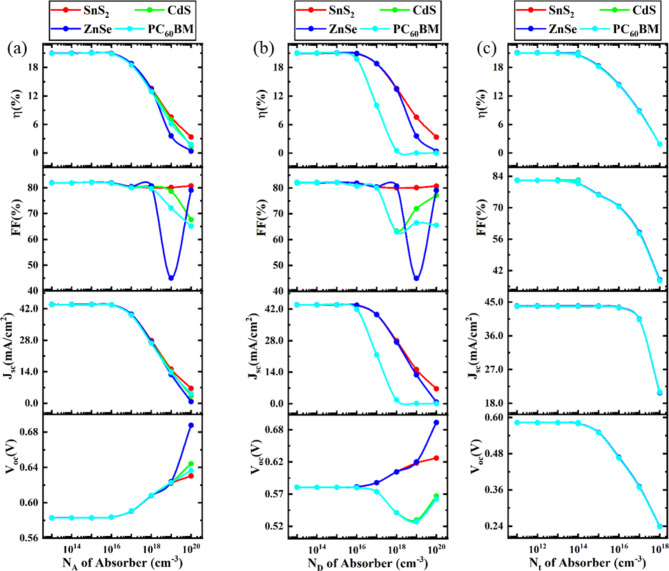
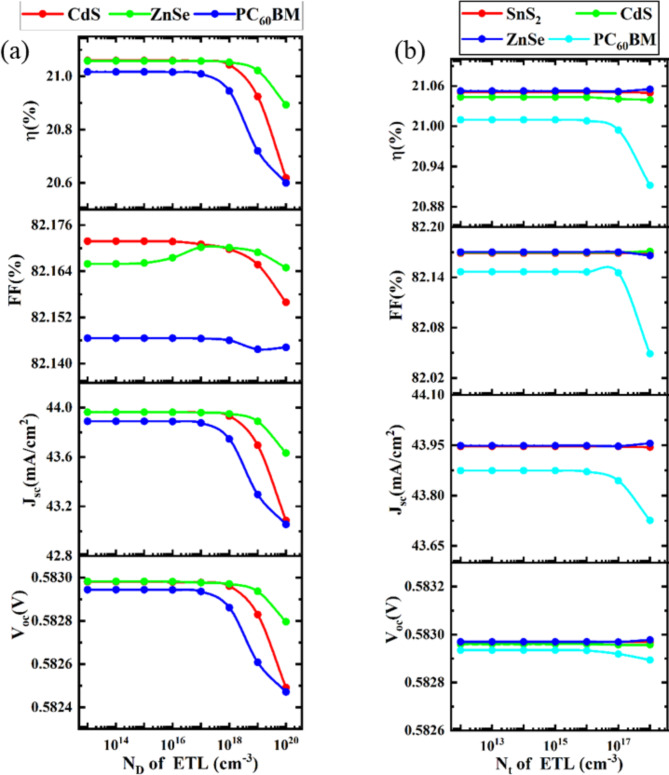
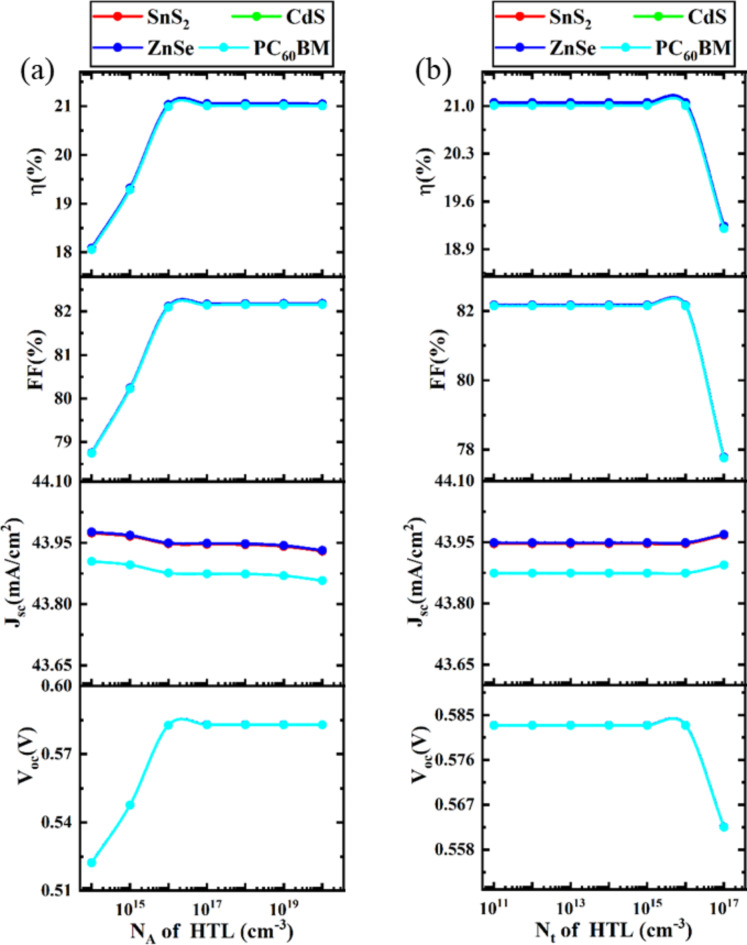
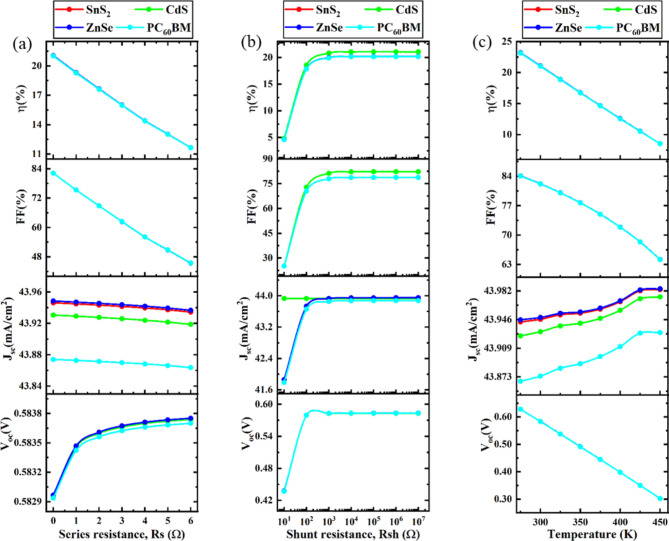
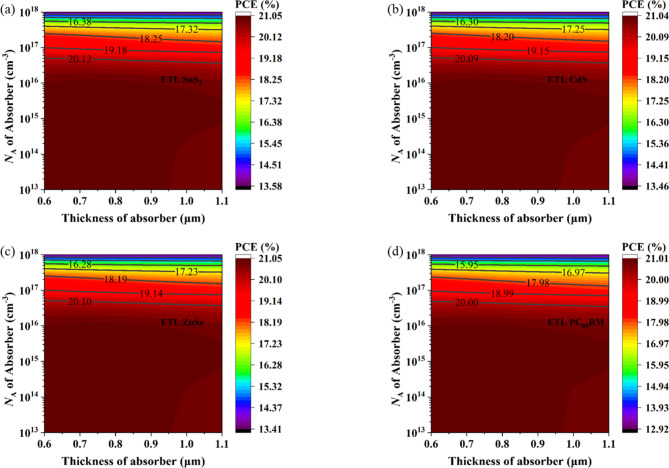
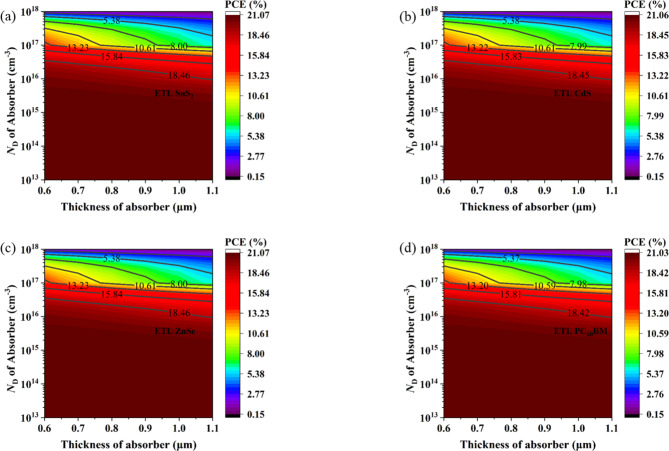
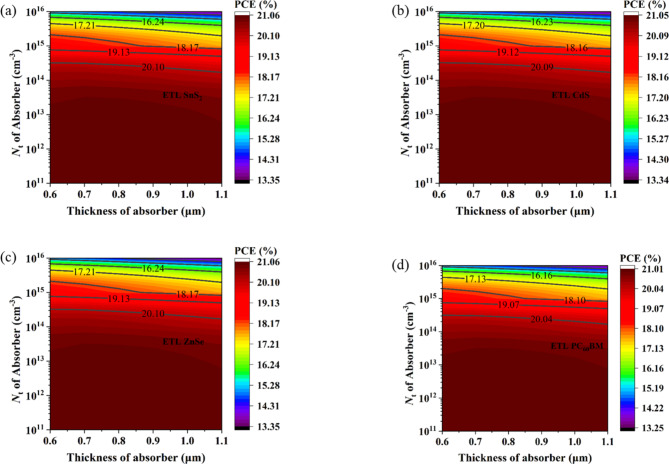
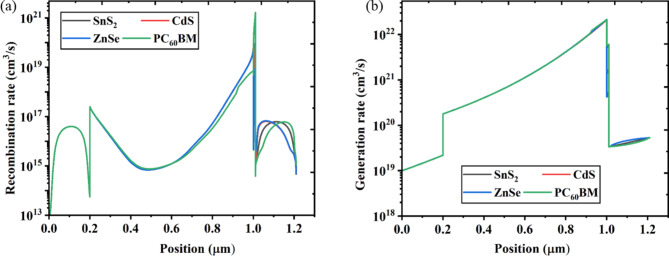
In this work, CsPb.Zn.IBr-based perovskite solar cells (PSCs) are numerically simulated and optimized under ideal lighting conditions using the SCAPS-1D simulator. We investigate how various hole transport layers (HTL) including ZnP, PTAA, MoS MoO MEH-PPV, GaAs, CuAlO, CuTe, ZnTe, MoTe, CMTS, CNTS, CZTS, CZTSe and electron transport layers (ETL) such as CdS, SnS, ZnSe, PCBM interact with the devices' functionality. Following HTL material optimization, a maximum power conversion efficiency (PCE) of 16.59% was observed for the FTO/SnS/CsPb.Zn.IBr/MoS/Au structure, with MoS proving to be a more economical option. The remainder of the investigation is done following the HTL optimization. We study how the performance of the PSC is affected by varying the materials of the ETL and to improve the PCE of the device, we finally optimized the thickness, charge carrier densities, and defect densities of the absorber, ETL, and HTL. In the end, the optimized arrangement produced a V of 0.583 V, a J of 43.95 mA/cm, an FF of 82.17%, and a PCE of 21.05% for the FTO/ZnSe/CsPb.Zn.IBr/MoS/Au structure. We also examine the effects of temperature, shunt resistance, series resistance, generation rate, recombination rate, current-voltage (JV) curve, and quantum efficiency (QE) properties to learn more about the performance of the optimized device. At 300 K, the optimized device provides the highest thermal stability. Our research shows the promise of CsPb.Zn.IBr-based PSCs and offers insightful information for further development and improvement.
在这项工作中,基于CsPb.Zn.IBr的钙钛矿太阳能电池(PSC)在理想光照条件下使用SCAPS-1D模拟器进行了数值模拟和优化。我们研究了包括ZnP、PTAA、MoS、MoO、MEH-PPV、GaAs、CuAlO、CuTe、ZnTe、MoTe、CMTS、CNTS、CZTS、CZTSe在内的各种空穴传输层(HTL)以及诸如CdS、SnS、ZnSe、PCBM等电子传输层(ETL)如何与器件功能相互作用。在对HTL材料进行优化之后,对于FTO/SnS/CsPb.Zn.IBr/MoS/Au结构,观察到最大功率转换效率(PCE)为16.59%,结果表明MoS是一种更经济的选择。在HTL优化之后进行了其余的研究。我们研究了改变ETL材料如何影响PSC的性能,并且为了提高器件的PCE,我们最终优化了吸收层、ETL和HTL的厚度、电荷载流子密度以及缺陷密度。最终,对于FTO/ZnSe/CsPb.Zn.IBr/MoS/Au结构,优化后的排列产生了0.583 V的开路电压、43.95 mA/cm²的短路电流密度、82.17%的填充因子以及21.05%的功率转换效率。我们还研究了温度效应、并联电阻、串联电阻、产生率、复合率、电流-电压(JV)曲线以及量子效率(QE)特性,以更多地了解优化器件的性能。在300 K时,优化后的器件具有最高的热稳定性。我们的研究展示了基于CsPb.Zn.IBr的PSC的前景,并为进一步的开发和改进提供了有见地的信息。