• 文献检索
  • 文档翻译
  • 深度研究
  • 学术资讯
  • Suppr Zotero 插件Zotero 插件
  • 邀请有礼
  • 套餐&价格
  • 历史记录
应用&插件
Suppr Zotero 插件Zotero 插件浏览器插件Mac 客户端Windows 客户端微信小程序
定价
高级版会员购买积分包购买API积分包
服务
文献检索文档翻译深度研究API 文档MCP 服务
关于我们
关于 Suppr公司介绍联系我们用户协议隐私条款
关注我们

Suppr 超能文献

核心技术专利:CN118964589B侵权必究
粤ICP备2023148730 号-1Suppr @ 2026

文献检索

告别复杂PubMed语法,用中文像聊天一样搜索,搜遍4000万医学文献。AI智能推荐,让科研检索更轻松。

立即免费搜索

文件翻译

保留排版,准确专业,支持PDF/Word/PPT等文件格式,支持 12+语言互译。

免费翻译文档

深度研究

AI帮你快速写综述,25分钟生成高质量综述,智能提取关键信息,辅助科研写作。

立即免费体验

使用机器学习算法早期检测儿童和青少年的强迫症、分离焦虑症和注意力缺陷多动障碍。

Early detection of paediatric and adolescent obsessive-compulsive, separation anxiety and attention deficit hyperactivity disorder using machine learning algorithms.

作者信息

Haque Umme Marzia, Kabir Enamul, Khanam Rasheda

机构信息

School of Mathematics, Physics and Computing, University of Southern Queensland, Toowoomba, Australia.

School of Business, University of Southern Queensland, Toowoomba, Australia.

出版信息

Health Inf Sci Syst. 2023 Jul 22;11(1):31. doi: 10.1007/s13755-023-00232-z. eCollection 2023 Dec.

DOI:10.1007/s13755-023-00232-z
PMID:37489154
原文链接:https://pmc.ncbi.nlm.nih.gov/articles/PMC10363094/
Abstract

PURPOSE

Mental health issues of young minds are at the threshold of all development and possibilities. Obsessive-compulsive disorder (OCD), separation anxiety disorder (SAD), and attention deficit hyperactivity disorder (ADHD) are three of the most common mental illness affecting children and adolescents. Several studies have been conducted on approaches for recognising OCD, SAD and ADHD, but their accuracy is inadequate due to limited features and participants. Therefore, the purpose of this study is to investigate the approach using machine learning (ML) algorithms with 1474 features from Australia's nationally representative mental health survey of children and adolescents.

METHODS

Based on the internal cross-validation (CV) score of the Tree-based Pipeline Optimization Tool (TPOTClassifier), the dataset has been examined using three of the most optimal algorithms, including Random Forest (RF), Decision Tree (DT), and Gaussian Naïve Bayes (GaussianNB).

RESULTS

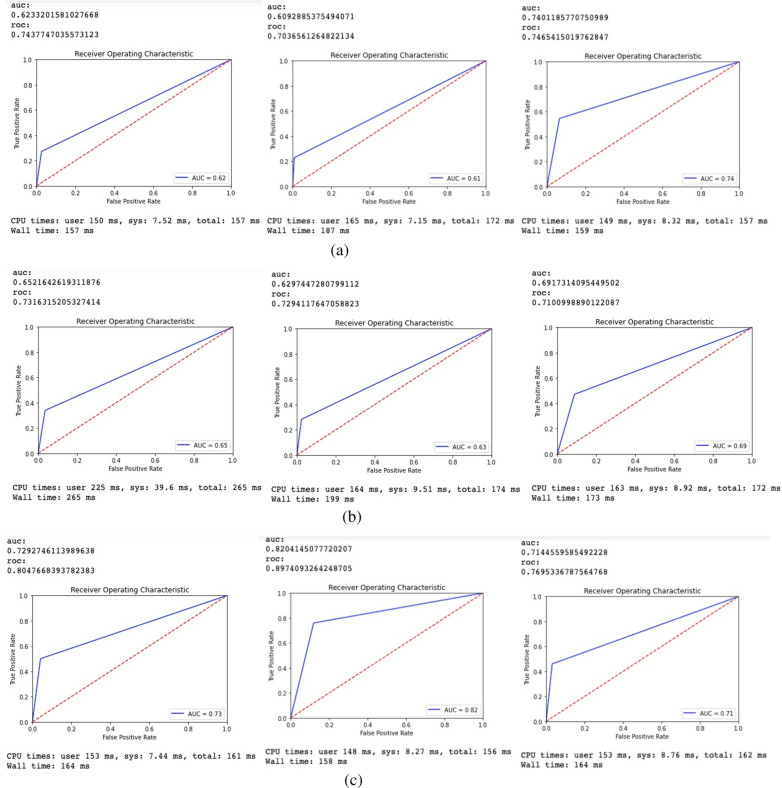
GaussianNB performs well in classifying OCD with 91% accuracy, 76% precision, and 96% specificity as well as in detecting SAD with 79% accuracy, 62% precision, 91% specificity. RF outperformed all other methods in identifying ADHD with 91% accuracy, 94% precision, and 99% specificity.

CONCLUSION

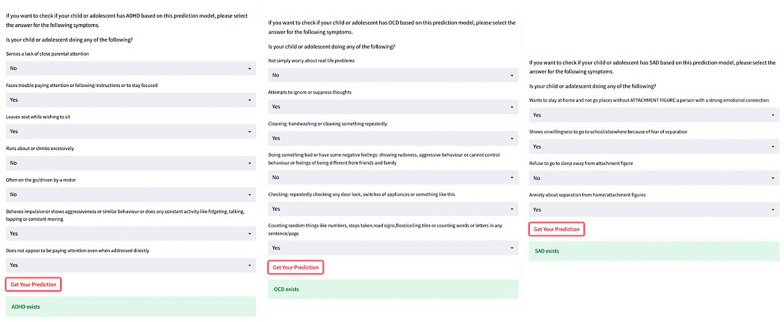
Using Streamlit and Python a web application was developed based on the findings of the analysis. The application will assist parents/guardians and school officials in detecting mental illnesses early in their children and adolescents using signs and symptoms to start the treatment at the earliest convenience.

摘要

目的

青少年的心理健康问题处于所有发展和可能性的开端。强迫症(OCD)、分离焦虑症(SAD)和注意力缺陷多动障碍(ADHD)是影响儿童和青少年的三种最常见的精神疾病。已经针对识别强迫症、分离焦虑症和注意力缺陷多动障碍的方法进行了多项研究,但由于特征和参与者有限,其准确性不足。因此,本研究的目的是使用机器学习(ML)算法,基于澳大利亚具有全国代表性的儿童和青少年心理健康调查中的1474个特征来研究该方法。

方法

基于基于树的管道优化工具(TPOTClassifier)的内部交叉验证(CV)分数,使用三种最优算法对数据集进行了检验,这三种算法包括随机森林(RF)、决策树(DT)和高斯朴素贝叶斯(GaussianNB)。

结果

高斯朴素贝叶斯在对强迫症进行分类时表现良好,准确率为91%,精确率为76%,特异性为96%;在检测分离焦虑症时,准确率为79%,精确率为62%,特异性为91%。随机森林在识别注意力缺陷多动障碍方面优于所有其他方法,准确率为91%,精确率为94%,特异性为99%。

结论

基于分析结果,使用Streamlit和Python开发了一个网络应用程序。该应用程序将帮助家长/监护人以及学校官员利用症状和体征尽早发现儿童和青少年的精神疾病,以便尽早开始治疗。

https://cdn.ncbi.nlm.nih.gov/pmc/blobs/1e8c/10363094/76dc3c3377ba/13755_2023_232_Fig3_HTML.jpg
https://cdn.ncbi.nlm.nih.gov/pmc/blobs/1e8c/10363094/8c350acab306/13755_2023_232_Fig1_HTML.jpg
https://cdn.ncbi.nlm.nih.gov/pmc/blobs/1e8c/10363094/3baef62e5d81/13755_2023_232_Fig2_HTML.jpg
https://cdn.ncbi.nlm.nih.gov/pmc/blobs/1e8c/10363094/76dc3c3377ba/13755_2023_232_Fig3_HTML.jpg
https://cdn.ncbi.nlm.nih.gov/pmc/blobs/1e8c/10363094/8c350acab306/13755_2023_232_Fig1_HTML.jpg
https://cdn.ncbi.nlm.nih.gov/pmc/blobs/1e8c/10363094/3baef62e5d81/13755_2023_232_Fig2_HTML.jpg
https://cdn.ncbi.nlm.nih.gov/pmc/blobs/1e8c/10363094/76dc3c3377ba/13755_2023_232_Fig3_HTML.jpg

相似文献

1
Early detection of paediatric and adolescent obsessive-compulsive, separation anxiety and attention deficit hyperactivity disorder using machine learning algorithms.使用机器学习算法早期检测儿童和青少年的强迫症、分离焦虑症和注意力缺陷多动障碍。
Health Inf Sci Syst. 2023 Jul 22;11(1):31. doi: 10.1007/s13755-023-00232-z. eCollection 2023 Dec.
2
Detection of child depression using machine learning methods.使用机器学习方法检测儿童抑郁症。
PLoS One. 2021 Dec 16;16(12):e0261131. doi: 10.1371/journal.pone.0261131. eCollection 2021.
3
A prospective investigation of impacts of comorbid attention deficit hyperactivity disorder (ADHD) on clinical features and long-term treatment response in adult patients with obsessive-compulsive disorder (OCD).一项前瞻性研究调查了共病注意缺陷多动障碍(ADHD)对成年强迫症(OCD)患者的临床特征和长期治疗反应的影响。
Compr Psychiatry. 2023 Aug;125:152401. doi: 10.1016/j.comppsych.2023.152401. Epub 2023 Jul 13.
4
Adaptive, emotional, and family functioning of children with obsessive-compulsive disorder and comorbid attention deficit hyperactivity disorder.患有强迫症和共病注意力缺陷多动障碍儿童的适应性、情绪及家庭功能。
Am J Psychiatry. 2005 Jun;162(6):1125-32. doi: 10.1176/appi.ajp.162.6.1125.
5
The impact of attention deficit hyperactivity disorder in obsessive-compulsive disorder subjects.注意缺陷多动障碍对强迫症患者的影响。
Depress Anxiety. 2019 Jun;36(6):533-542. doi: 10.1002/da.22898. Epub 2019 Apr 16.
6
Attention-deficit/hyperactivity disorder in children and adolescents with obsessive-compulsive disorder: fact or artifact?患有强迫症的儿童和青少年中的注意力缺陷/多动障碍:是事实还是假象?
J Am Acad Child Adolesc Psychiatry. 2002 Jan;41(1):52-8. doi: 10.1097/00004583-200201000-00011.
7
The Features of Comorbidity of Childhood ADHD in Patients With Obsessive Compulsive Disorder.儿童注意缺陷多动障碍共病强迫症患者的特征。
J Atten Disord. 2020 May;24(7):973-980. doi: 10.1177/1087054716669228. Epub 2016 Sep 20.
8
Clinical expression and treatment response among children with comorbid obsessive compulsive disorder and attention-deficit/hyperactivity disorder.共病强迫症和注意力缺陷多动障碍儿童的临床表型及治疗反应
J Affect Disord. 2020 Apr 1;266:585-594. doi: 10.1016/j.jad.2020.01.144. Epub 2020 Jan 31.
9
Tourette syndrome-associated psychopathology: roles of comorbid attention-deficit hyperactivity disorder and obsessive-compulsive disorder.抽动障碍相关精神病理学:共患注意缺陷多动障碍和强迫症的作用。
J Dev Behav Pediatr. 2009 Oct;30(5):413-9. doi: 10.1097/dbp.0b013e3181ba0f89.
10
Children and adolescents with obsessive-compulsive disorder and comorbid attention-deficit/hyperactivity disorder: preliminary results of a prospective follow-up study.患有强迫症和共病注意力缺陷/多动障碍的儿童和青少年:一项前瞻性随访研究的初步结果。
J Neural Transm (Vienna). 2008;115(2):187-90. doi: 10.1007/s00702-007-0841-2. Epub 2008 Jan 16.

引用本文的文献

1
Obsessive-compulsive disorder detection using ensemble of scalp EEG-based convolutional neural network.基于头皮脑电图的卷积神经网络集成用于强迫症检测。
Phys Eng Sci Med. 2025 Aug 28. doi: 10.1007/s13246-025-01627-w.
2
Artificial intelligence for children with attention deficit/hyperactivity disorder: a scoping review.人工智能在注意力缺陷多动障碍儿童中的应用:一项范围综述。
Exp Biol Med (Maywood). 2025 Apr 24;250:10238. doi: 10.3389/ebm.2025.10238. eCollection 2025.
3
Spatial and frequency domain-based feature fusion for accurate detection of schizophrenia using AI-driven approaches.

本文引用的文献

1
Associations Between the Severity of Obsessive-Compulsive Disorder and Vocal Features in Children and Adolescents: Protocol for a Statistical and Machine Learning Analysis.儿童和青少年强迫症严重程度与嗓音特征之间的关联:统计与机器学习分析方案
JMIR Res Protoc. 2022 Oct 28;11(10):e39613. doi: 10.2196/39613.
2
Exploiting pretrained CNN models for the development of an EEG-based robust BCI framework.利用预训练的卷积神经网络(CNN)模型开发基于脑电图(EEG)的稳健脑机接口(BCI)框架。
Comput Biol Med. 2022 Apr;143:105242. doi: 10.1016/j.compbiomed.2022.105242. Epub 2022 Jan 25.
3
Detection of child depression using machine learning methods.
基于空间和频域的特征融合,采用人工智能驱动方法准确检测精神分裂症。
Health Inf Sci Syst. 2025 Apr 12;13(1):32. doi: 10.1007/s13755-025-00345-7. eCollection 2025 Dec.
4
Predicting the Risk of Loneliness in Children and Adolescents: A Machine Learning Study.预测儿童和青少年孤独感的风险:一项机器学习研究。
Behav Sci (Basel). 2024 Oct 15;14(10):947. doi: 10.3390/bs14100947.
5
Personalized Prediction of Long-Term Renal Function Prognosis Following Nephrectomy Using Interpretable Machine Learning Algorithms: Case-Control Study.基于可解释机器学习算法的肾切除术后长期肾功能预后个体化预测:病例对照研究。
JMIR Med Inform. 2024 Sep 20;12:e52837. doi: 10.2196/52837.
6
Individualized prediction models in ADHD: a systematic review and meta-regression.注意缺陷多动障碍的个体化预测模型:一项系统评价与meta回归分析
Mol Psychiatry. 2024 Dec;29(12):3865-3873. doi: 10.1038/s41380-024-02606-5. Epub 2024 May 23.
使用机器学习方法检测儿童抑郁症。
PLoS One. 2021 Dec 16;16(12):e0261131. doi: 10.1371/journal.pone.0261131. eCollection 2021.
4
Prediction of illness remission in patients with Obsessive-Compulsive Disorder with supervised machine learning.基于监督式机器学习的强迫症患者疾病缓解预测。
J Affect Disord. 2022 Jan 1;296:117-125. doi: 10.1016/j.jad.2021.09.042. Epub 2021 Sep 16.
5
Multimodal MR Images-Based Diagnosis of Early Adolescent Attention-Deficit/Hyperactivity Disorder Using Multiple Kernel Learning.基于多模态磁共振图像的多内核学习在青少年早期注意力缺陷多动障碍诊断中的应用
Front Neurosci. 2021 Sep 14;15:710133. doi: 10.3389/fnins.2021.710133. eCollection 2021.
6
A Novel Knowledge Distillation-Based Feature Selection for the Classification of ADHD.一种基于知识蒸馏的用于注意缺陷多动障碍分类的新型特征选择方法。
Biomolecules. 2021 Jul 23;11(8):1093. doi: 10.3390/biom11081093.
7
A Robust Machine Learning Based Framework for the Automated Detection of ADHD Using Pupillometric Biomarkers and Time Series Analysis.基于机器学习的鲁棒框架,用于使用瞳孔计生物标志物和时间序列分析自动检测 ADHD。
Sci Rep. 2021 Aug 12;11(1):16370. doi: 10.1038/s41598-021-95673-5.
8
Can the MMPI Predict Adult ADHD? An Approach Using Machine Learning Methods.明尼苏达多项人格测验(MMPI)能预测成人注意力缺陷多动障碍(ADHD)吗?一种使用机器学习方法的途径。
Diagnostics (Basel). 2021 May 28;11(6):976. doi: 10.3390/diagnostics11060976.
9
Identifying CBT non-response among OCD outpatients: A machine-learning approach.识别强迫症门诊患者中认知行为疗法无反应者:一种机器学习方法。
Psychother Res. 2021 Jan;31(1):52-62. doi: 10.1080/10503307.2020.1839140. Epub 2020 Nov 11.
10
A New Framework for Automatic Detection of Patients With Mild Cognitive Impairment Using Resting-State EEG Signals.基于静息态 EEG 信号的轻度认知障碍患者自动检测新框架
IEEE Trans Neural Syst Rehabil Eng. 2020 Sep;28(9):1966-1976. doi: 10.1109/TNSRE.2020.3013429. Epub 2020 Jul 31.