Nouri Mehran, Shateri Zainab, Vali Mohebat, Faghih Shiva
Department of Community Nutrition, School of Nutrition and Food Sciences, Shiraz University of Medical Sciences, Shiraz, Iran.
Student Research Committee, Shiraz University of Medical Sciences, Shiraz, Iran.
BMC Nutr. 2023 Aug 17;9(1):99. doi: 10.1186/s40795-023-00756-3.
The current research aimed to evaluate the relationship between fruit, vegetable (FV), and dairy consumption with the odds of developing hypertension based on nationwide Stepwise approach to surveillance (STEPS) data in Iran.
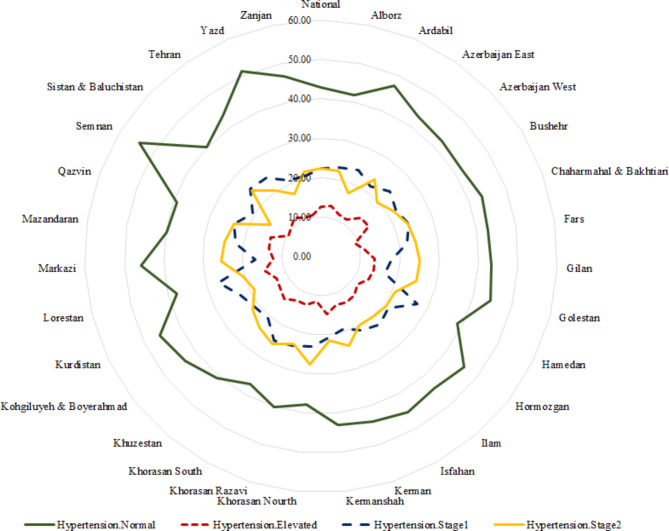
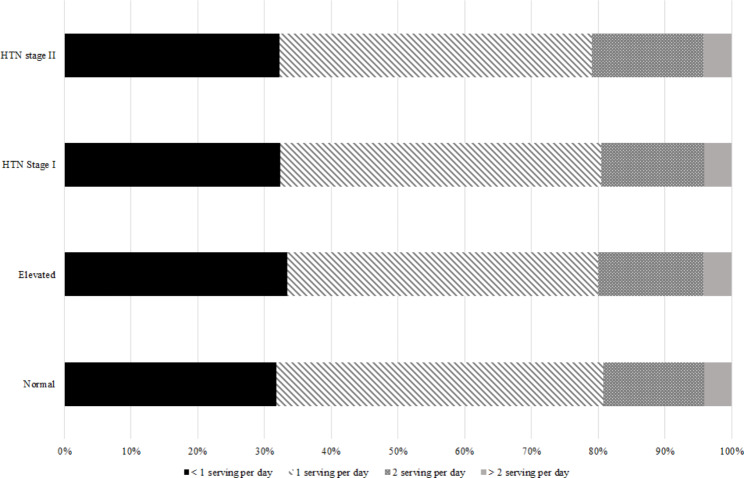
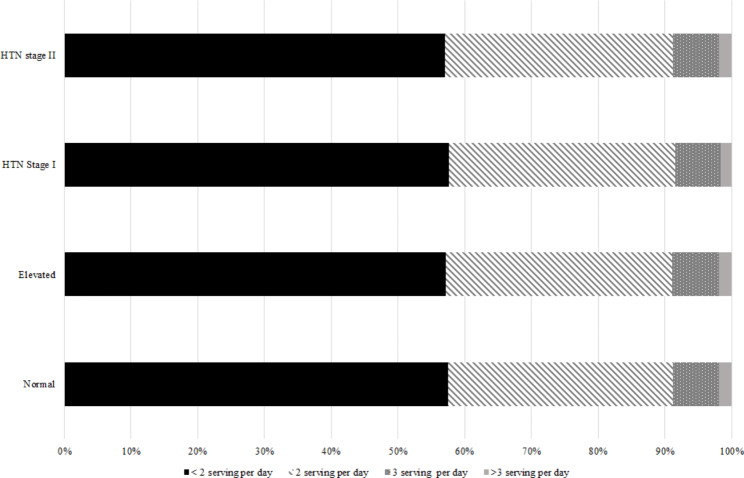
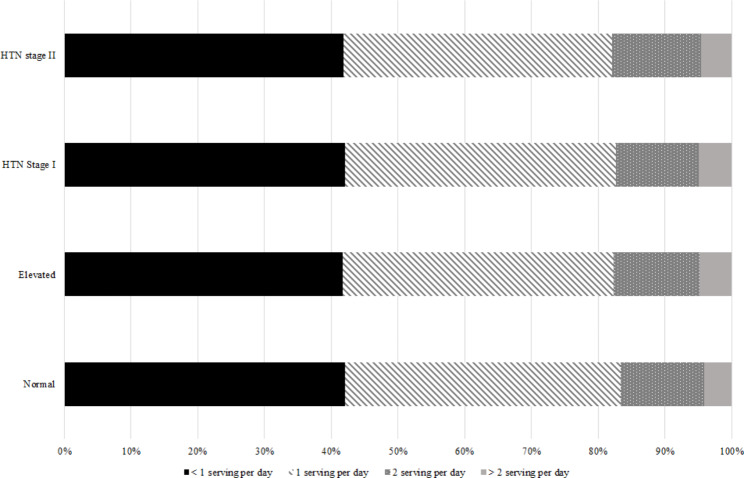
This cross-sectional study was accomplished by the research center of non-communicable diseases (NCDs) in Tehran. In total, 29,378 individuals' data were analyzed. Participants were classified into normal, elevated BP, stage I, and stage II hypertension according to systolic blood pressure (SBP) and diastolic blood pressure (DBP) examinations. Based on the STEPS questionnaire, the consumption of FVs and dairy products was evaluated. Multinomial logistic regression was applied to assess the relationship between the consumption of FVs and dairy products with hypertension.
The findings revealed that only fruit consumption (≥ 2 servings/day) was negatively related to stage I hypertension (odds ratio (OR) = 0.81; 95% confidence interval (CI): 0.69-0.95) in two servings per day and OR = 0.81; 95% CI: 0.68-0.96 in > two servings per day) in the adjusted model. There was no significant relationship between consuming vegetables and dairy products with elevated BP and hypertension.
Our study showed that increasing fruit consumption was related to reducing hypertension odds. Regarding the consumption of dairy products and vegetables, no significant relationship was found with the odds of hypertension. More studies, especially cohorts, are needed to evaluate the impacts of FV and dairy products on the risk of hypertension.
当前研究旨在基于伊朗全国性逐步监测(STEPS)数据,评估水果、蔬菜(FV)和乳制品摄入量与患高血压几率之间的关系。
这项横断面研究由德黑兰非传染性疾病(NCDs)研究中心完成。总共分析了29378人的数据。根据收缩压(SBP)和舒张压(DBP)检查结果,将参与者分为正常、血压升高、I期和II期高血压组。基于STEPS问卷,评估FV和乳制品的摄入量。采用多项逻辑回归分析评估FV和乳制品摄入量与高血压之间的关系。
研究结果显示,在调整模型中,仅水果摄入量(≥2份/天)与I期高血压呈负相关(每天2份时,比值比(OR)=0.81;95%置信区间(CI):0.69 - 0.95;每天超过2份时,OR = 0.81;95% CI:0.68 - 0.96)。蔬菜和乳制品摄入量与血压升高及高血压之间无显著关系。
我们的研究表明,增加水果摄入量与降低患高血压几率有关。关于乳制品和蔬菜的摄入量,未发现与患高血压几率有显著关系。需要更多研究,尤其是队列研究,来评估FV和乳制品对高血压风险的影响。