Li Kan, Wu Jiawei, Xu Shuang, Li Xueying, Zhang Yanhe, Gao Xue-Jiao
College of Veterinary Medicine, Northeast Agricultural University , Harbin, Heilongjiang Province, China.
Heilongjiang Key Laboratory for Laboratory Animals and Comparative Medicine, Northeast Agricultural University , Harbin, China.
Microbiol Spectr. 2023 Aug 18;11(5):e0191423. doi: 10.1128/spectrum.01914-23.
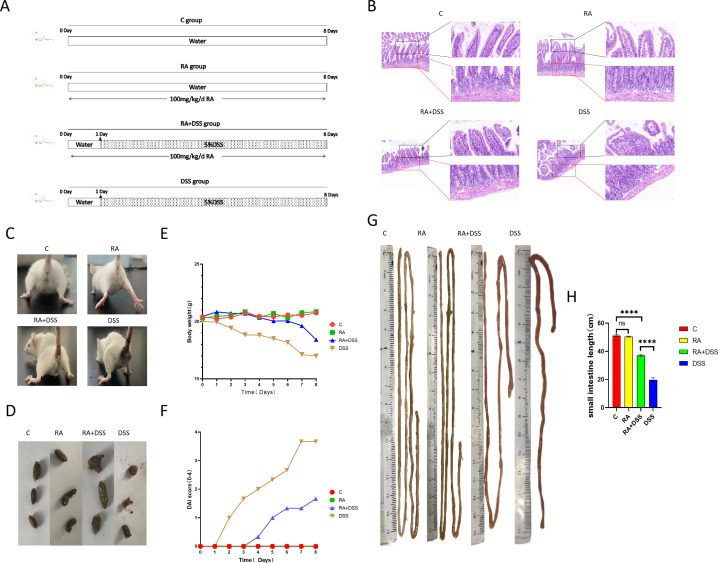
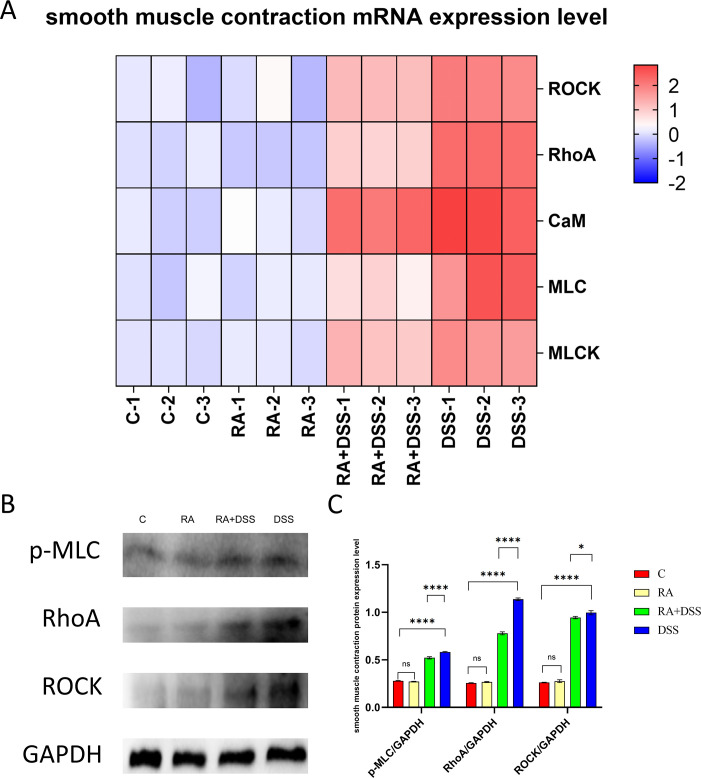
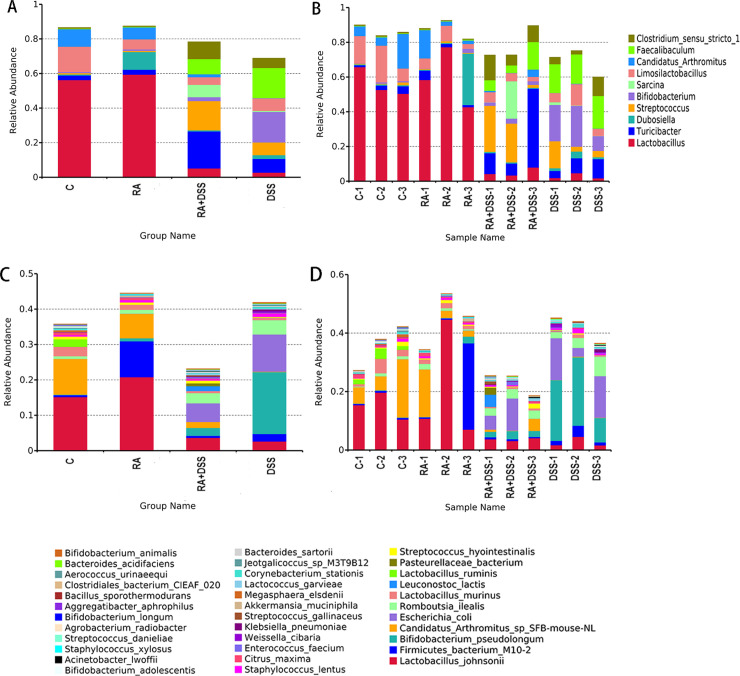
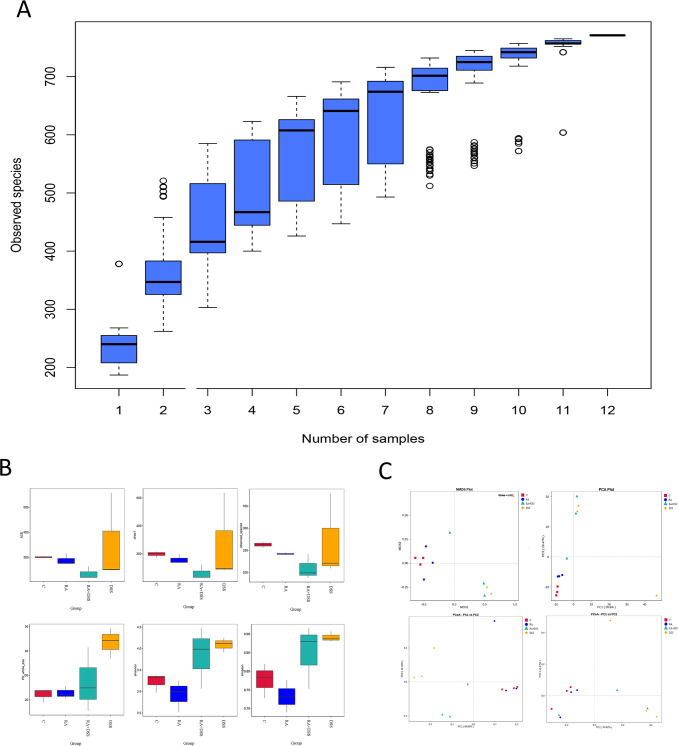
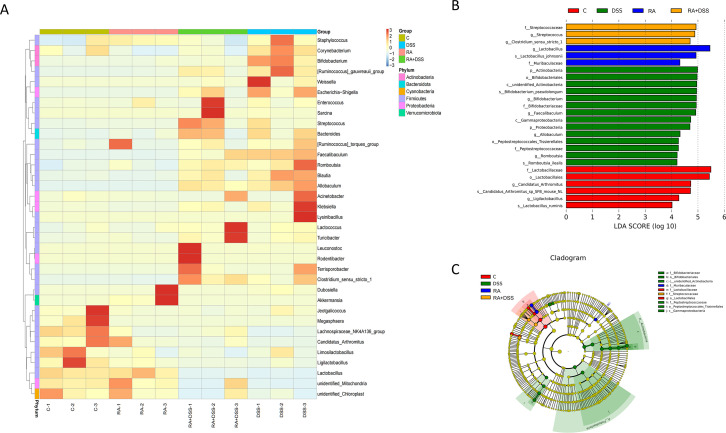
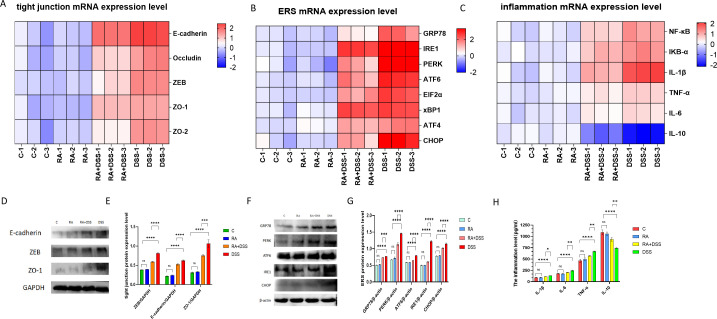
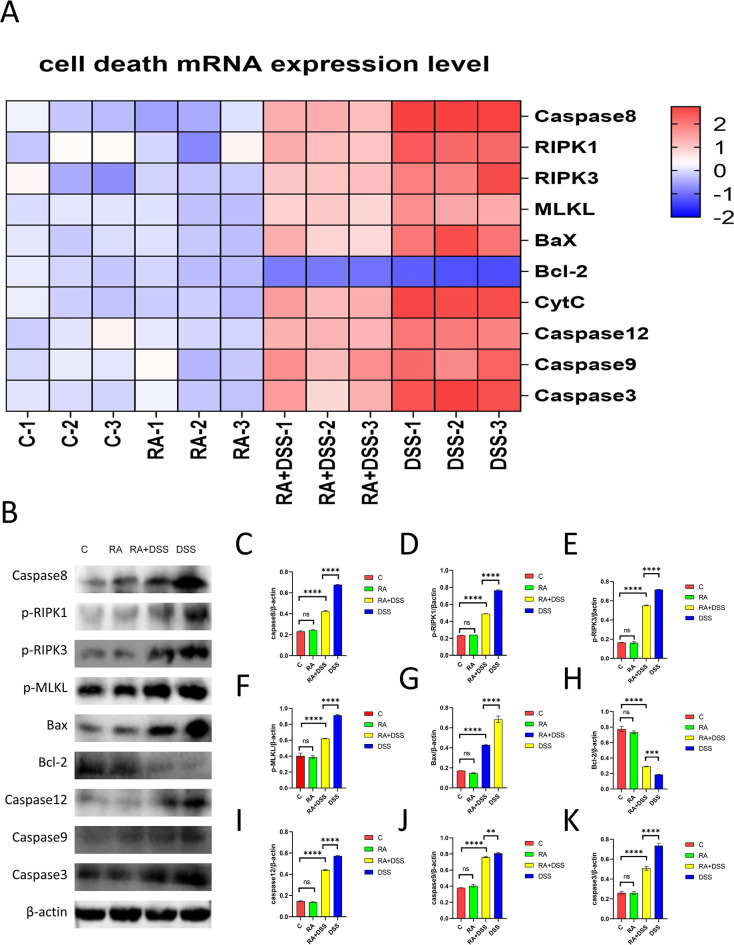
The host-bacterial interactions play the key role in inflammatory bowel disease (IBD). Dysbiosis of the intestinal flora can lead to pathological changes in the intestine. Rosmarinic acid (RA) is a natural phenolic acid compound with antioxidant, anti-cancer, anti-inflammatory, anti-apoptotic, anti-fibrotic, and anti-bacterial activities that has a palliative effect on acute IBD. We have established an model for mice. Histological staining was performed to directly observe RA alterations in the intestinal tract. The alteration of RA on mouse intestinal flora was observed by 16S rRNA high-throughput sequencing, and the effect of RA on intestinal mechanism of action was detected by qPCR and western blot. The results showed that RA had a significant protective effect on the intestine. RA upregulated the abundance of and and downregulated the abundance of , and . RA downregulated the expressions of ROCK, RhoA, CaM, MLC, MLCK, ZEB1, ZO-1, ZO-2, occludin, E-cadherin, IL-1β, IL-6, TNF-α, GRP78, PERK, IRE1, ATF6, CHOP, Caspase12, Caspase9, Caspase3, Bax, Cytc, RIPK1, RIPK3, MLKL, and upregulated the expression of IL-10 and Bcl-2. These results displayed that RA inhibited the inflammation, which is caused by tight junction damage, by repairing intestinal flora dysbiosis, relieved endoplasmic reticulum stress, inhibited cell death, and corrected smooth muscle contractile dysregulation. The results of this study revealed RA could have a protective effect on the small intestine of mice by regulating intestinal flora. IMPORTANCE Inflammatory bowel disease (IBD) is a chronic, relapsing, remitting disorder of the gastrointestinal system. In this study, we investigated the protective effects of rosmarinic acid on the intestinal tract. The results showed that RA was effective in reducing inflammatory damage, endoplasmic reticulum stress, smooth muscle contraction abnormalities, and regulating intestinal flora disorders.
宿主-细菌相互作用在炎症性肠病(IBD)中起关键作用。肠道菌群失调可导致肠道发生病理变化。迷迭香酸(RA)是一种天然酚酸化合物,具有抗氧化、抗癌、抗炎、抗凋亡、抗纤维化和抗菌活性,对急性IBD有缓解作用。我们建立了小鼠模型。进行组织学染色以直接观察肠道中RA的变化。通过16S rRNA高通量测序观察RA对小鼠肠道菌群的改变,并通过qPCR和蛋白质印迹法检测RA对肠道作用机制的影响。结果表明,RA对肠道有显著的保护作用。RA上调了[具体菌群名称1]和[具体菌群名称2]的丰度,下调了[具体菌群名称3]、[具体菌群名称4]和[具体菌群名称5]的丰度。RA下调了ROCK、RhoA、CaM、MLC、MLCK、ZEB1、ZO-1、ZO-2、闭合蛋白、E-钙黏蛋白、IL-1β、IL-6、TNF-α、GRP78、PERK、IRE1、ATF6、CHOP、Caspase12、Caspase9、Caspase3、Bax、Cytc、RIPK1、RIPK3、MLKL的表达,并上调了IL-10和Bcl-2的表达。这些结果表明,RA通过修复肠道菌群失调抑制了由紧密连接损伤引起的炎症,减轻了内质网应激,抑制了细胞死亡,并纠正了平滑肌收缩失调。本研究结果显示,RA可通过调节肠道菌群对小鼠小肠起到保护作用。重要性炎症性肠病(IBD)是一种慢性、复发性、缓解性的胃肠系统疾病。在本研究中,我们研究了迷迭香酸对肠道的保护作用。结果表明,RA在减轻炎症损伤、内质网应激、平滑肌收缩异常以及调节肠道菌群紊乱方面是有效的。