Lee Jocelyn C, Neonaki Marina, Alexopoulos Athanasios, Varzakas Theodoros
Independent Researcher, Benicia, CA 94510, USA.
Department Food Science and Technology, University of the Peloponnese, GR24100 Kalamata, Greece.
Foods. 2023 Aug 26;12(17):3218. doi: 10.3390/foods12173218.
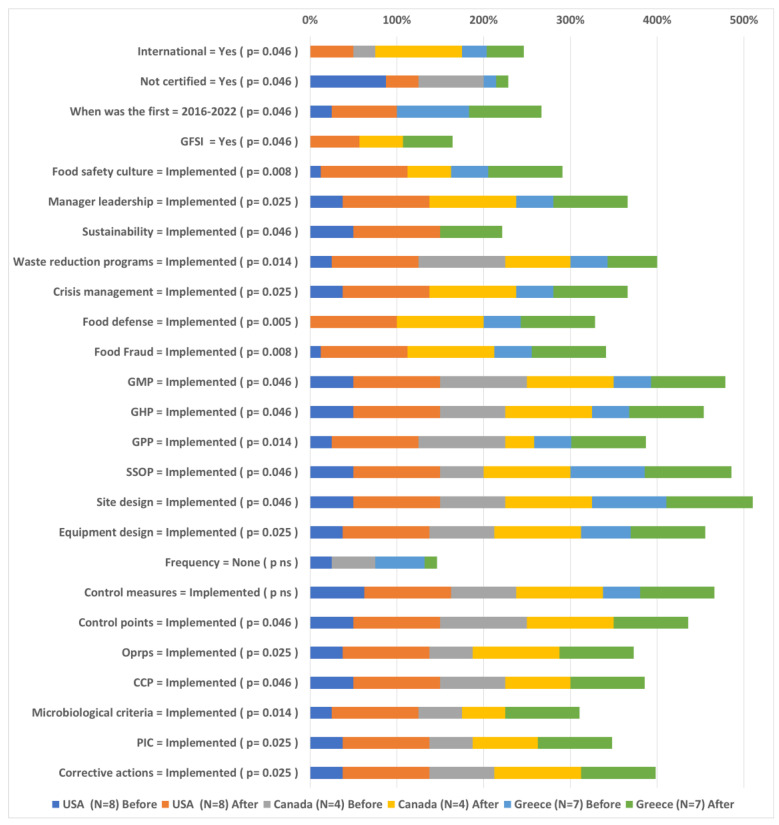
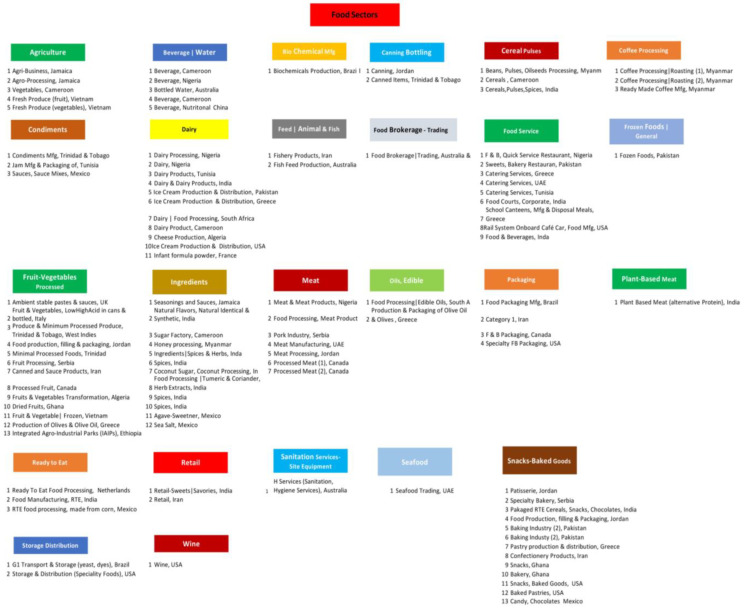
Global food safety and security are key principles to be followed in the context of the implementation of food safety management systems. The objective of this paper is to assess the contemporary developments of Food Safety Management System standards (FSMS) worldwide and to identify the primary constraints and advantages associated with their implementation by small and medium-sized enterprises across different regions. The effectiveness of these systems has also been evaluated. 116 case studies have been employed across developing and developed regions worldwide across 27 primary food sectors. After the implementation of FSMS, there was a significant increase in the percentage of companies that have implemented the international FSMS, both in developed (16.7% to 63.9%) and developing countries (26.6% to 48.1%). Certification has also increased from 34.2% to 59.6% in the total sample, namely from 33.3% to 61.1% in developed countries and from 34.6% to 59.0% in developing countries. There was a significant increase in medium vs. small company size (57.1% to 62.3%, = 0.046), only in developing countries. Food safety culture and manager leadership implementation were increased to over 80% after FSMS implementation in both developed and developing countries ( < 0.001). Training, resources, and technology adequacy were also increased in all companies ( < 0.001).
全球食品安全与保障是实施食品安全管理体系时应遵循的关键原则。本文的目的是评估全球食品安全管理体系标准(FSMS)的当代发展情况,并确定不同地区中小企业实施这些标准的主要制约因素和优势。还对这些体系的有效性进行了评估。在全球发展中地区和发达地区的27个主要食品部门开展了116个案例研究。实施FSMS后,实施国际FSMS的公司比例在发达国家(从16.7%增至63.9%)和发展中国家(从26.6%增至48.1%)均显著增加。在总样本中,认证比例也从34.2%增至59.6%,即发达国家从33.3%增至61.1%,发展中国家从34.6%增至59.0%。仅在发展中国家,中型企业与小型企业相比(从57.1%增至62.3%,P = 0.046)有显著增加。在发达国家和发展中国家,FSMS实施后食品安全文化和管理者领导力的实施比例均增至80%以上(P < 0.001)。所有公司的培训、资源和技术充足性也有所提高(P < 0.001)。