Center for Rehabilitation Medicine, Cancer Center, Department of Orthopedics, Zhejiang Provincial People's Hospital Affiliated to Qingdao University, Qingdao, Shandong, People's Republic of China.
Center for Rehabilitation Medicine, Cancer Center, Department of Orthopedics, Zhejiang Provincial People's Hospital, Affiliated People's Hospital, Hangzhou Medical College, Hangzhou, 310014, Zhejiang, People's Republic of China.
Sci Rep. 2023 Oct 25;13(1):18301. doi: 10.1038/s41598-023-45438-z.
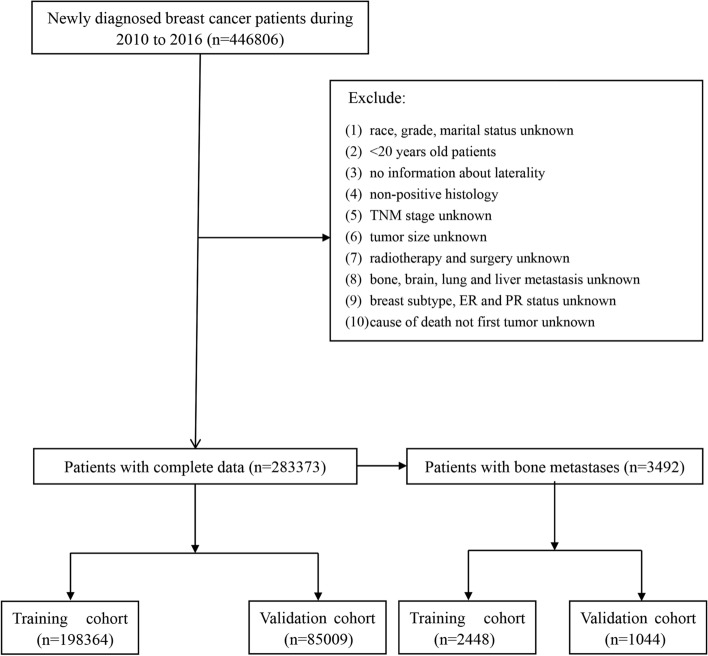
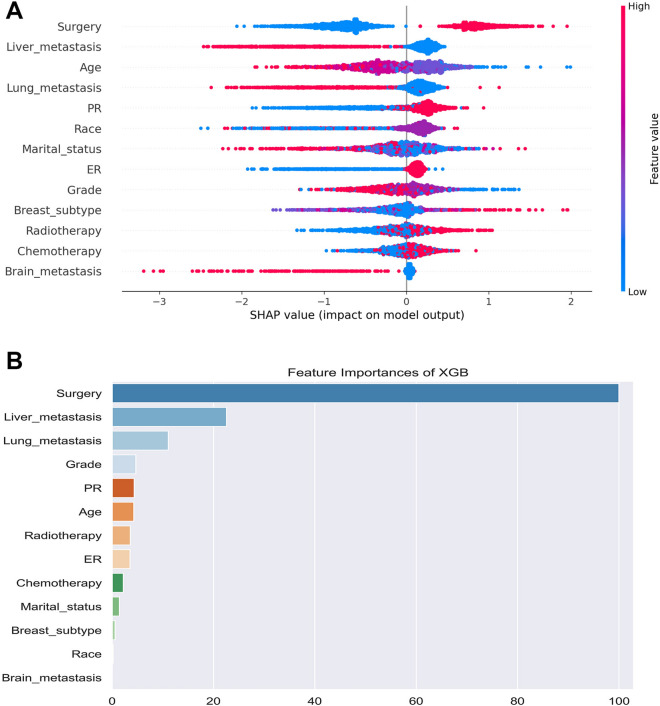
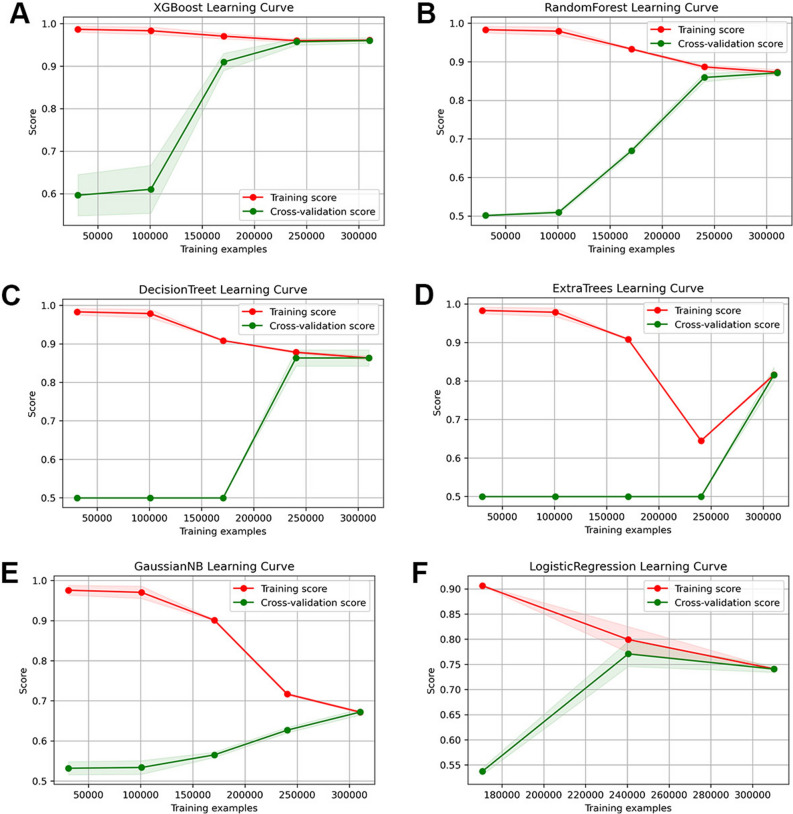
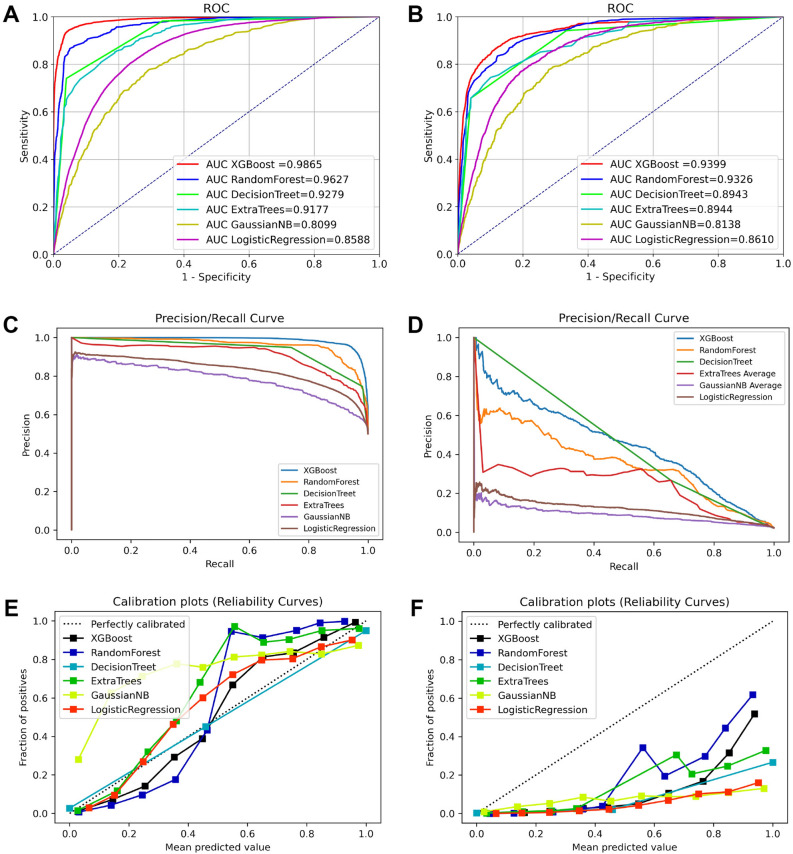
This study aimed at establishing more accurate predictive models based on novel machine learning algorithms, with the overarching goal of providing clinicians with effective decision-making assistance. We retrospectively analyzed the breast cancer patients recorded in the Surveillance, Epidemiology, and End Results (SEER) database from 2010 to 2016. Multivariable logistic regression analyses were used to identify risk factors for bone metastases in breast cancer, whereas Cox proportional hazards regression analyses were used to identify prognostic factors for breast cancer with bone metastasis (BCBM). Based on the identified risk and prognostic factors, we developed diagnostic and prognostic models that incorporate six machine learning classifiers. We then used the area under the receiver operating characteristic (ROC) curve (AUC), learning curve, precision curve, calibration plot, and decision curve analysis to evaluate performance of the machine learning models. Univariable and multivariable logistic regression analyses showed that bone metastases were significantly associated with age, race, sex, grade, T stage, N stage, surgery, radiotherapy, chemotherapy, tumor size, brain metastasis, liver metastasis, lung metastasis, breast subtype, and PR. Univariate and multivariate Cox regression analyses revealed that age, race, marital status, grade, surgery, radiotherapy, chemotherapy, brain metastasis, liver metastasis, lung metastasis, breast subtype, ER, and PR were closely associated with the prognosis of BCBM. Among the six machine learning models, the XGBoost algorithm predicted the most accurate results (Diagnostic model AUC = 0.98; Prognostic model AUC = 0.88). According to the Shapley additive explanations (SHAP), the most critical feature of the diagnostic model was surgery, followed by N stage. Interestingly, surgery was also the most critical feature of prognostic model, followed by liver metastasis. Based on the XGBoost algorithm, we could effectively predict the diagnosis and survival of bone metastasis in breast cancer and provide targeted references for the treatment of BCBM patients.
本研究旨在基于新型机器学习算法建立更准确的预测模型,为临床医生提供有效的决策辅助。我们回顾性分析了 2010 年至 2016 年 SEER 数据库中记录的乳腺癌患者。使用多变量逻辑回归分析确定乳腺癌骨转移的危险因素,使用 Cox 比例风险回归分析确定乳腺癌伴骨转移(BCBM)的预后因素。基于确定的风险和预后因素,我们开发了包含六个机器学习分类器的诊断和预后模型。然后,我们使用接收者操作特征曲线(ROC)下面积(AUC)、学习曲线、精度曲线、校准图和决策曲线分析来评估机器学习模型的性能。单变量和多变量逻辑回归分析表明,骨转移与年龄、种族、性别、分级、T 分期、N 分期、手术、放疗、化疗、肿瘤大小、脑转移、肝转移、肺转移、乳腺亚型、PR 显著相关。单变量和多变量 Cox 回归分析显示,年龄、种族、婚姻状况、分级、手术、放疗、化疗、脑转移、肝转移、肺转移、乳腺亚型、ER 和 PR 与 BCBM 的预后密切相关。在六个机器学习模型中,XGBoost 算法预测结果最准确(诊断模型 AUC=0.98;预后模型 AUC=0.88)。根据 Shapley 加法解释(SHAP),诊断模型最重要的特征是手术,其次是 N 分期。有趣的是,手术也是预后模型最重要的特征,其次是肝转移。基于 XGBoost 算法,我们可以有效地预测乳腺癌骨转移的诊断和生存情况,为 BCBM 患者的治疗提供有针对性的参考。