Graduate Program in Ecology, Federal University of Santa Catarina, Florianopolis, Brazil.
Geosciences Barcelona, Spanish National Research Council, Barcelona, Spain.
Nature. 2024 Feb;626(7999):555-564. doi: 10.1038/s41586-023-06970-0. Epub 2024 Feb 14.
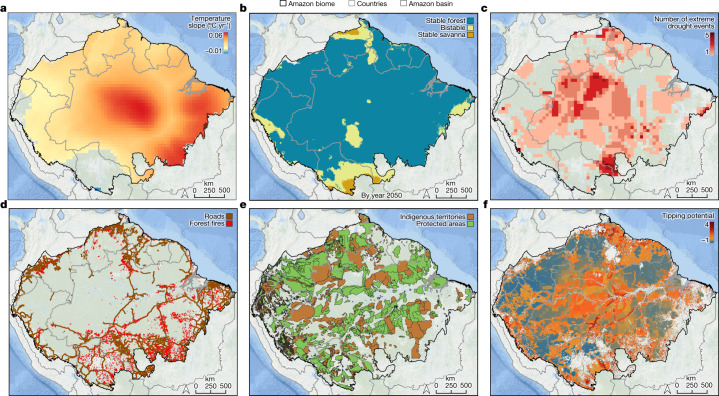
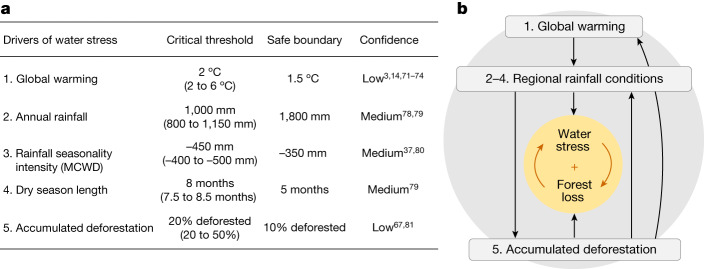
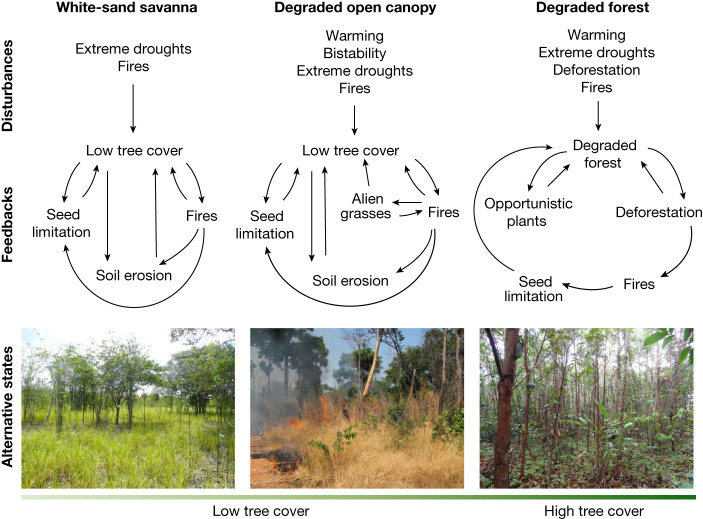
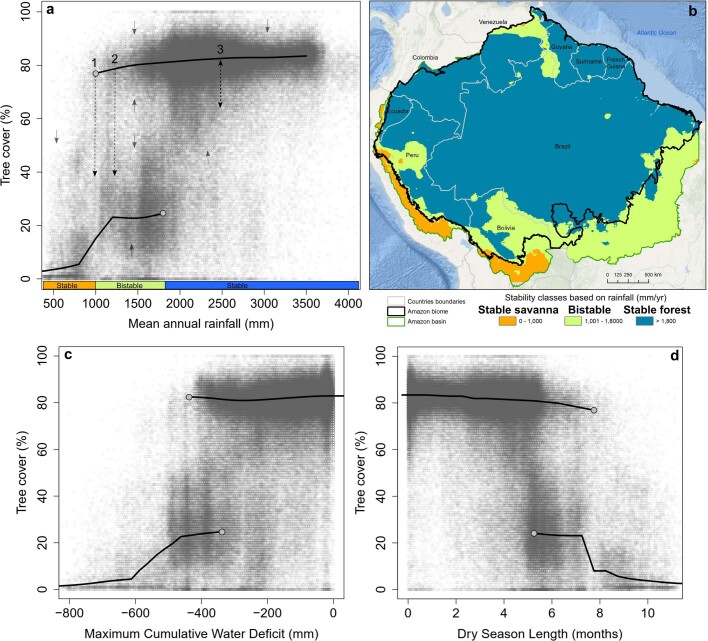
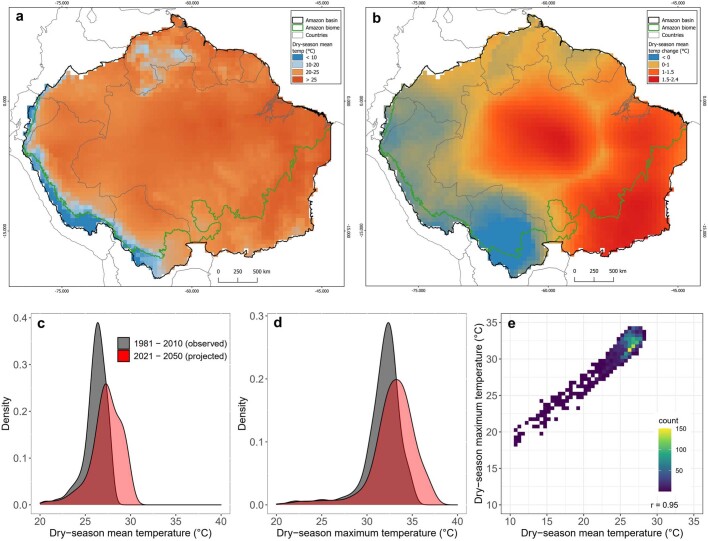
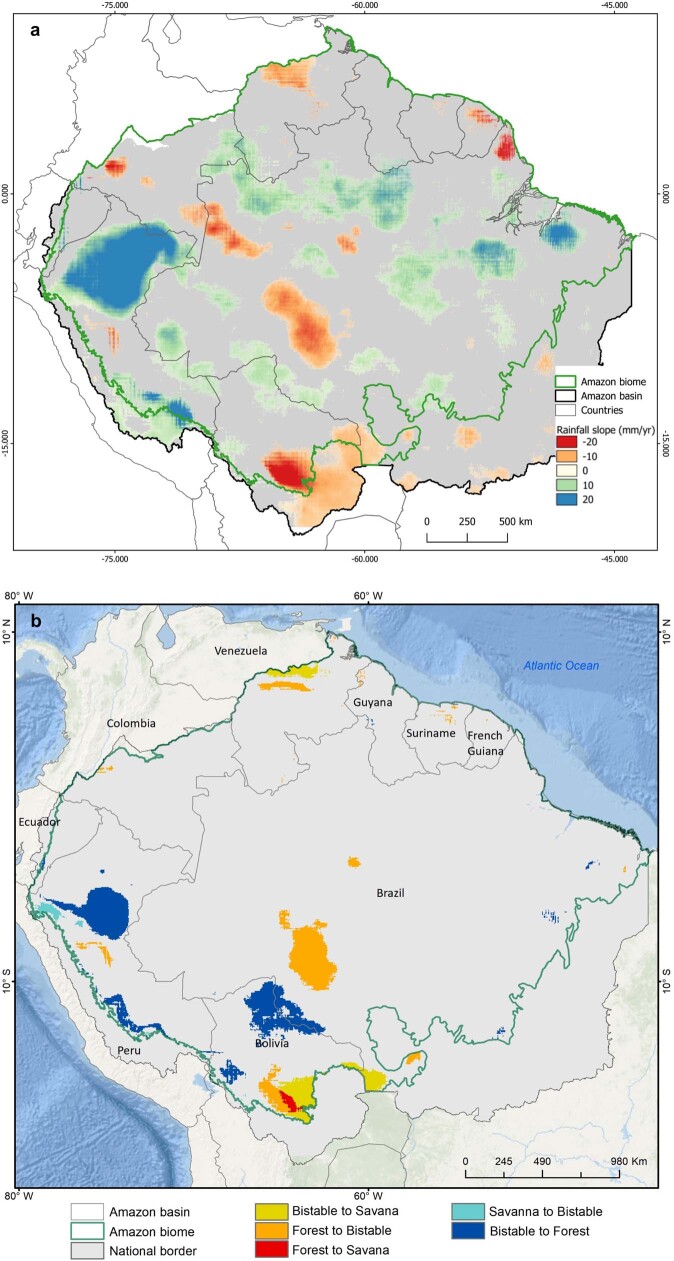
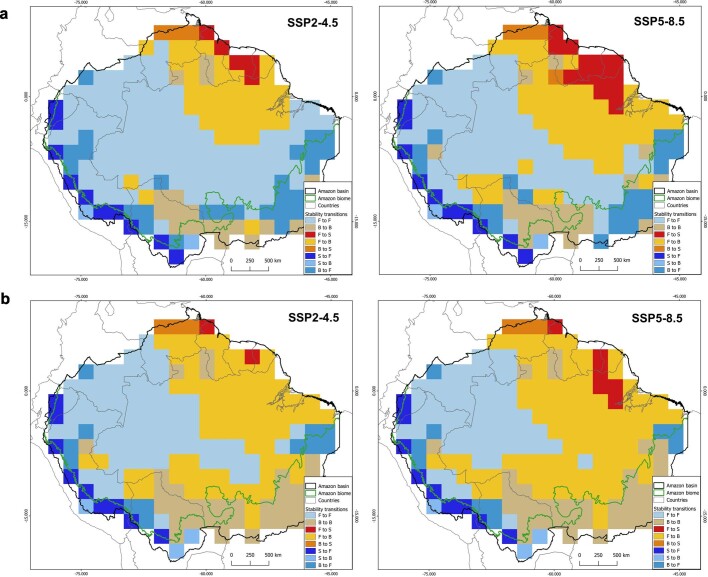
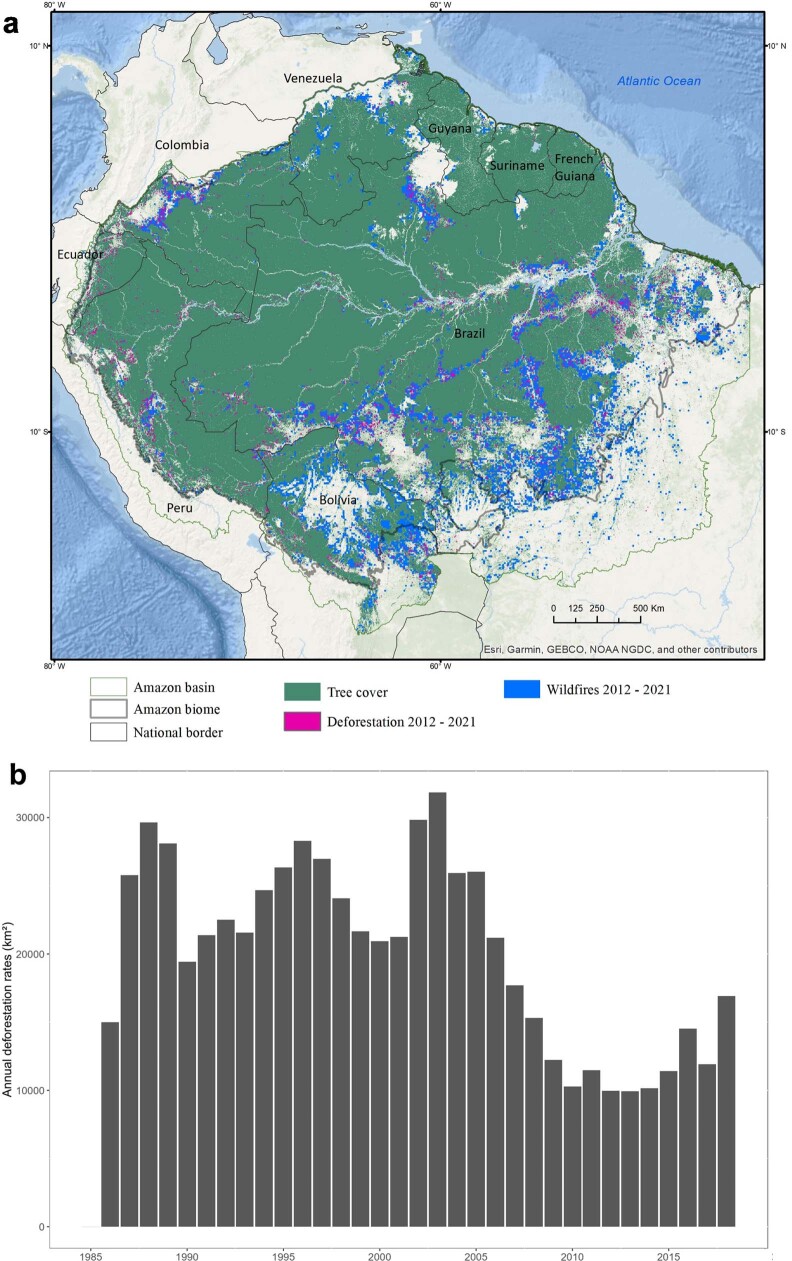
The possibility that the Amazon forest system could soon reach a tipping point, inducing large-scale collapse, has raised global concern. For 65 million years, Amazonian forests remained relatively resilient to climatic variability. Now, the region is increasingly exposed to unprecedented stress from warming temperatures, extreme droughts, deforestation and fires, even in central and remote parts of the system. Long existing feedbacks between the forest and environmental conditions are being replaced by novel feedbacks that modify ecosystem resilience, increasing the risk of critical transition. Here we analyse existing evidence for five major drivers of water stress on Amazonian forests, as well as potential critical thresholds of those drivers that, if crossed, could trigger local, regional or even biome-wide forest collapse. By combining spatial information on various disturbances, we estimate that by 2050, 10% to 47% of Amazonian forests will be exposed to compounding disturbances that may trigger unexpected ecosystem transitions and potentially exacerbate regional climate change. Using examples of disturbed forests across the Amazon, we identify the three most plausible ecosystem trajectories, involving different feedbacks and environmental conditions. We discuss how the inherent complexity of the Amazon adds uncertainty about future dynamics, but also reveals opportunities for action. Keeping the Amazon forest resilient in the Anthropocene will depend on a combination of local efforts to end deforestation and degradation and to expand restoration, with global efforts to stop greenhouse gas emissions.
亚马逊森林系统可能很快达到临界点,引发大规模崩溃,这引起了全球关注。在过去的 6500 万年里,亚马逊森林对气候变化保持着较强的弹性。如今,该地区正日益面临前所未有的压力,包括气温升高、极端干旱、森林砍伐和火灾,甚至在系统的中心和偏远地区也是如此。森林与环境条件之间长期存在的反馈机制正在被新的反馈机制所取代,这些反馈机制改变了生态系统的弹性,增加了关键转变的风险。在这里,我们分析了导致亚马逊森林水分胁迫的五个主要驱动因素的现有证据,以及这些驱动因素的潜在临界阈值,如果这些驱动因素越过了这些阈值,可能会引发局部、区域甚至生物群落范围的森林崩溃。通过结合各种干扰的空间信息,我们估计到 2050 年,10%至 47%的亚马逊森林将面临可能引发意外生态系统转变并可能加剧区域气候变化的复合干扰。通过分析亚马逊各地受干扰森林的例子,我们确定了三种最可能的生态系统轨迹,涉及不同的反馈和环境条件。我们讨论了亚马逊的固有复杂性如何增加了对未来动态的不确定性,但也揭示了采取行动的机会。在人类世保持亚马逊森林的弹性将取决于一系列的行动,包括在地方一级努力制止森林砍伐和退化,扩大恢复,以及在全球范围内努力停止温室气体排放。