Hirschl Nicholas, Leveque Wildnese, Granitto Julia, Sammarco Valia, Fontillas Mervyns, Penson Richard T
Massachusetts General Hospital, 55 Fruit St, Boston, MA 02114, USA.
Cancers (Basel). 2024 Feb 25;16(5):932. doi: 10.3390/cancers16050932.
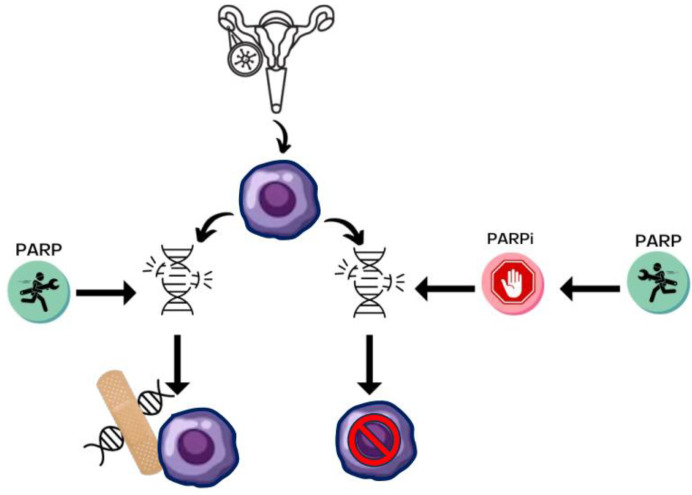
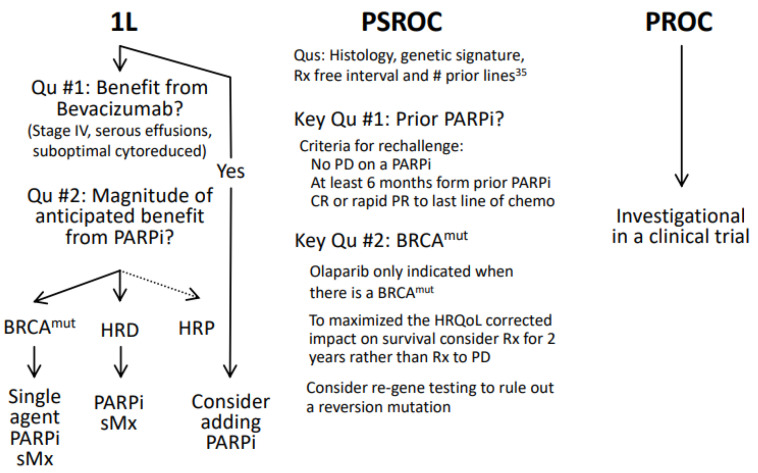
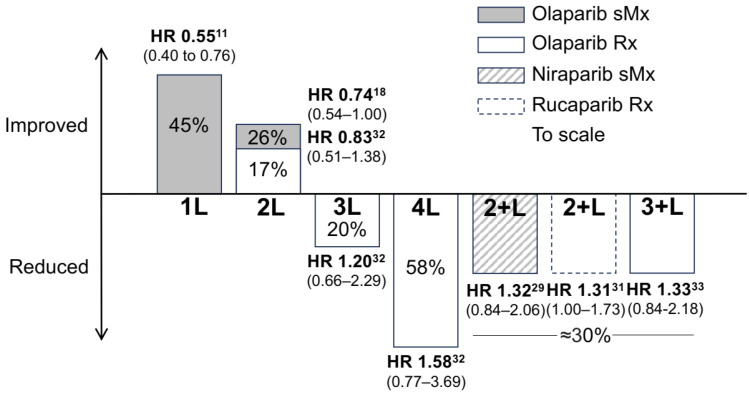
Poly (ADP-ribose) polymerase (PARP) inhibitors have become an established part of the anticancer armamentarium. Discovered in the 1980s, PARP inhibitors (PARPis) were initially developed to exploit the presence of BRCA mutations, which disrupt the homologous recombination repair of deoxyribonucleic acid (DNA) via synthetic lethality, an intrinsic vulnerability caused by the cell's dependence on other DNA repair mechanisms for which PARP is an essential contributor. PARPi use expanded with the demonstration of clinical benefit when other mechanisms of high-fidelity DNA damage response were present in cancer cells called homologous repair deficiency (HRD). Recently, new data have resulted in the voluntary withdrawal of later-line treatment indications for all the available PARPis used in ovarian cancer because of a negative impact on overall survival (OS). PARPi switch maintenance to consolidate a response to platinum-based therapy is recommended for earlier treatment lines to have the greatest impact on the chance of cure and length of survival. This article reviews the clinical utility of PARPis and how to integrate them into best practices.
聚(ADP-核糖)聚合酶(PARP)抑制剂已成为抗癌药物库中既定的一部分。PARP抑制剂(PARPis)于20世纪80年代被发现,最初是为了利用BRCA突变的存在而开发的,BRCA突变通过合成致死性破坏脱氧核糖核酸(DNA)的同源重组修复,合成致死性是一种内在的脆弱性,由细胞对其他DNA修复机制的依赖引起,而PARP是这些机制的重要贡献者。当癌细胞中存在称为同源修复缺陷(HRD)的其他高保真DNA损伤反应机制时,PARPi的应用随着临床益处的证明而扩大。最近,由于对总生存期(OS)有负面影响,新数据导致所有用于卵巢癌的现有PARPis的后线治疗适应症被自愿撤回。对于早期治疗线,建议采用PARPi转换维持治疗以巩固对铂类疗法的反应,从而对治愈机会和生存长度产生最大影响。本文综述了PARPis的临床应用以及如何将它们纳入最佳实践。