Institute for Ophthalmic Research, University of Tübingen, Tübingen, Germany.
Centre for Integrative Neuroscience, University of Tübingen, Tübingen, Germany.
Elife. 2024 Oct 4;13:e86860. doi: 10.7554/eLife.86860.
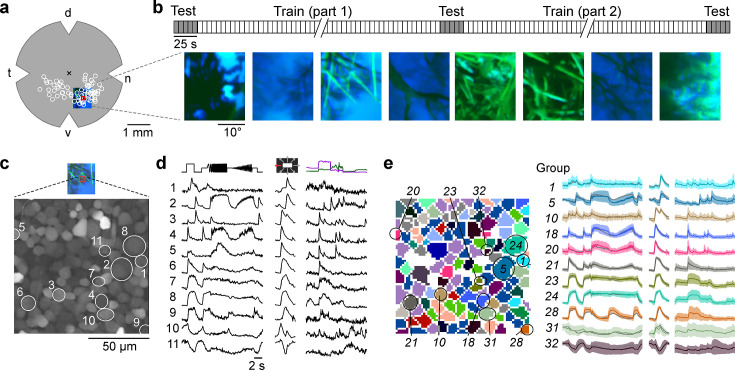
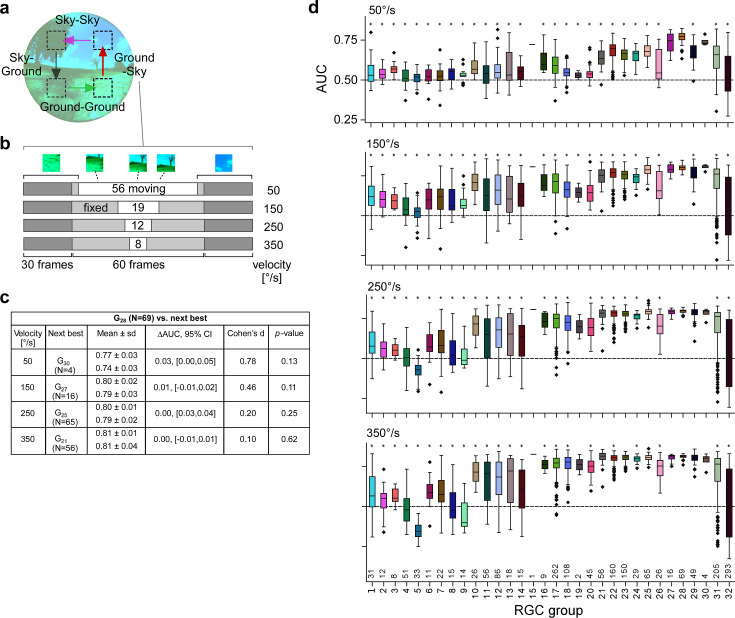
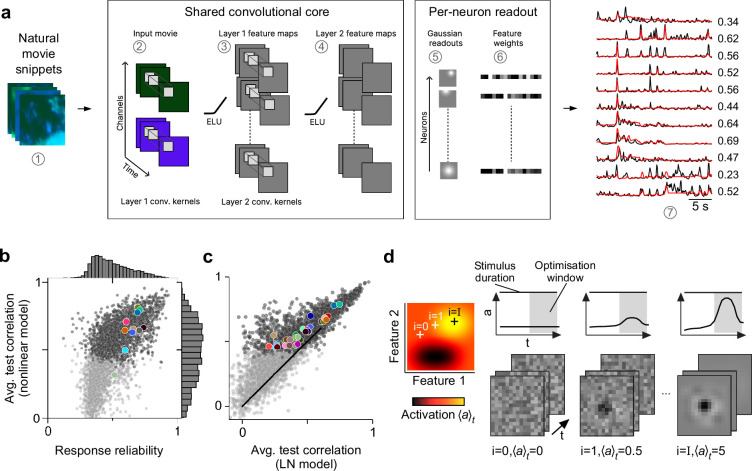
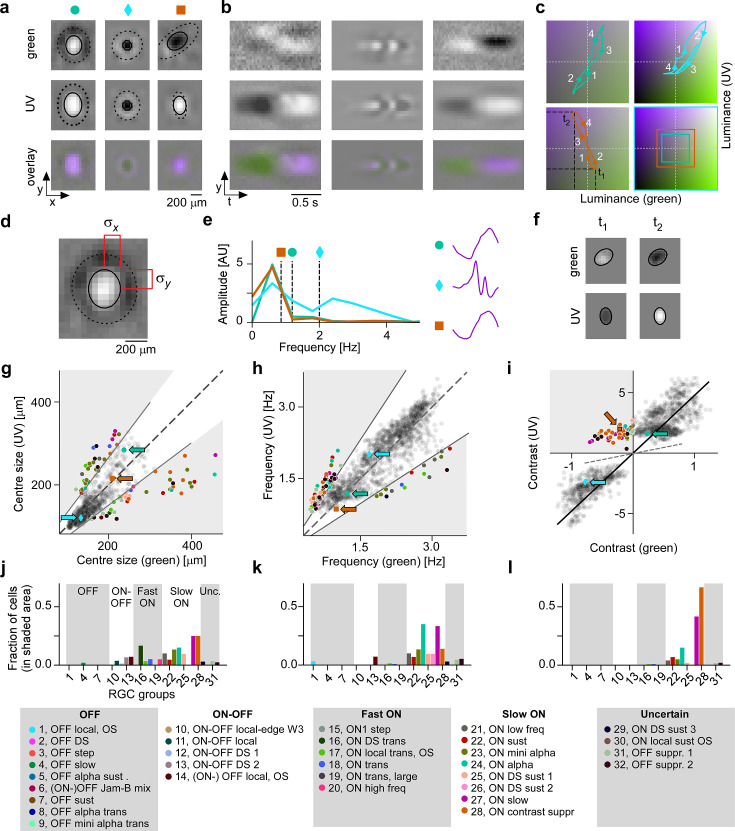
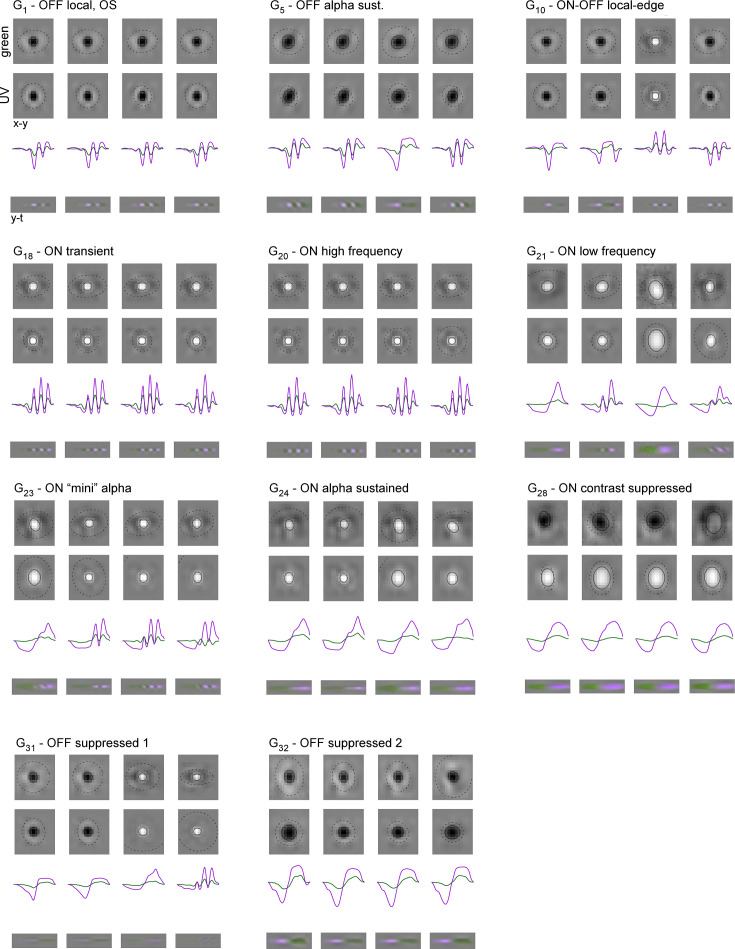
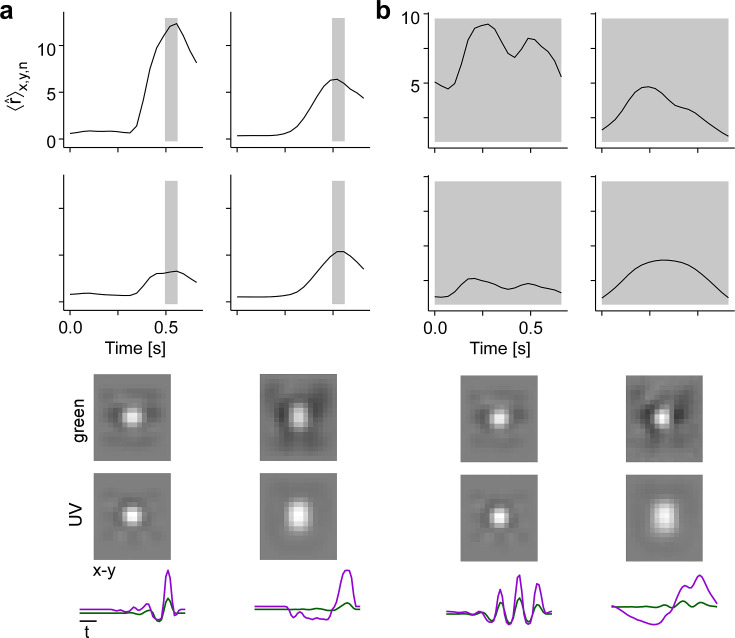
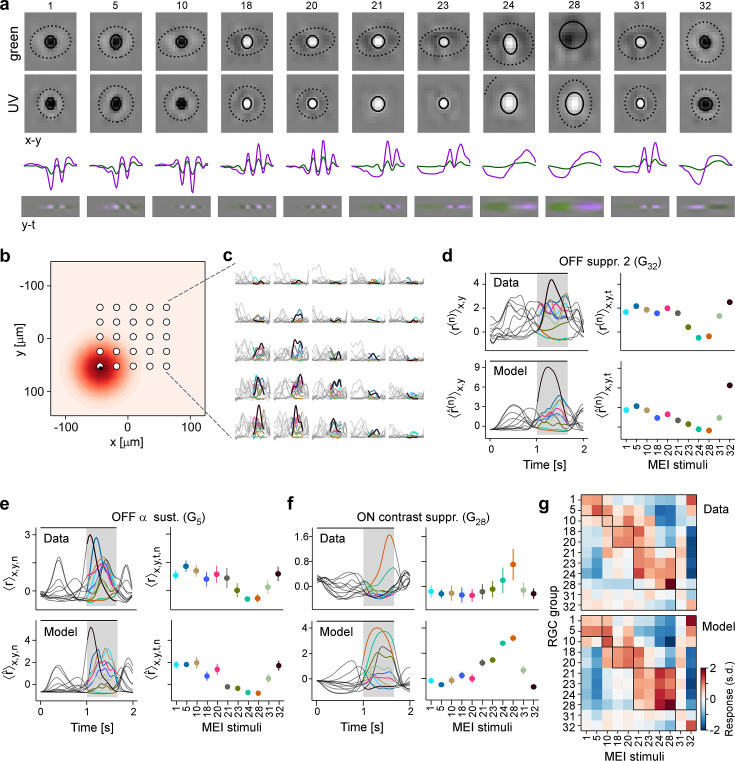
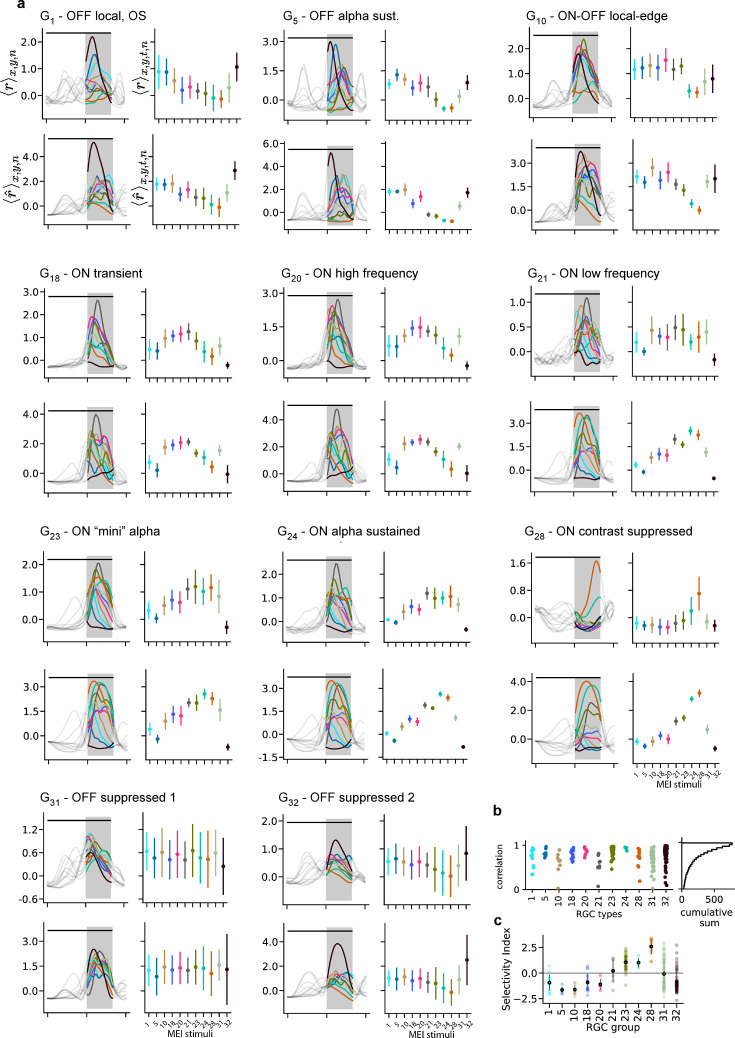
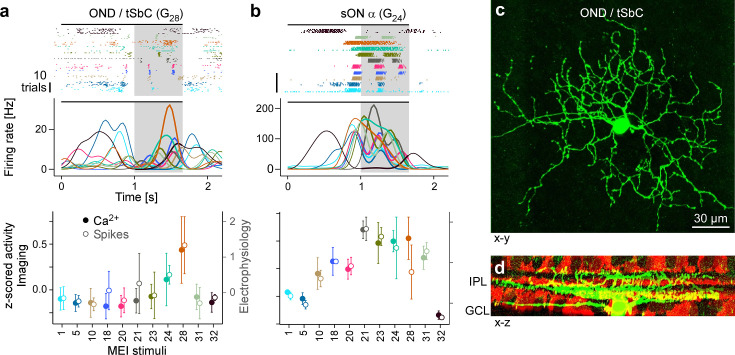
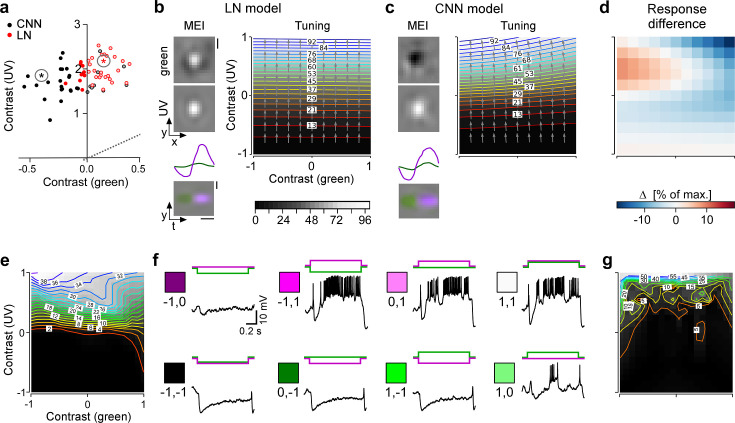
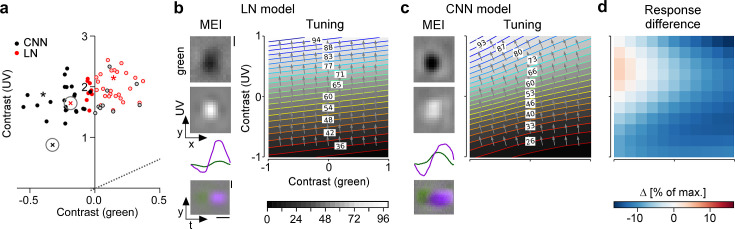
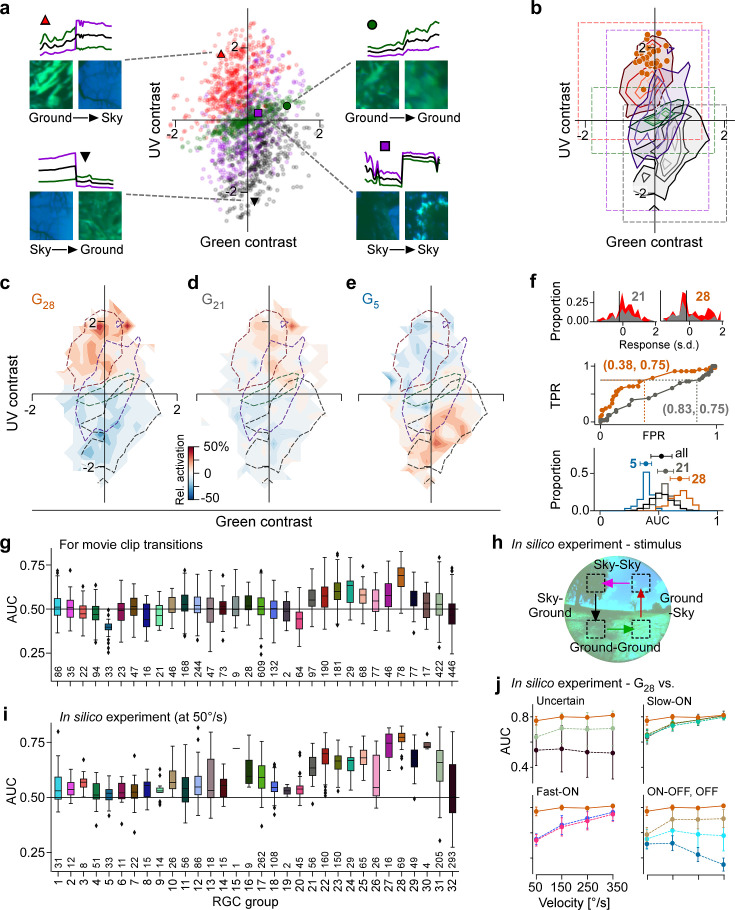
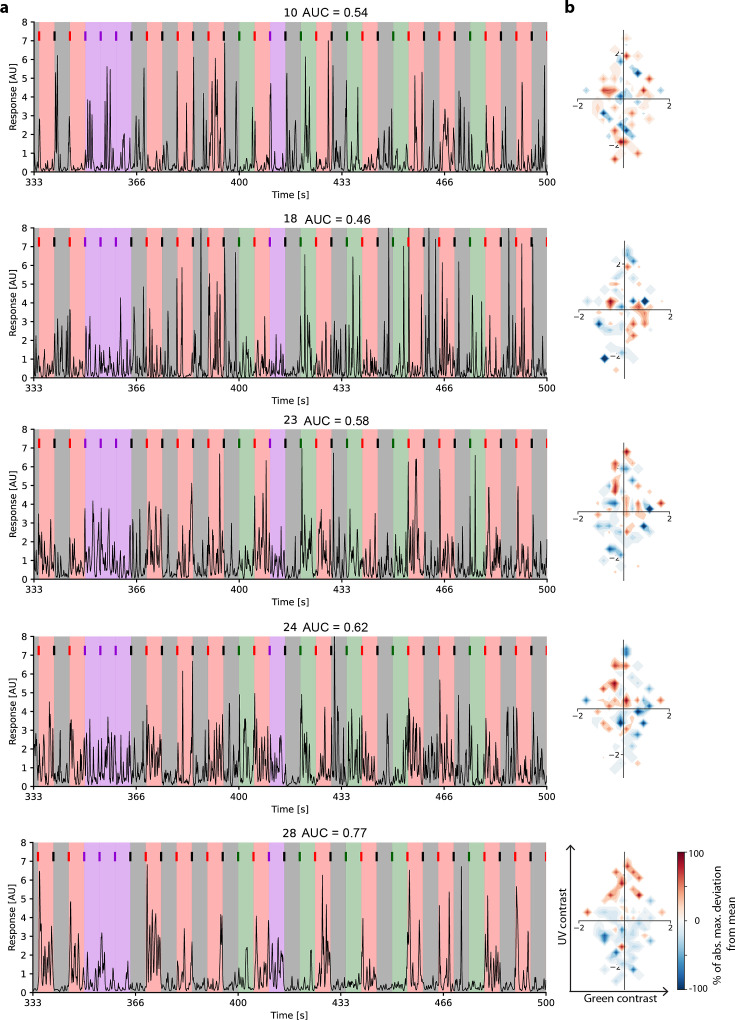
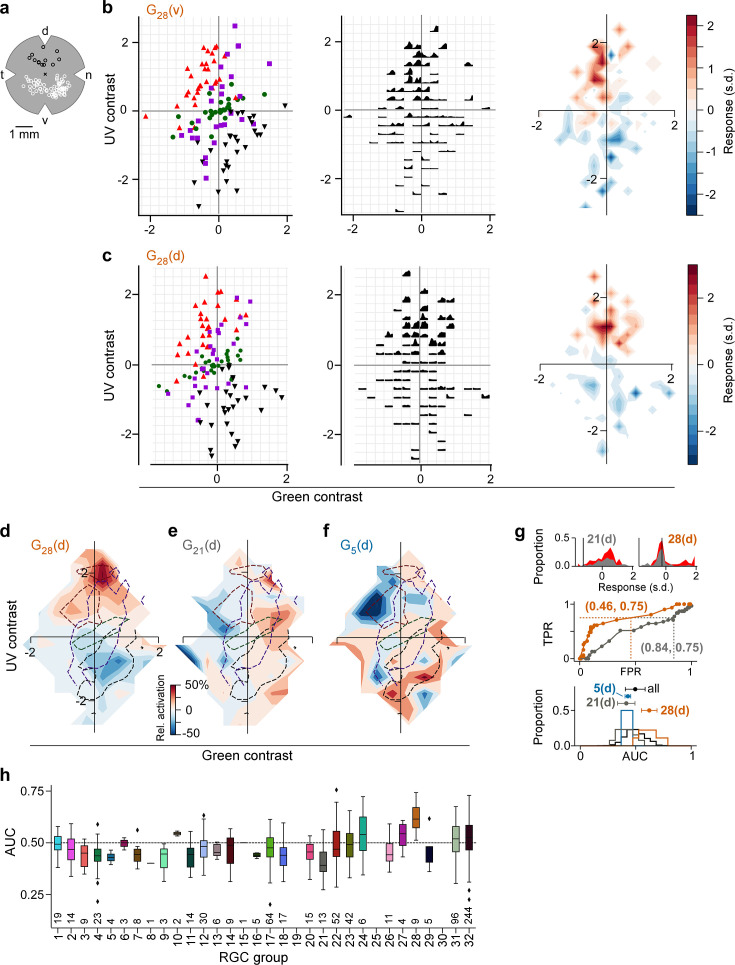
The retina transforms patterns of light into visual feature representations supporting behaviour. These representations are distributed across various types of retinal ganglion cells (RGCs), whose spatial and temporal tuning properties have been studied extensively in many model organisms, including the mouse. However, it has been difficult to link the potentially nonlinear retinal transformations of natural visual inputs to specific ethological purposes. Here, we discover a nonlinear selectivity to chromatic contrast in an RGC type that allows the detection of changes in visual context. We trained a convolutional neural network (CNN) model on large-scale functional recordings of RGC responses to natural mouse movies, and then used this model to search in silico for stimuli that maximally excite distinct types of RGCs. This procedure predicted centre colour opponency in transient suppressed-by-contrast (tSbC) RGCs, a cell type whose function is being debated. We confirmed experimentally that these cells indeed responded very selectively to Green-OFF, UV-ON contrasts. This type of chromatic contrast was characteristic of transitions from ground to sky in the visual scene, as might be elicited by head or eye movements across the horizon. Because tSbC cells performed best among all RGC types at reliably detecting these transitions, we suggest a role for this RGC type in providing contextual information (i.e. sky or ground) necessary for the selection of appropriate behavioural responses to other stimuli, such as looming objects. Our work showcases how a combination of experiments with natural stimuli and computational modelling allows discovering novel types of stimulus selectivity and identifying their potential ethological relevance.
视网膜将光的模式转化为支持行为的视觉特征表示。这些表示分布在各种类型的视网膜神经节细胞(RGC)中,其空间和时间调谐特性已在包括小鼠在内的许多模式生物中得到了广泛研究。然而,将自然视觉输入的潜在非线性视网膜转换与特定的行为目的联系起来一直很困难。在这里,我们发现一种 RGC 类型对色对比的非线性选择性,这种选择性可以检测视觉背景的变化。我们在对自然小鼠电影的 RGC 反应的大规模功能记录上训练了一个卷积神经网络(CNN)模型,然后使用该模型在计算机上搜索最大限度地激发不同类型 RGC 的刺激。该程序预测了瞬态抑制对比(tSbC)RGC 中的中心颜色拮抗,这种细胞类型的功能仍存在争议。我们通过实验证实,这些细胞确实对 Green-OFF、UV-ON 对比度非常有选择性地反应。这种类型的色对比是视觉场景中从地面到天空的过渡的特征,可能是由于头部或眼睛在地平线上的运动引起的。由于 tSbC 细胞在可靠地检测这些过渡方面优于所有 RGC 类型,因此我们认为这种 RGC 类型在提供上下文信息(即天空或地面)方面发挥作用,这些信息对于选择对其他刺激(例如逼近物体)的适当行为反应是必要的。我们的工作展示了如何将自然刺激与计算模型相结合的实验,可以发现新类型的刺激选择性,并确定它们的潜在行为相关性。