Department of Medical and Digital Engineering, Hanyang University, Seoul, 04763, Republic of Korea.
Department of Industrial Engineering, Hanyang University, Seoul, 04763, Republic of Korea.
Sci Rep. 2024 Oct 5;14(1):23237. doi: 10.1038/s41598-024-73665-5.
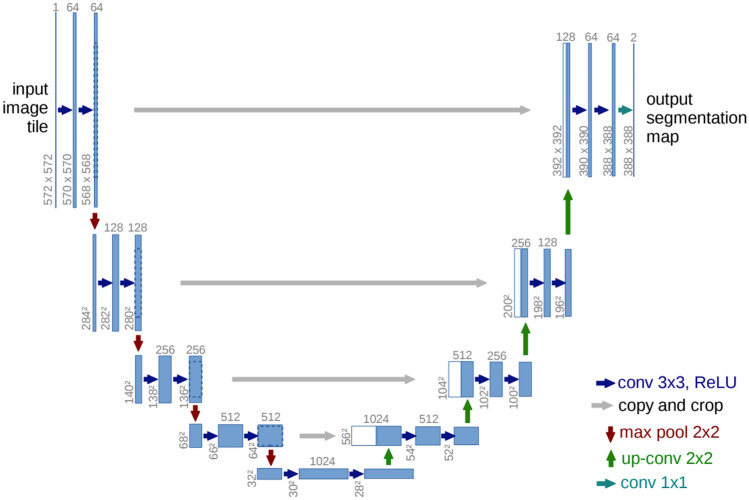
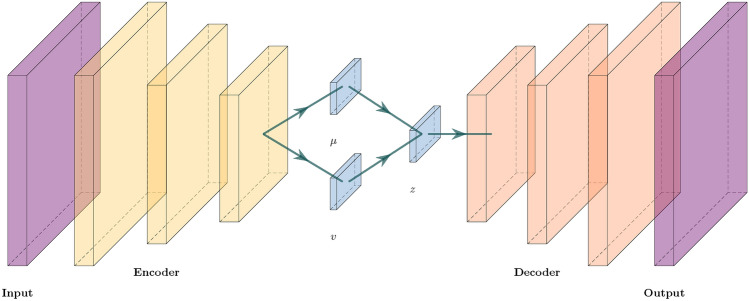
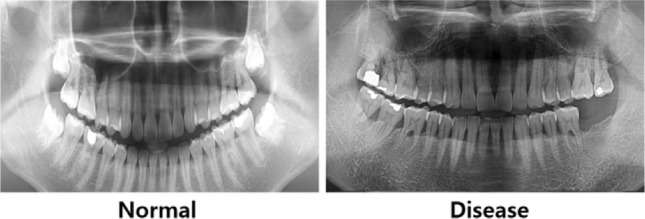
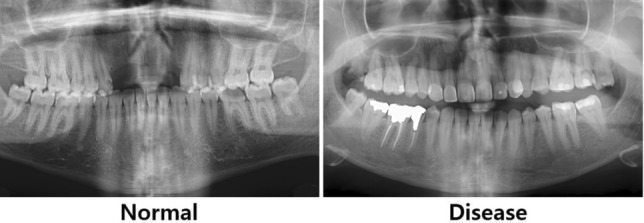
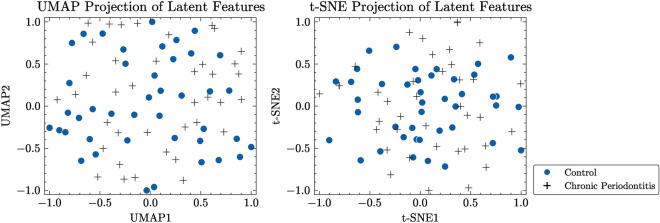
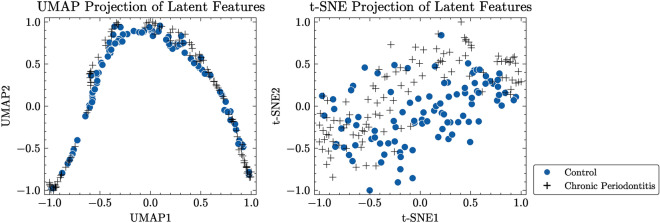
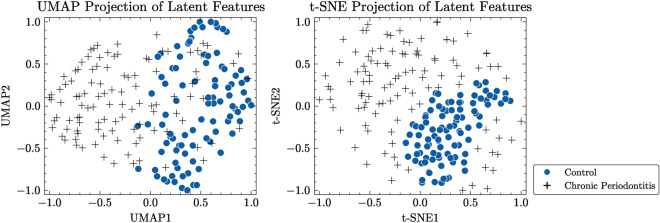
In the domain of medical imaging, the advent of deep learning has marked a significant progression, particularly in the nuanced area of periodontal disease diagnosis. This study specifically targets the prevalent issue of scarce labeled data in medical imaging. We introduce a novel unsupervised few-shot learning algorithm, meticulously crafted for classifying periodontal diseases using a limited collection of dental panoramic radiographs. Our method leverages UNet architecture for generating regions of interest (RoI) from radiographs, which are then processed through a Convolutional Variational Autoencoder (CVAE). This approach is pivotal in extracting critical latent features, subsequently clustered using an advanced algorithm. This clustering is key in our methodology, enabling the assignment of labels to images indicative of periodontal diseases, thus circumventing the challenges posed by limited datasets. Our validation process, involving a comparative analysis with traditional supervised learning and standard autoencoder-based clustering, demonstrates a marked improvement in both diagnostic accuracy and efficiency. For three real-world validation datasets, our UNet-CVAE architecture achieved up to average 14% higher accuracy compared to state-of-the-art supervised models including the vision transformer model when trained with 100 labeled images. This study not only highlights the capability of unsupervised learning in overcoming data limitations but also sets a new benchmark for diagnostic methodologies in medical AI, potentially transforming practices in data-constrained scenarios.
在医学影像领域,深度学习的出现标志着重大进展,特别是在牙周病诊断这一细微领域。本研究特别针对医学影像中稀缺标记数据这一普遍问题。我们引入了一种新颖的无监督少样本学习算法,精心设计用于使用有限的牙科全景 X 光片集对牙周病进行分类。我们的方法利用 UNet 架构从 X 光片中生成感兴趣区域 (RoI),然后通过卷积变分自动编码器 (CVAE) 对其进行处理。这种方法在提取关键潜在特征方面至关重要,随后使用先进的算法对其进行聚类。这种聚类是我们方法的关键,能够将标签分配给表示牙周病的图像,从而避免了数据集有限带来的挑战。我们的验证过程涉及与传统监督学习和基于标准自动编码器的聚类的比较分析,表明在使用 100 个标记图像进行训练时,我们的 UNet-CVAE 架构在诊断准确性和效率方面都有显著提高。对于三个真实世界的验证数据集,与包括视觉转换器模型在内的最先进的监督模型相比,我们的 UNet-CVAE 架构的平均准确率提高了 14%。这项研究不仅突显了无监督学习在克服数据限制方面的能力,还为医学人工智能中的诊断方法设定了新的基准,可能会改变数据受限情况下的实践。