Soares Panmela, Martinelli Suellen Secchi, Atance Elena Albero, Fabri Rafaela, Clemente-Gómez Vicente, Davó-Blanes Mari Carmen, Cavalli Suzi Barletto
Nutrition Post-Graduation Programme, Federal University of Santa Catarina, Florianópolis, 88040-900, Brazil.
Public Health Research Group, University of Alicante, 03690, Alicante, Spain.
Heliyon. 2024 Oct 5;10(20):e39019. doi: 10.1016/j.heliyon.2024.e39019. eCollection 2024 Oct 30.
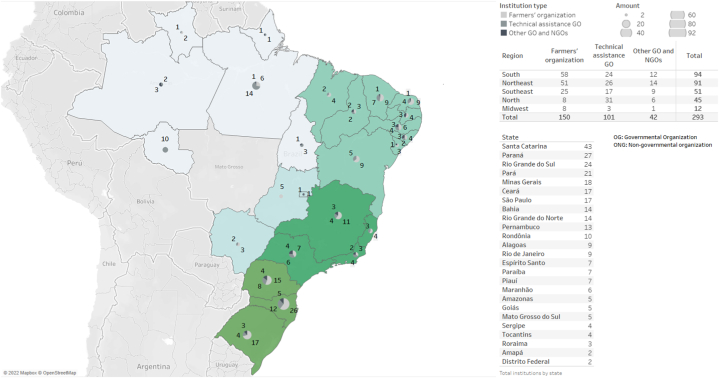
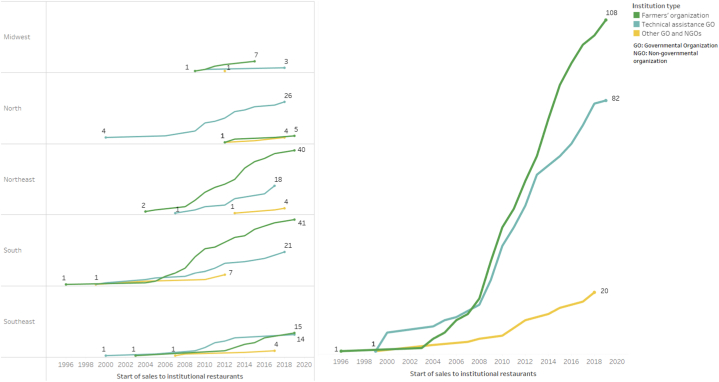
Public food purchase programs are a useful tool for promoting food security through rural development, supporting family farmers, and encouraging sustainable and healthy food production. The study aimed to analyse the characteristics of family farmer organizations associated with the Brazilian Public Food Procurement (PFP) program and the opinion of technicians and managers of the organizations regarding the benefits and challenges of the program. A cross-sectional study was conducted through a structured questionnaire. The questionnaire contained questions regarding the characteristics of the organization and the food sales process, as well as the opinion about the benefits and challenges of PFP. The results were stratified according to the organization's participation in the PFP. The chi-squared or Fisher's exact test was applied. A total of 293 managers and technicians from family farmer organizations participated in the study. The majority of participants (71.7 %) reported their involvement in the PFP program. The study revealed that farmer organizations and public technical assistance agencies with larger memberships and employing conventional or mixed production methods were found to be more actively engaged in the PFP program across Brazil. Participants highlighted that direct sales under the program offer benefits to consumers, producers, and the environment. However, challenges identified include seasonal production constraints, bureaucratic hurdles in sales procedures, inadequate infrastructure for food storage and processing within farmer organizations, insufficient information from restaurants about purchasing opportunities, and a lack of support and technical assistance. These factors pose implementation challenges for the PFP program. While the PFP program shows promise in promoting direct sales and supporting local farmers, addressing the identified challenges will be crucial for its sustained success and broader adoption across different regions.
公共食品采购计划是通过农村发展促进粮食安全、支持家庭农民以及鼓励可持续和健康食品生产的一项有用工具。该研究旨在分析与巴西公共食品采购(PFP)计划相关的家庭农民组织的特征,以及这些组织的技术人员和管理人员对该计划的益处和挑战的看法。通过结构化问卷进行了一项横断面研究。问卷包含有关组织特征和食品销售过程的问题,以及对PFP益处和挑战的看法。结果根据组织参与PFP的情况进行分层。应用了卡方检验或费舍尔精确检验。共有来自家庭农民组织的293名管理人员和技术人员参与了该研究。大多数参与者(71.7%)报告他们参与了PFP计划。研究表明,在巴西,成员较多且采用传统或混合生产方式的农民组织和公共技术援助机构更积极地参与PFP计划。参与者强调,该计划下的直接销售对消费者、生产者和环境都有好处。然而,发现的挑战包括季节性生产限制、销售程序中的官僚障碍、农民组织内食品储存和加工的基础设施不足、餐馆提供的采购机会信息不足,以及缺乏支持和技术援助。这些因素给PFP计划带来了实施挑战。虽然PFP计划在促进直接销售和支持当地农民方面显示出前景,但应对已确定的挑战对于其持续成功和在不同地区更广泛采用至关重要。