
阿尔及利亚提取物的抗氧化、植物化学和药理特性
Antioxidant, Phytochemical, and Pharmacological Properties of Algerian Extracts.
作者信息
Lahlou Radhia Aitfella, Gonçalves Ana Carolina, Bounechada Mustapha, Nunes Ana R, Soeiro Pedro, Alves Gilberto, Moreno Diego A, Garcia-Viguera Cristina, Raposo Cesar, Silvestre Samuel, Rodilla Jesus M, Ismael Maria Isabel, Silva Luís R
机构信息
Chemistry Department, University of Beira Interior, 6201-001 Covilhã, Portugal.
Fiber Materials and Environmental Technologies (FibEnTech), University of Beira Interior, 6201-001 Covilhã, Portugal.
出版信息
Antioxidants (Basel). 2024 Dec 11;13(12):1512. doi: 10.3390/antiox13121512.
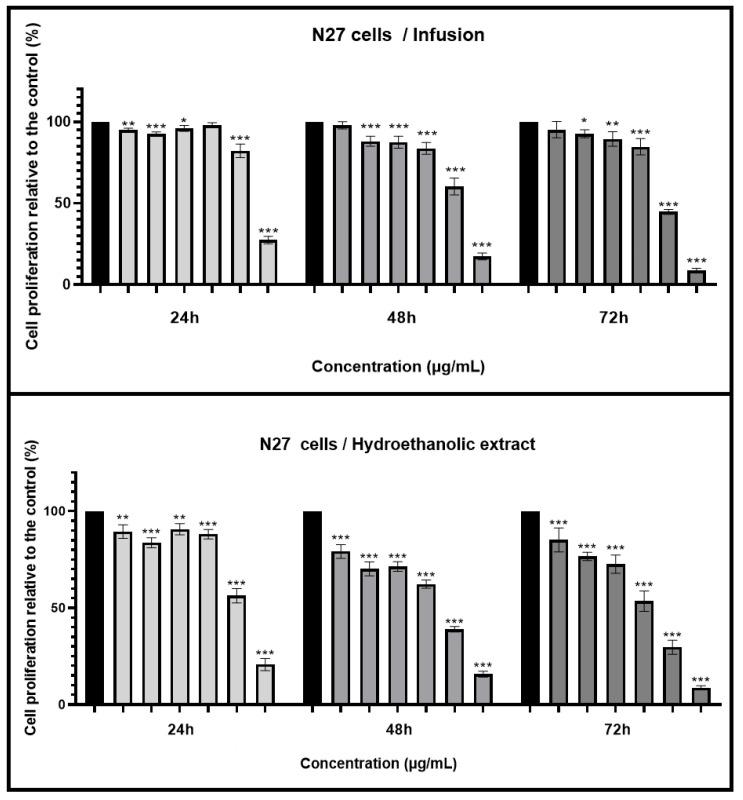
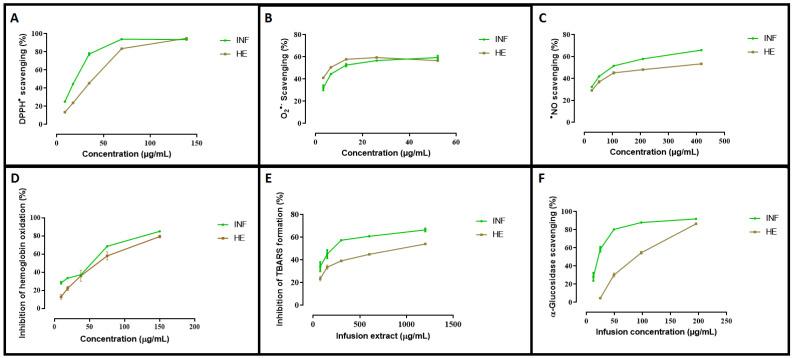
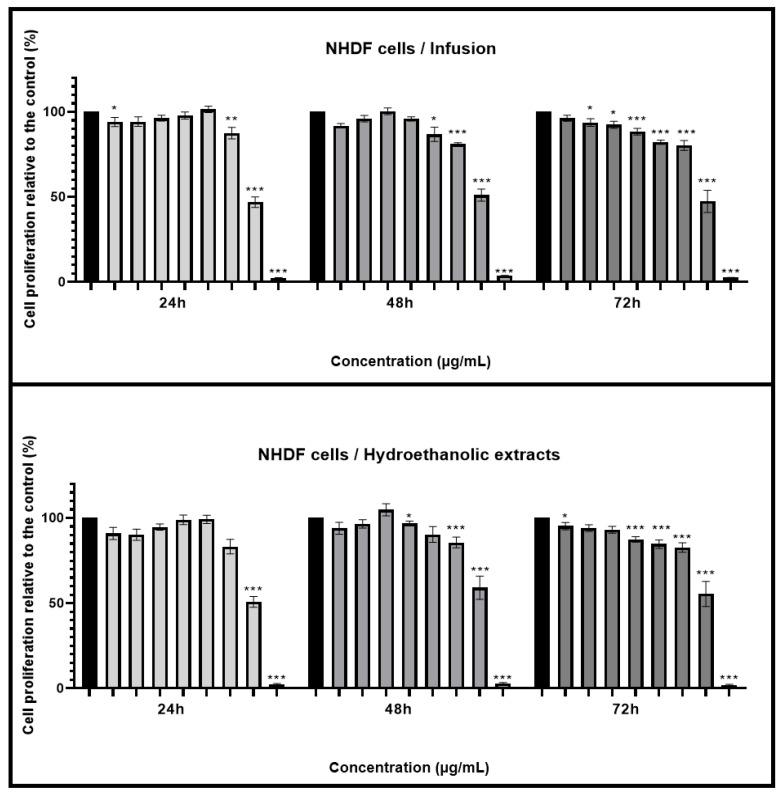
Water mint () is used in many formulations worldwide as a functional food and natural remedy to treat gastrointestinal disorders, lung diseases, and certain mental disorders such as epilepsy and depression. This study assessed the bioactivity of its infusion extract (INF) and hydroethanolic extract (HE) to highlight its health benefits. These extracts were analyzed for their chemical composition by HPLC-DAD-ESI-MSn, their antioxidant and antidiabetic properties, and their capacities to protect human erythrocytes against induced hemoglobin oxidation and lipid peroxidation. The effect on normal human dermal fibroblast (NHDF) cells and on the N27 rat dopaminergic neuron cell line was also assessed. The chromatographic analysis identified 57 compounds belonging to hydroxycinnamic acids, flavanones, flavone, and isoflavonoids. In respect to the biological potential, the extracts revealed a notable capacity for 2,2-diphenyl-1-picrylhydrazyl, nitric oxide, and superoxide radicals, as well as for the inhibition of -glucosidase action and the protection of human erythrocytes against oxidative damage. Quantification revealed noteworthy phenolic content in both extracts. Additionally, the extracts demonstrated less cytotoxic effects regarding the NHDF and N27 cell lines. Overall, presents promising antioxidant activity and a spectrum of potential biological activities, underscoring its significance as a novel antioxidant candidate for applications in animal nutrition, human medicine, and natural product research in the pharmaceutical and nutraceutical industries.
水薄荷()在全球许多配方中被用作功能性食品和天然药物,用于治疗胃肠道疾病、肺部疾病以及某些精神疾病,如癫痫和抑郁症。本研究评估了其浸提物(INF)和水乙醇提取物(HE)的生物活性,以突出其健康益处。通过HPLC-DAD-ESI-MSn分析了这些提取物的化学成分、抗氧化和抗糖尿病特性,以及它们保护人类红细胞免受诱导的血红蛋白氧化和脂质过氧化的能力。还评估了对正常人皮肤成纤维细胞(NHDF)和N27大鼠多巴胺能神经元细胞系的影响。色谱分析鉴定出57种属于羟基肉桂酸、黄烷酮、黄酮和异黄酮的化合物。就生物潜力而言,提取物显示出对2,2-二苯基-1-苦基肼、一氧化氮和超氧自由基的显著清除能力,以及对α-葡萄糖苷酶活性的抑制作用和对人类红细胞免受氧化损伤的保护作用。定量分析显示两种提取物中酚类含量都很高。此外,提取物对NHDF和N27细胞系的细胞毒性较小。总体而言,水薄荷具有良好的抗氧化活性和一系列潜在的生物活性,强调了其作为动物营养、人类医学以及制药和营养保健品行业天然产物研究中新型抗氧化剂候选物的重要性。
 Zotero 插件