Ding Daisy Yi, Tang Zeyu, Zhu Bokai, Ren Hongyu, Shalek Alex K, Tibshirani Robert, Nolan Garry P
Department of Biomedical Data Science, Stanford University, Stanford, CA, USA.
Weill Cornell Graduate School of Medical Sciences, Weill Cornell Medicine, New York, NY, USA.
Nat Genet. 2025 Apr;57(4):910-921. doi: 10.1038/s41588-025-02119-z. Epub 2025 Apr 1.
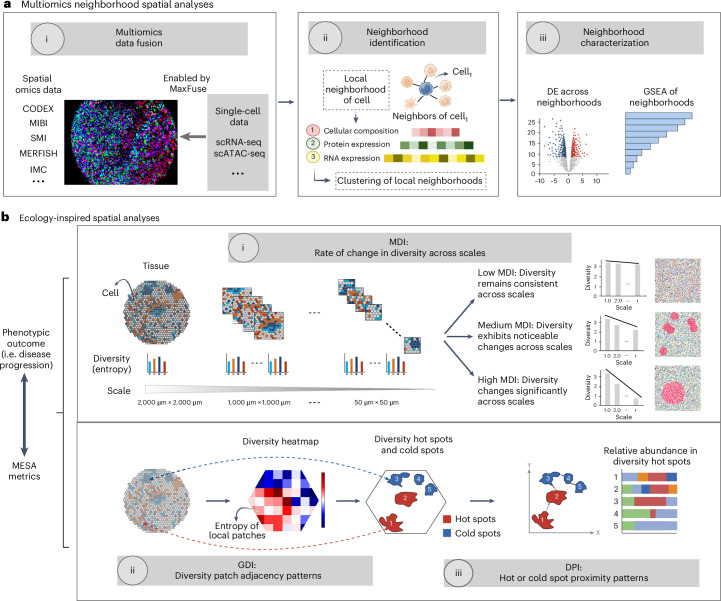
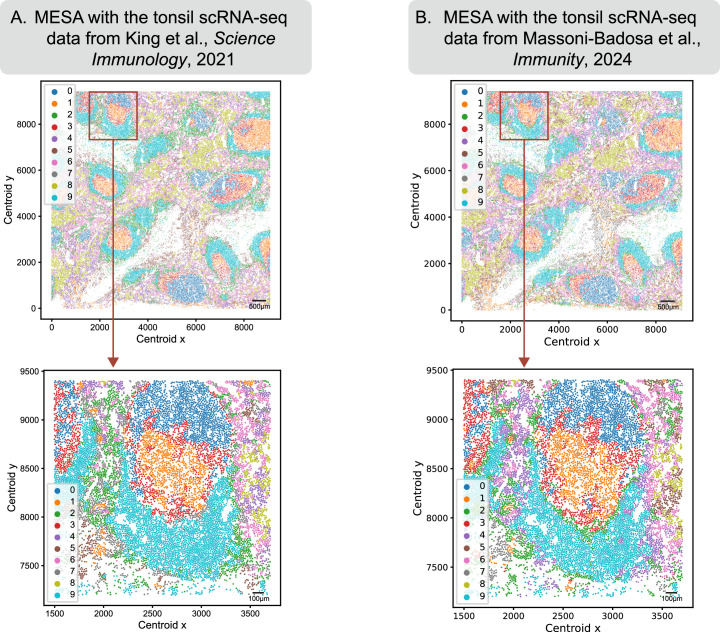
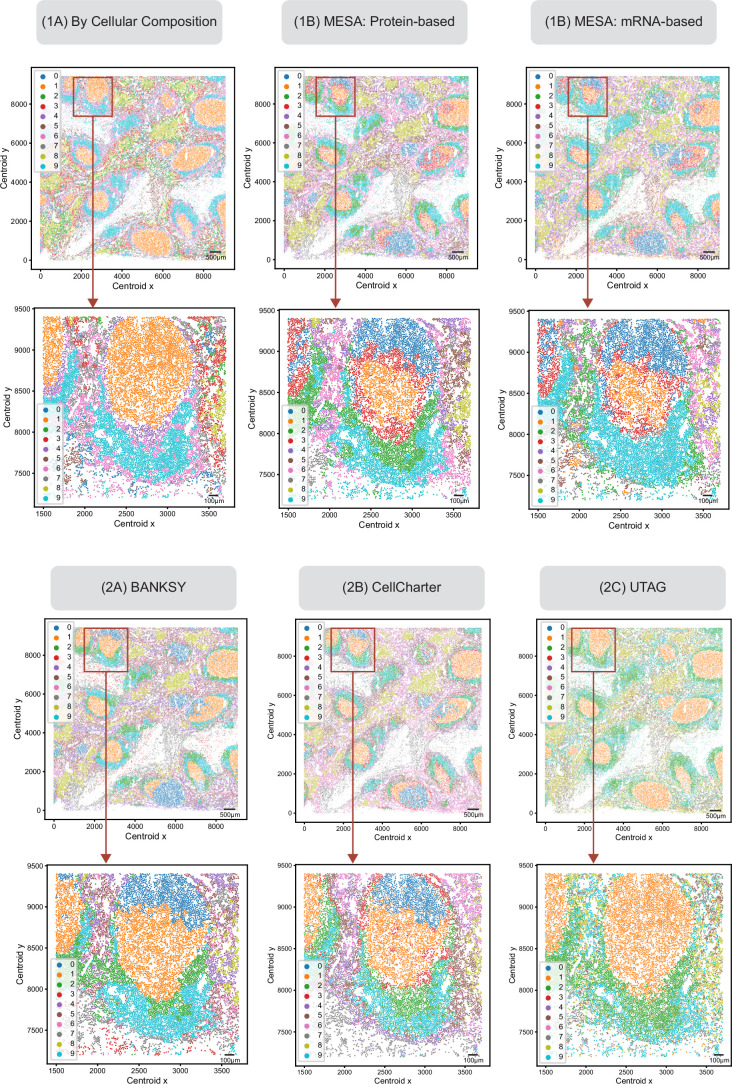
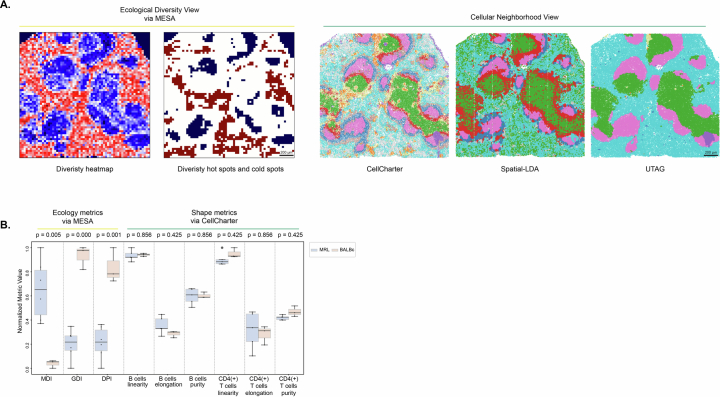
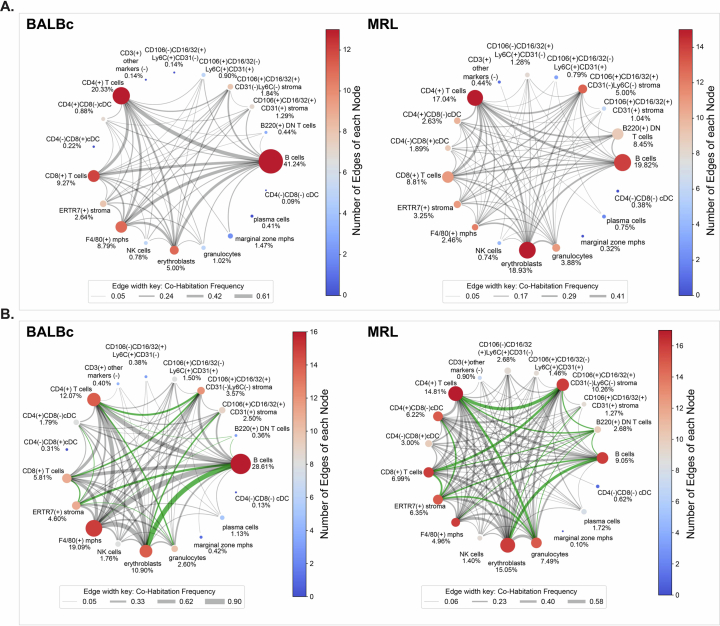
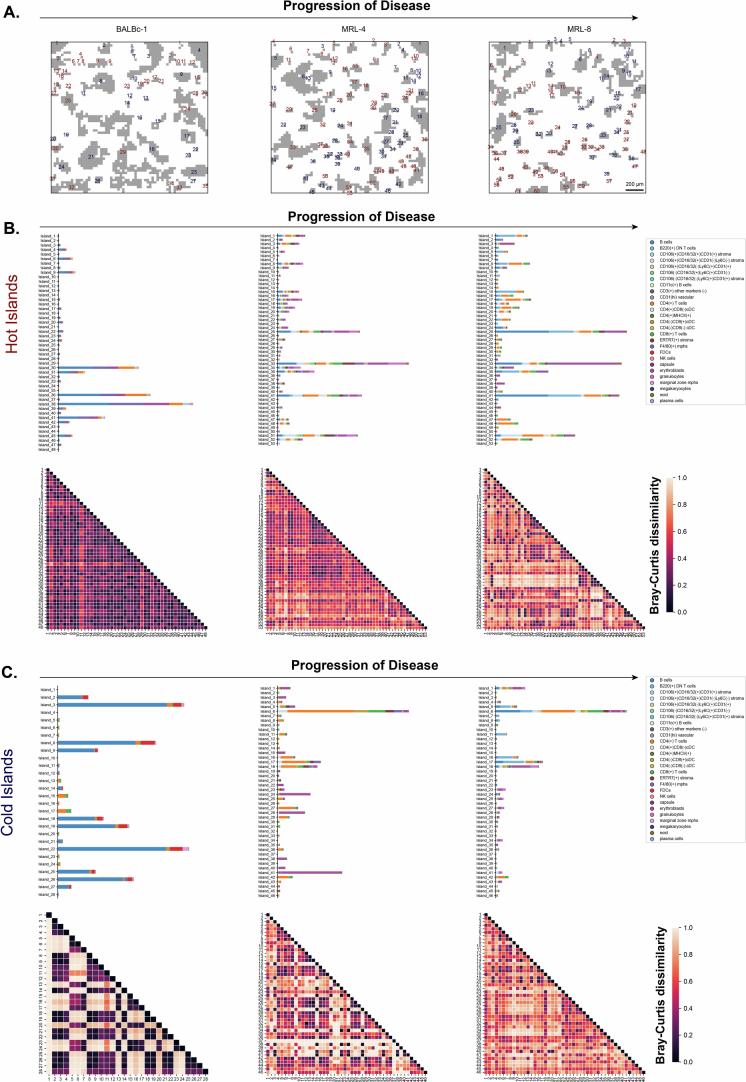
The spatial organization of cells in tissues underlies biological function, and recent advances in spatial profiling technologies have enhanced our ability to analyze such arrangements to study biological processes and disease progression. We propose MESA (multiomics and ecological spatial analysis), a framework drawing inspiration from ecological concepts to delineate functional and spatial shifts across tissue states. MESA introduces metrics to systematically quantify spatial diversity and identify hot spots, linking spatial patterns to phenotypic outcomes, including disease progression. Furthermore, MESA integrates spatial and single-cell multiomics data to facilitate an in-depth, molecular understanding of cellular neighborhoods and their spatial interactions within tissue microenvironments. Applying MESA to diverse datasets demonstrates additional insights it brings over prior methods, including newly identified spatial structures and key cell populations linked to disease states. Available as a Python package, MESA offers a versatile framework for quantitative decoding of tissue architectures in spatial omics across health and disease.
组织中细胞的空间组织是生物学功能的基础,空间分析技术的最新进展增强了我们分析此类排列以研究生物过程和疾病进展的能力。我们提出了MESA(多组学与生态空间分析),这是一个从生态概念中汲取灵感的框架,用于描绘不同组织状态下的功能和空间变化。MESA引入了一些指标来系统地量化空间多样性并识别热点,将空间模式与表型结果(包括疾病进展)联系起来。此外,MESA整合了空间和单细胞多组学数据,以促进对细胞邻域及其在组织微环境中的空间相互作用的深入分子理解。将MESA应用于各种数据集证明了它比先前方法带来的更多见解,包括新发现的空间结构和与疾病状态相关的关键细胞群体。作为一个Python包提供,MESA为跨健康和疾病的空间组学中组织结构的定量解码提供了一个通用框架。