Christensen G D, Simpson W A, Bisno A L, Beachey E H
Infect Immun. 1982 Jul;37(1):318-26. doi: 10.1128/iai.37.1.318-326.1982.
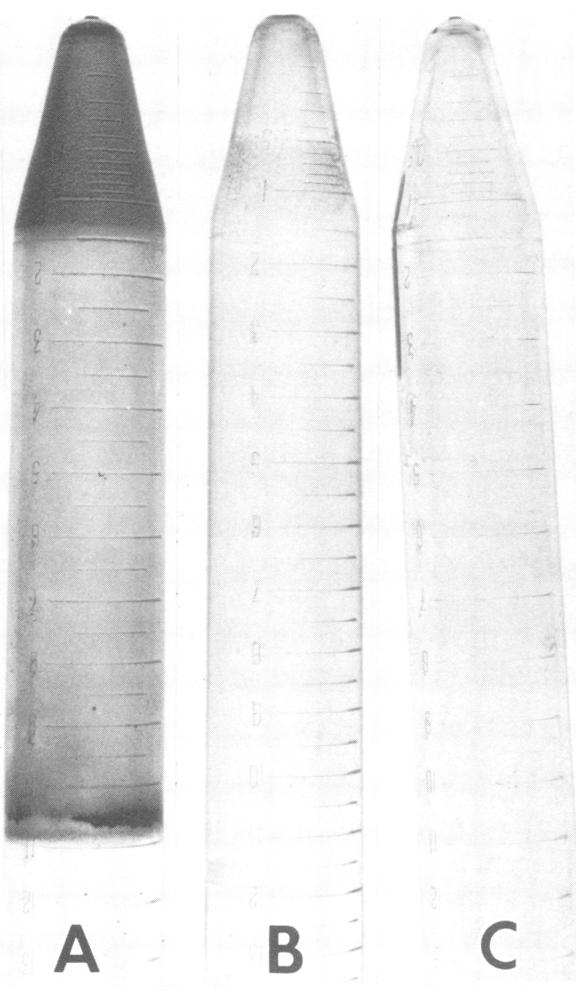
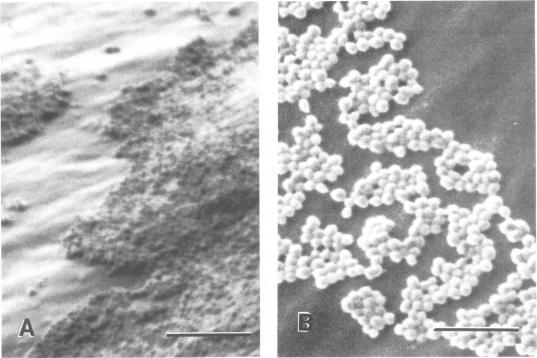
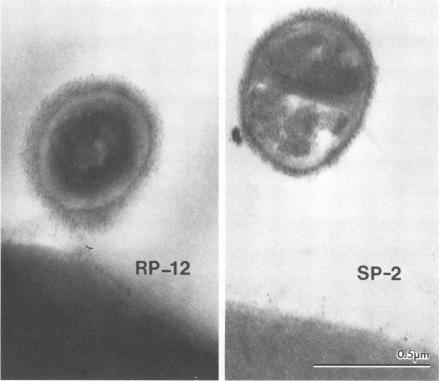
Slime production is not a generally recognized feature of Staphylococcus epidermidis. In a recent outbreak of S. epidermidis intravascular catheter-associated sepsis, we noted that 63% of clinically implicated strains grew as a slimy film coating the culture tube walls when propagated in tryptic soy broth. Only 37% of randomly collected blood culture contaminants and skin isolates demonstrated a similar phenomenon (p less than 0.05). Transmission electron micrographs of these coating bacteria showed them to be encased in an extracellular matrix that stained with alcian blue. Slime production was most evident in autoclaved media containing Casamino Acids and glucose supplementation (0.25% wt/vol). There were strain and media preparation variability of slime production in the presence of other carbohydrates. Some strains were not able to produce slime under any of the tested conditions. The production or nonproduction of slime did not influence growth rate. When grown in vitro, slime producers accumulated on the surface of intravascular catheters as macrocolonies, whereas non-slime, producers did not. Transmission and scanning electron micrographs showed slime producers to be encased in an adhesive layer on the catheter surface, whereas nonproducers were not encased. These results suggest that slime-mediated adherence may be a critical factor in the pathogenesis of S. epidermidis infections of medical devices.
产生黏液并非表皮葡萄球菌的普遍公认特征。在最近一次表皮葡萄球菌血管内导管相关败血症的暴发中,我们注意到,在胰蛋白酶大豆肉汤中传代培养时,63%的临床相关菌株生长为覆盖培养管壁的黏液膜。随机收集的血培养污染物和皮肤分离株中只有37%表现出类似现象(p小于0.05)。这些形成包膜的细菌的透射电子显微镜图像显示,它们被包裹在一种用阿尔辛蓝染色的细胞外基质中。在含有酪蛋白氨基酸和添加葡萄糖(0.25%重量/体积)的高压灭菌培养基中,黏液产生最为明显。在存在其他碳水化合物的情况下,黏液产生存在菌株和培养基制备的变异性。一些菌株在任何测试条件下都无法产生黏液。黏液的产生与否并不影响生长速率。在体外培养时,产生黏液的菌株会以大菌落的形式聚集在血管内导管表面,而不产生黏液的菌株则不会。透射电子显微镜和扫描电子显微镜图像显示,产生黏液的菌株被包裹在导管表面的一层黏附层中,而不产生黏液的菌株则没有被包裹。这些结果表明,黏液介导的黏附可能是表皮葡萄球菌医疗器械感染发病机制中的一个关键因素。