Mumenthaler M S, Taylor J L, O'Hara R, Yesavage J A
Department of Psychiatry and Behavioral Sciences, Stanford University School of Medicine, California, USA.
Alcohol Res Health. 1999;23(1):55-64.
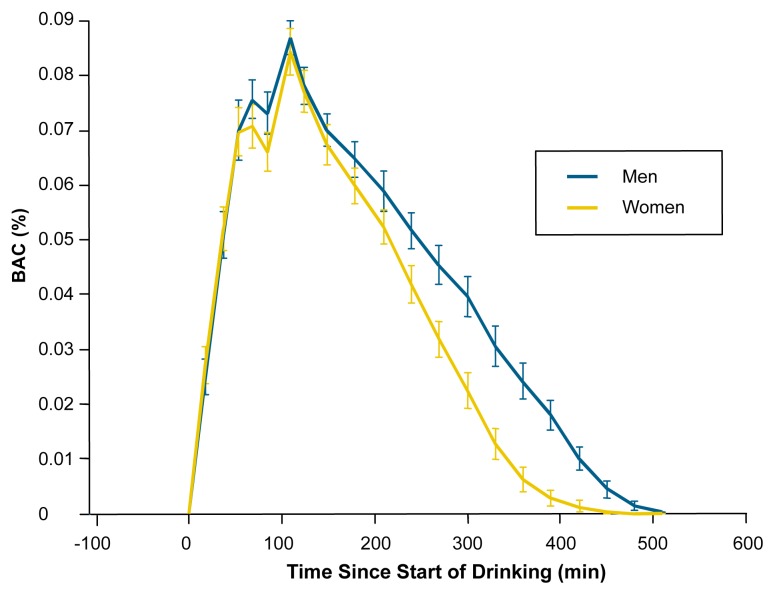
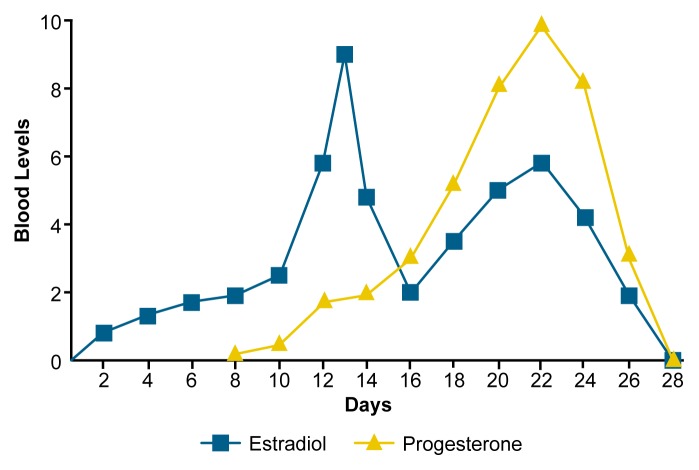
Women appear to become more impaired than men after drinking equivalent amounts of alcohol, achieving higher blood alcohol concentrations even when doses are adjusted for body weight. This finding may be attributable in part to gender differences in total body water content. Men and women appear to eliminate approximately the same total amount of alcohol per unit body weight per hour. However, women seem to eliminate significantly more alcohol per unit of lean body mass per hour than men. Some studies report that women are more susceptible than men to alcohol-related impairment of cognitive performance, especially in tasks involving delayed memory or divided attention functions. Psychomotor performance impairment, however, does not appear to be affected by gender. This article provides an overview of alcohol metabolism (pharmacokinetics) and reviews recent studies on gender differences in alcohol absorption, distribution, elimination, and impairment. Speculation that gender differences in alcohol pharmacokinetics or alcohol-induced performance impairment may be caused by the menstrual cycle and variations in female sex hormones are discussed. It is concluded that the menstrual cycle is unlikely to influence alcohol pharmacokinetics.
在饮用等量酒精后,女性似乎比男性受到的影响更大,即使根据体重调整饮酒量,女性的血液酒精浓度仍会更高。这一发现可能部分归因于总体水含量的性别差异。男性和女性每小时每单位体重消除的酒精总量似乎大致相同。然而,女性每小时每单位瘦体重消除的酒精量似乎比男性明显更多。一些研究报告称,女性比男性更容易受到酒精相关的认知功能损害,尤其是在涉及延迟记忆或分散注意力功能的任务中。然而,精神运动性能损害似乎不受性别的影响。本文概述了酒精代谢(药代动力学),并综述了近期关于酒精吸收、分布。消除和损害方面性别差异的研究。文中还讨论了关于酒精药代动力学或酒精诱导的性能损害方面的性别差异可能由月经周期和女性性激素变化引起的推测。得出的结论是,月经周期不太可能影响酒精药代动力学。