Myers Catherine E, Scharfman Helen E
Department of Psychology, Rutgers University-Newark, Newark, New Jersey, USA.
Hippocampus. 2009 Apr;19(4):321-37. doi: 10.1002/hipo.20516.
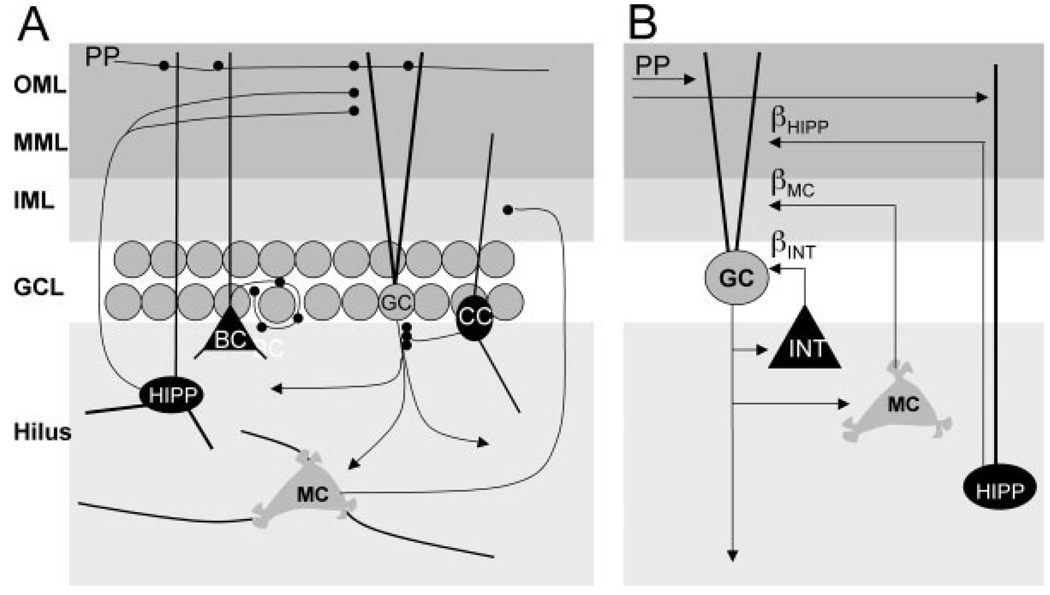
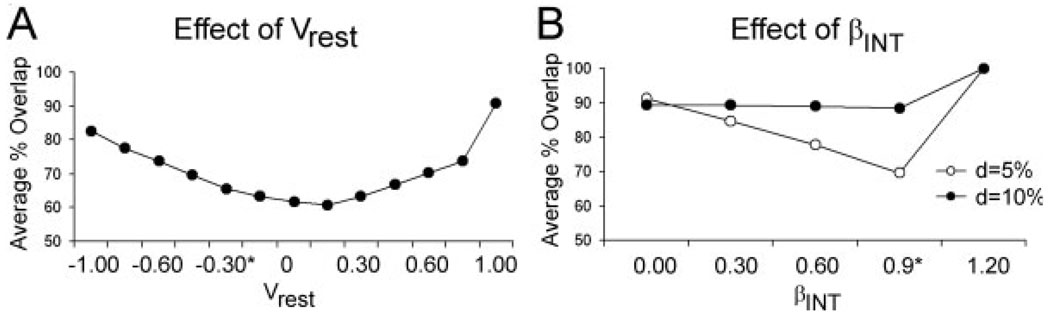
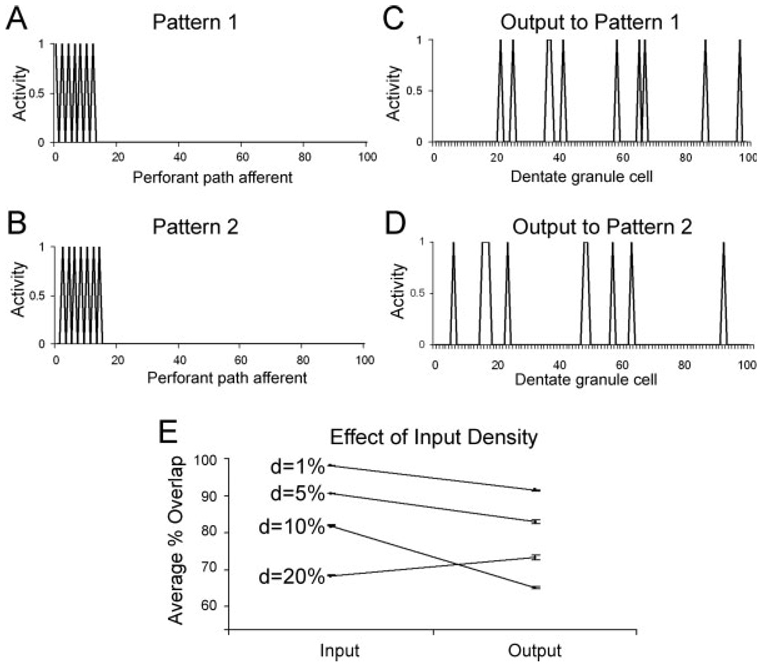
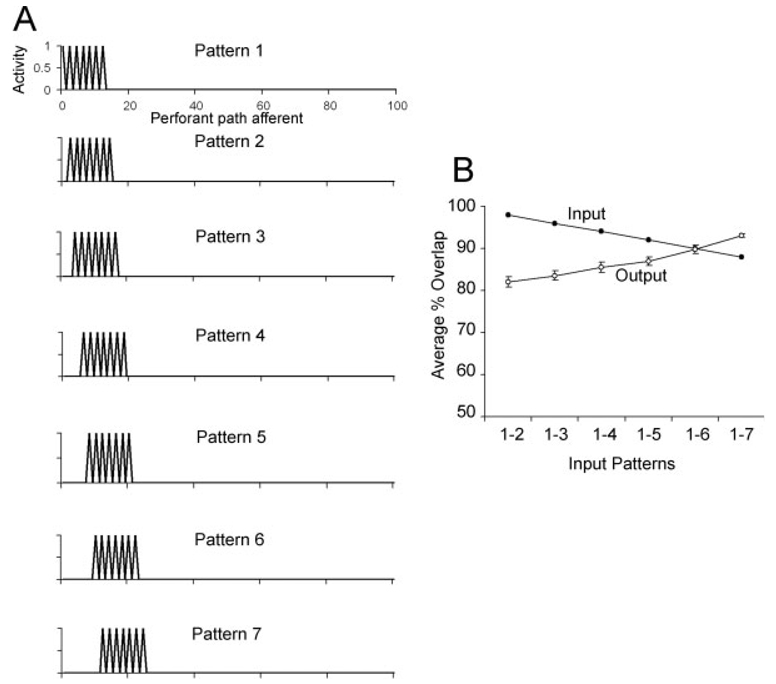
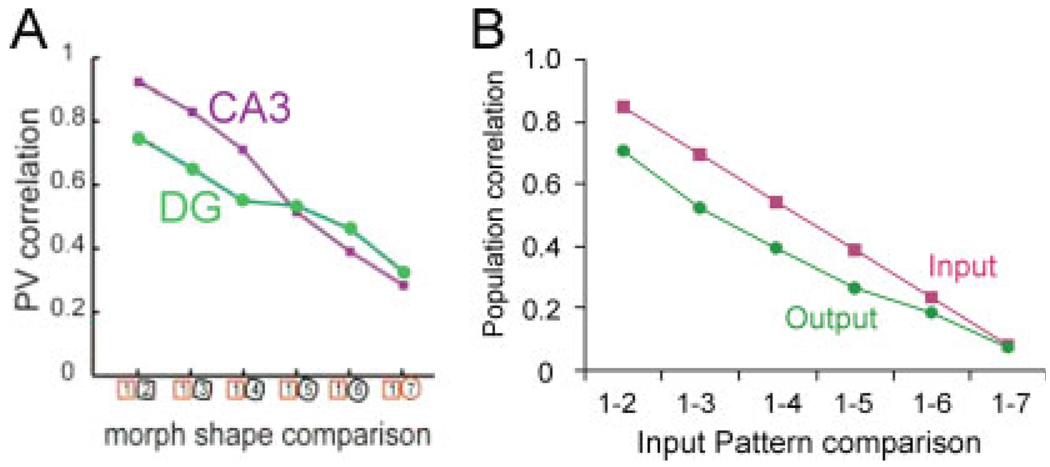
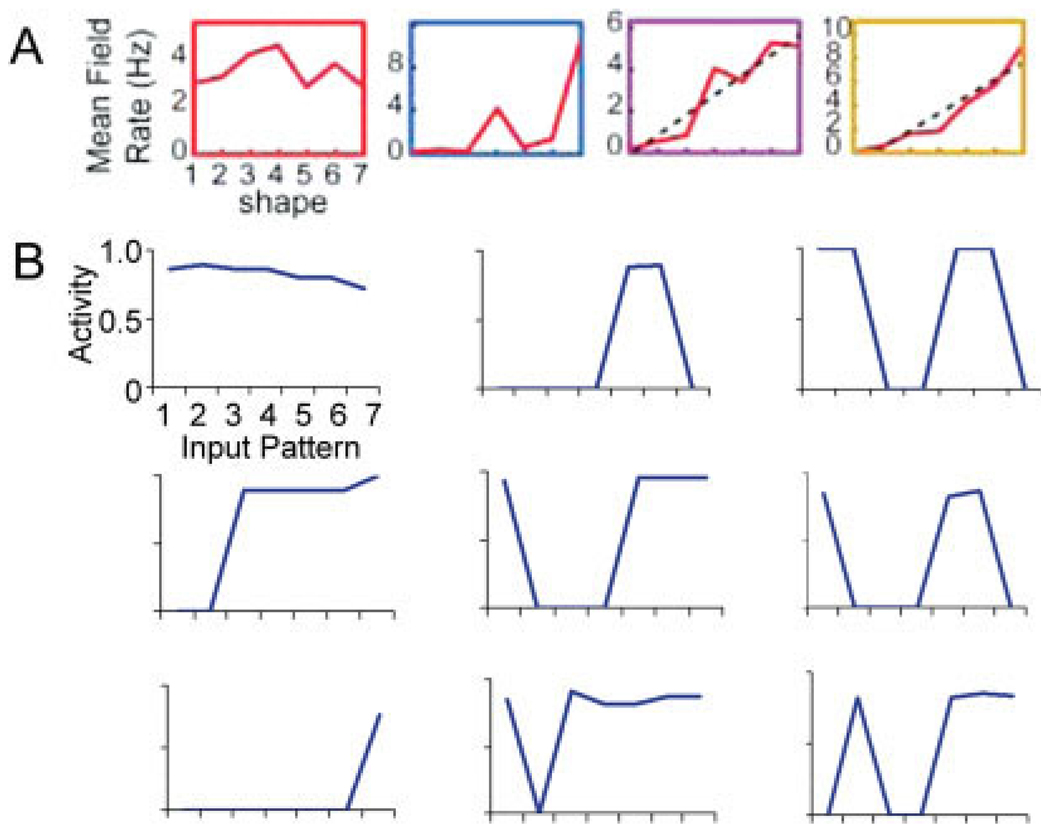
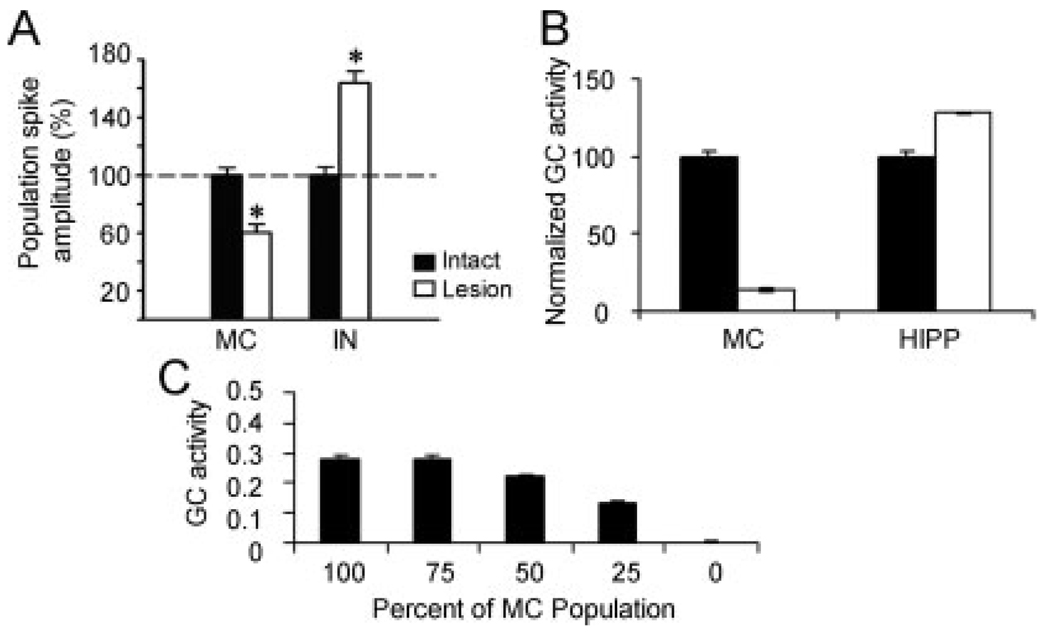
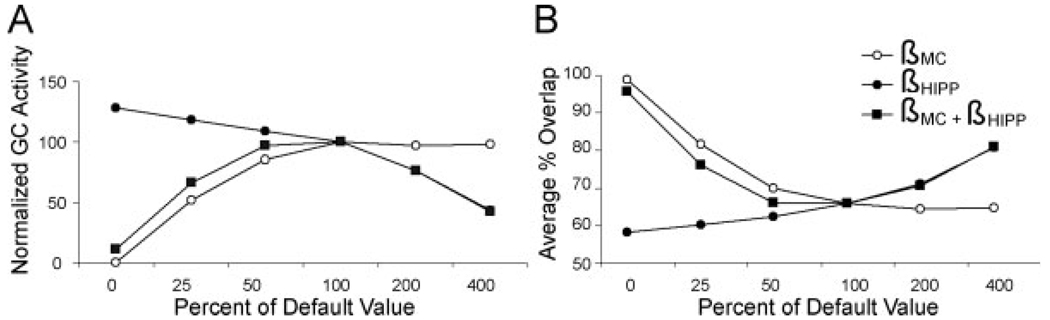
We present a simple computational model of the dentate gyrus to evaluate the hypothesis that pattern separation, defined as the ability to transform a set of similar input patterns into a less-similar set of output patterns, is dynamically regulated by hilar neurons. Prior models of the dentate gyrus have generally fallen into two categories: simplified models that have focused on a single granule cell layer and its ability to perform pattern separation, and large-scale and biophysically realistic models of dentate gyrus, which include hilar cells, but which have not specifically addressed pattern separation. The present model begins to bridge this gap. The model includes two of the major subtypes of hilar cells: excitatory hilar mossy cells and inhibitory hilar interneurons that receive input from and project to the perforant path terminal zone (HIPP cells). In the model, mossy cells and HIPP cells provide a mechanism for dynamic regulation of pattern separation, allowing the system to upregulate and downregulate pattern separation in response to environmental and task demands. Specifically, pattern separation in the model can be strongly decreased by decreasing mossy cell function and/or by increasing HIPP cell function; pattern separation can be increased by the opposite manipulations. We propose that hilar cells may similarly mediate dynamic regulation of pattern separation in the dentate gyrus in vivo, not only because of their connectivity within the dentate gyrus, but also because of their modulation by brainstem inputs and by the axons that "backproject" from area CA3 pyramidal cells.
我们提出了一种简单的齿状回计算模型,以评估以下假设:模式分离(定义为将一组相似的输入模式转换为一组不太相似的输出模式的能力)由门区神经元动态调节。先前的齿状回模型通常分为两类:一类是简化模型,专注于单个颗粒细胞层及其执行模式分离的能力;另一类是齿状回的大规模生物物理逼真模型,其中包括门区细胞,但未专门涉及模式分离。当前模型开始弥合这一差距。该模型包括门区细胞的两种主要亚型:兴奋性门区苔藓细胞和抑制性门区中间神经元,它们接收来自穿通路径终末区(HIPP细胞)的输入并向其投射。在该模型中,苔藓细胞和HIPP细胞提供了一种动态调节模式分离的机制,使系统能够根据环境和任务需求上调和下调模式分离。具体而言,通过降低苔藓细胞功能和/或增加HIPP细胞功能,模型中的模式分离可被显著降低;通过相反的操作可增加模式分离。我们提出,门区细胞可能同样在体内介导齿状回中模式分离的动态调节,这不仅是因为它们在齿状回内的连接,还因为它们受到脑干输入以及来自CA3区锥体细胞“反向投射”轴突的调制。