Scientific Institute for Quality of Healthcare, Radboud University Nijmegen Medical Centre, Nijmegen, The Netherlands.
BMC Med. 2011 Jan 24;9:8. doi: 10.1186/1741-7015-9-8.
Shoulder pain is a common musculoskeletal problem that is often chronic or recurrent. Myofascial trigger points (MTrPs) cause shoulder pain and are prevalent in patients with shoulder pain. However, few studies have focused on MTrP therapy. The aim of this study was to assess the effectiveness of multimodal treatment of MTrPs in patients with chronic shoulder pain.
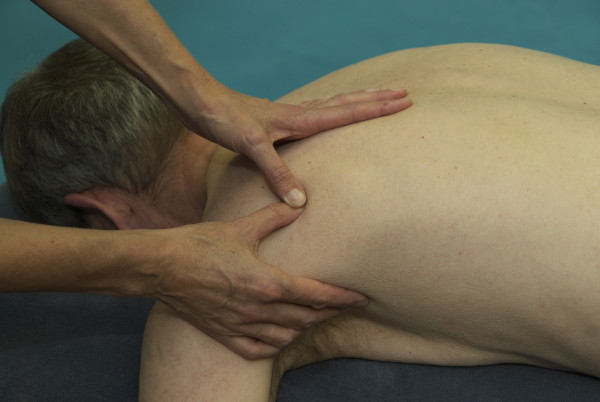
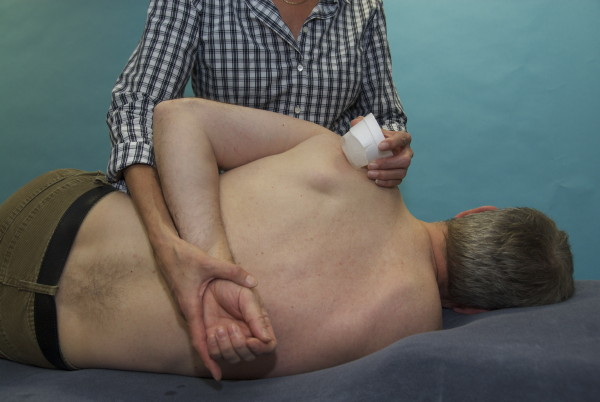
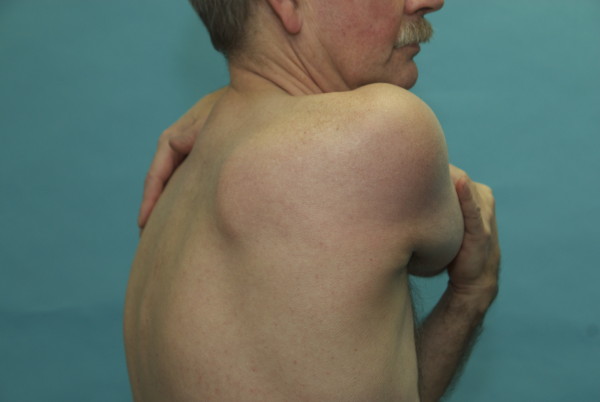
A single-assessor, blinded, randomized, controlled trial was conducted. The intervention group received comprehensive treatment once weekly consisting of manual compression of the MTrPs, manual stretching of the muscles and intermittent cold application with stretching. Patients were instructed to perform muscle-stretching and relaxation exercises at home and received ergonomic recommendations and advice to assume and maintain good posture. The control group remained on the waiting list for 3 months. The Disabilities of Arm, Shoulder and Hand (DASH) questionnaire score (primary outcome), Visual Analogue Scale for Pain (VAS-P), Global Perceived Effect (GPE) scale and the number of muscles with MTrPs were assessed at 6 and 12 weeks in the intervention group and compared with those of a control group.
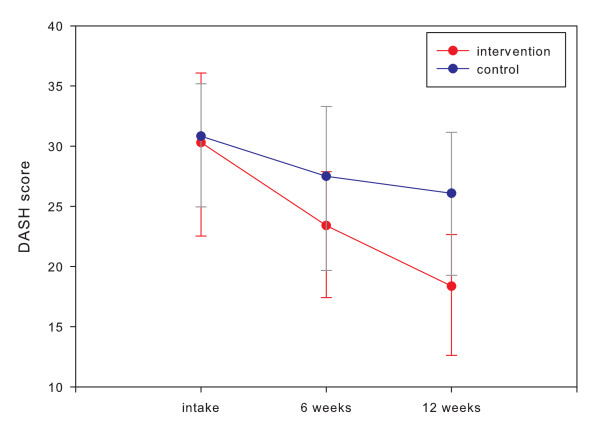
Compared with the control group, the intervention group showed significant improvement (P < 0.05) on the DASH after 12 weeks (mean difference, 7.7; 95% confidence interval (95% CI), 1.2 to 14.2), on the VAS-P1 for current pain (mean difference, 13.8; 95% CI, 2.6 to 25.0), on the VAS-P2 for pain in the past 7 days (mean difference, 10.2; 95% CI, 0.7 to 19.7) and VAS-P3 most severe pain in the past 7 days (mean difference, 13.8; 95% CI, 0.8 to 28.4). After 12 weeks, 55% of the patients in the intervention group reported improvement (from slightly improved to completely recovered) versus 14% in the control group. The mean number of muscles with active MTrPs decreased in the intervention group compared with the control group (mean difference, 2.7; 95% CI, 1.2 to 4.2).
The results of this study show that 12-week comprehensive treatment of MTrPs in shoulder muscles reduces the number of muscles with active MTrPs and is effective in reducing symptoms and improving shoulder function in patients with chronic shoulder pain.
ISRCTN: ISRCTN75722066.
肩部疼痛是一种常见的肌肉骨骼问题,通常是慢性或复发性的。肌筋膜触发点(MTrP)会引起肩部疼痛,并且在肩部疼痛患者中很常见。然而,很少有研究关注 MTrP 治疗。本研究旨在评估 MTrP 综合治疗对慢性肩部疼痛患者的有效性。
进行了一项单评估员、盲法、随机、对照试验。干预组每周接受一次综合治疗,包括 MTrP 的手动压缩、肌肉的手动拉伸和间歇性冷应用加拉伸。患者被指示在家中进行肌肉拉伸和放松运动,并接受人体工程学建议和保持良好姿势的建议。对照组在 3 个月内继续等待。在干预组和对照组分别在 6 周和 12 周时评估了手臂、肩部和手残疾(DASH)问卷评分(主要结局)、疼痛视觉模拟量表(VAS-P)、总体感觉效果(GPE)量表和存在 MTrP 的肌肉数量。
与对照组相比,干预组在 12 周后 DASH 显著改善(P < 0.05)(平均差异,7.7;95%置信区间(95%CI),1.2 至 14.2),当前疼痛的 VAS-P1(平均差异,13.8;95%CI,2.6 至 25.0),过去 7 天疼痛的 VAS-P2(平均差异,10.2;95%CI,0.7 至 19.7)和过去 7 天最严重疼痛的 VAS-P3(平均差异,13.8;95%CI,0.8 至 28.4)。12 周后,干预组 55%的患者报告改善(从略有改善到完全恢复),而对照组为 14%。与对照组相比,干预组活跃 MTrP 的肌肉数量减少(平均差异,2.7;95%CI,1.2 至 4.2)。
本研究结果表明,肩部肌肉 12 周的 MTrP 综合治疗可减少活跃 MTrP 的肌肉数量,并有效减轻慢性肩部疼痛患者的症状和改善肩部功能。
ISRCTN:ISRCTN75722066。