Division of Environmental Medicine, Norwegian Institute of Public Health, P.O. Box 4404, Nydalen, Oslo NO-0403, Norway.
Int J Environ Res Public Health. 2011 Aug;8(8):3144-55. doi: 10.3390/ijerph8083144. Epub 2011 Jul 26.
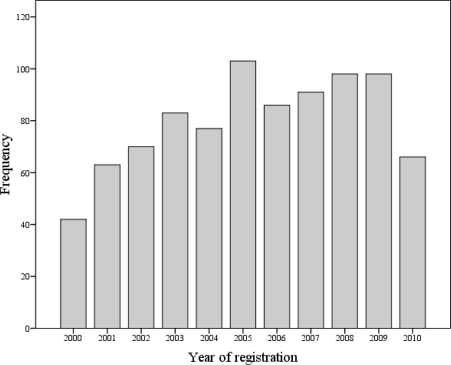
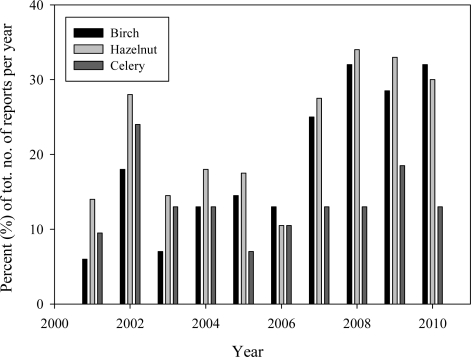
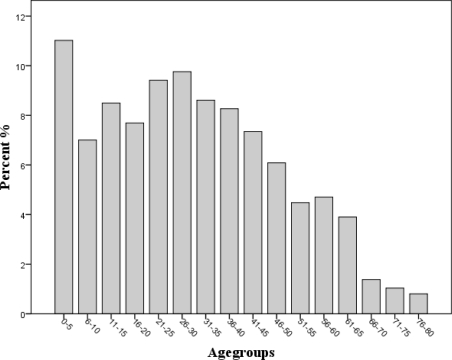
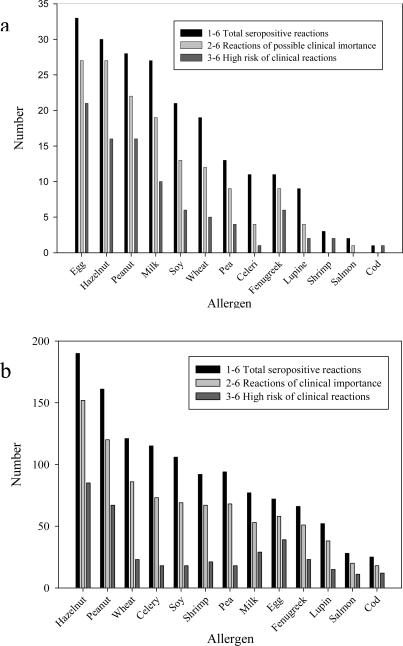
The Norwegian Food Allergy Register was established at the Norwegian Institute of Public Health in 2000. The purpose of the register is to gain information about severe allergic reactions to food in Norway and to survey food products in relation to allergen labelling and contamination. Cases are reported on a voluntary basis by first line doctors, and submitted together with a serum sample for specific IgE analysis. The register has received a total of 877 reports from 1 July, 2000 to 31 December, 2010. Two age groups, small children and young adults are over-represented, and the overall gender distribution is 40:60 males-females. The legumes lupine and fenugreek have been identified as two "new" allergens in processed foods and cases of contamination and faults in production of processed foods have been revealed. The highest frequency of food specific IgE is to hazelnuts and peanuts, with a marked increase in reactions to hazelnuts during the last three years. The Food Allergy Register has improved our knowledge about causes and severity of food allergic reactions in Norway. The results show the usefulness of population based national food allergy registers in providing information for health authorities and to secure safe food for individuals with food allergies.
挪威食物过敏登记处成立于 2000 年,隶属于挪威公共卫生研究所。该登记处的目的是获取挪威严重食物过敏反应的相关信息,并对食物产品进行调查,以了解过敏原标签和污染情况。一线医生自愿报告病例,并提交血清样本进行特定 IgE 分析。该登记处自 2000 年 7 月 1 日至 2010 年 12 月 31 日共收到 877 份报告。两个年龄组,即幼儿和年轻成年人的报告比例过高,总体性别分布为男性占 40%,女性占 60%。羽扇豆和葫芦巴已被确定为加工食品中的两种“新”过敏原,且已发现加工食品的污染和生产失误的案例。食物特异性 IgE 频率最高的是榛子和花生,过去三年中榛子过敏反应明显增加。食物过敏登记处提高了我们对挪威食物过敏反应原因和严重程度的认识。研究结果表明,基于人群的国家食物过敏登记处对于为卫生当局提供信息和确保食物过敏个体的安全食物是有用的。