Janelia Farm Research Campus, Ashburn, Virginia, United States of America.
PLoS One. 2012;7(9):e44448. doi: 10.1371/journal.pone.0044448. Epub 2012 Sep 21.
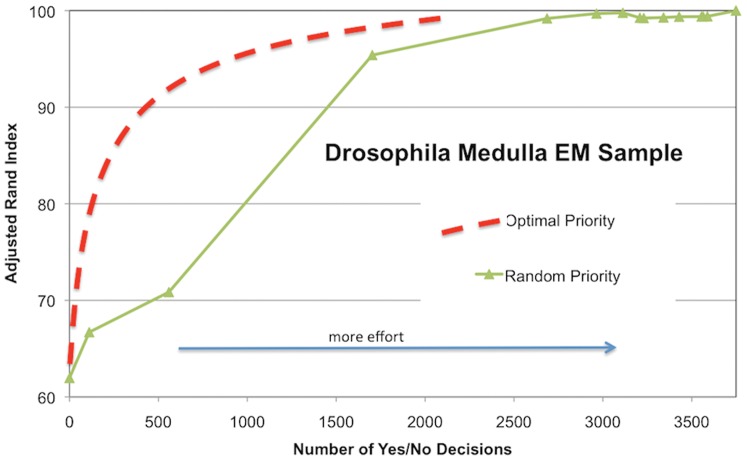
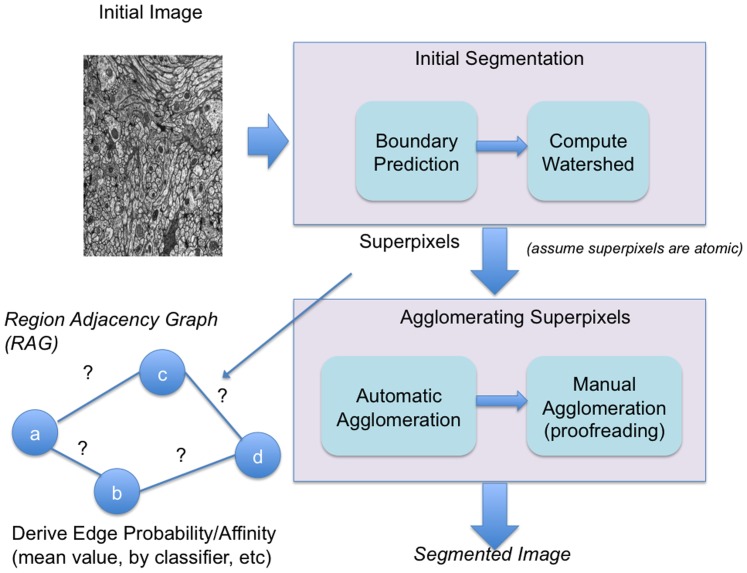
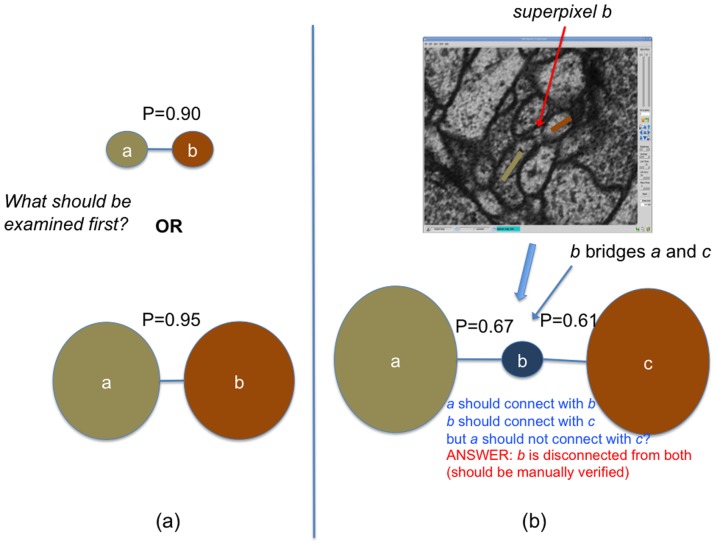
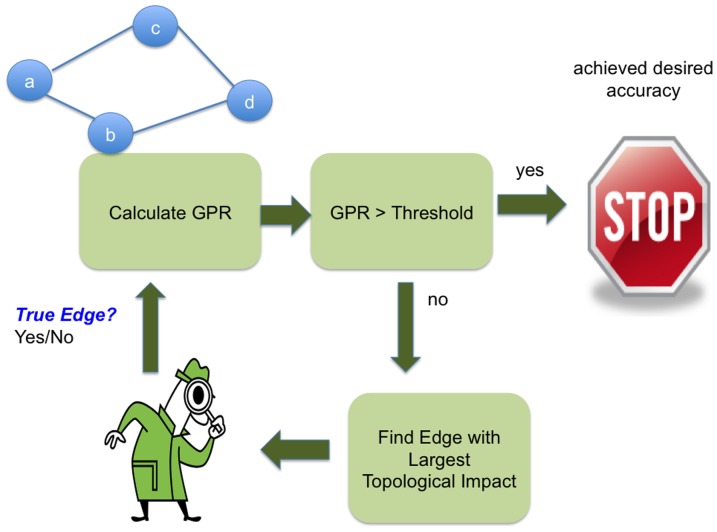
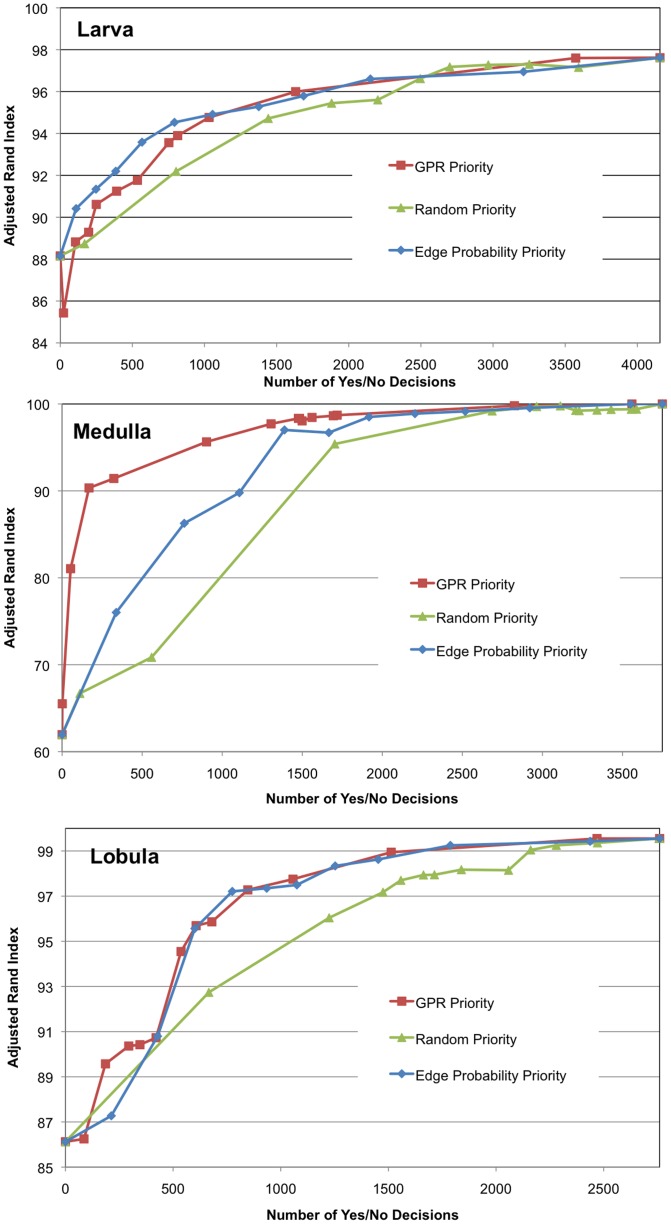
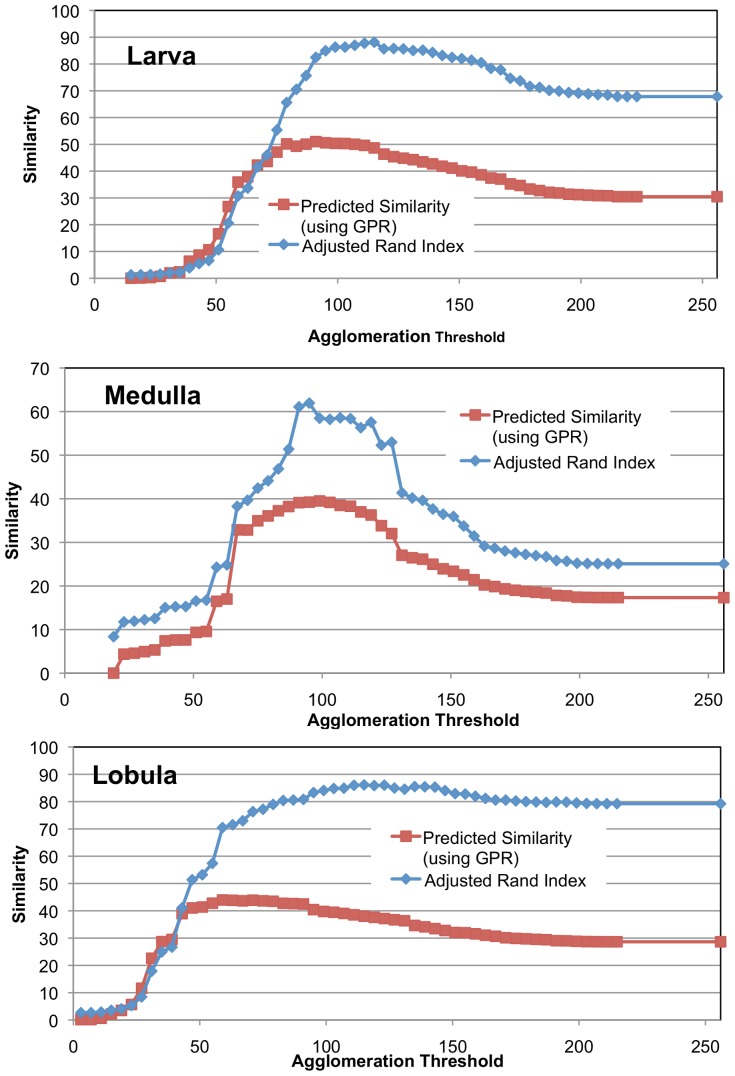
The ability to automatically segment an image into distinct regions is a critical aspect in many visual processing applications. Because inaccuracies often exist in automatic segmentation, manual segmentation is necessary in some application domains to correct mistakes, such as required in the reconstruction of neuronal processes from microscopic images. The goal of the automated segmentation tool is traditionally to produce the highest-quality segmentation, where quality is measured by the similarity to actual ground truth, so as to minimize the volume of manual correction necessary. Manual correction is generally orders-of-magnitude more time consuming than automated segmentation, often making handling large images intractable. Therefore, we propose a more relevant goal: minimizing the turn-around time of automated/manual segmentation while attaining a level of similarity with ground truth. It is not always necessary to inspect every aspect of an image to generate a useful segmentation. As such, we propose a strategy to guide manual segmentation to the most uncertain parts of segmentation. Our contributions include 1) a probabilistic measure that evaluates segmentation without ground truth and 2) a methodology that leverages these probabilistic measures to significantly reduce manual correction while maintaining segmentation quality.
将图像自动分割成不同区域的能力是许多视觉处理应用中的关键方面。由于自动分割常常存在不准确的情况,因此在某些应用领域中需要手动分割来纠正错误,例如从微观图像中重建神经元过程。自动化分割工具的目标传统上是生成最高质量的分割,其中质量通过与实际地面实况的相似性来衡量,以最大限度地减少所需的手动校正量。手动校正通常比自动化分割耗时几个数量级,通常使得处理大型图像变得难以处理。因此,我们提出了一个更相关的目标:在达到与地面实况相似性的同时,最小化自动化/手动分割的周转时间。生成有用的分割并不总是需要检查图像的每个方面。因此,我们提出了一种策略,将手动分割引导到分割中最不确定的部分。我们的贡献包括 1)一种无需地面实况即可评估分割的概率度量,以及 2)一种利用这些概率度量来显著减少手动校正同时保持分割质量的方法。