The Children's Mercy Hospital, Kansas City, MO, USA.
BMC Gastroenterol. 2012 Oct 15;12:142. doi: 10.1186/1471-230X-12-142.
Sleep disturbances are increasingly recognized as a common problem for children and adolescents with chronic pain conditions, but little is known about the prevalence, type, and impact of sleep problems in pediatric functional gastrointestinal disorders (FGIDs). The objectives of the current study were two-fold: 1) to describe the pattern of sleep disturbances reported in a large sample of children and adolescents with FGIDs; and, 2) to explore the impact of sleep by examining the inter-relationships between sleep disturbance, physical symptoms, emotional problems, and functional disability in this population.
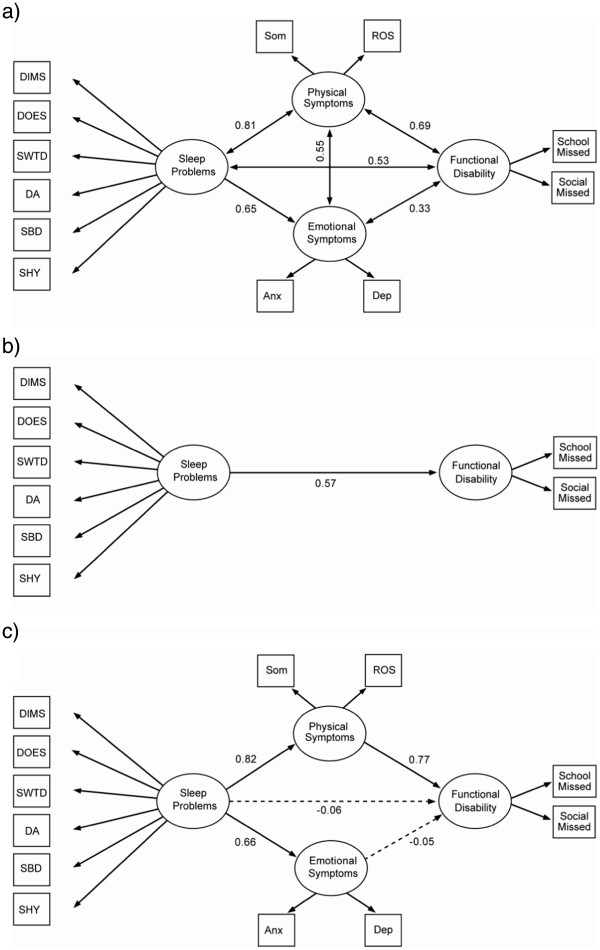
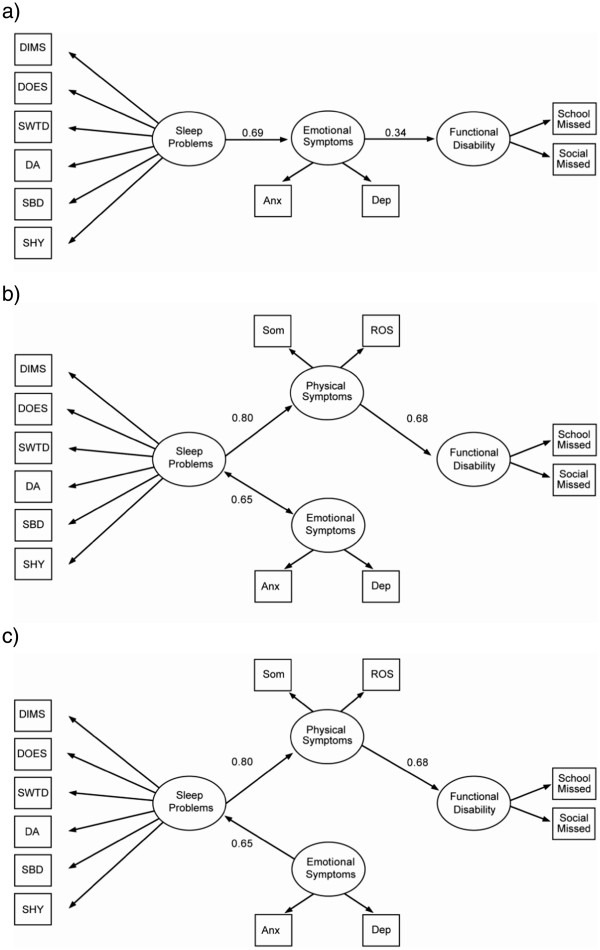
Over a 3-year period, 283 children aged 8-17 years who were diagnosed with an FGID and a primary caretaker independently completed questionnaires regarding sleep, emotional functioning, physical symptoms, and functional disability during an initial evaluation for chronic abdominal pain at a pediatric tertiary care center. A verbal review of systems also was collected at that time. Descriptive statistics were used to characterize the pattern of sleep disturbances reported, while structural equation modeling (SEM) was employed to test theorized meditational relationships between sleep and functional disability through physical and emotional symptoms.
Clinically significant elevations in sleep problems were found in 45% of the sample, with difficulties related to sleep onset and maintenance being most common. No difference was seen by specific FGID or by sex, although adolescents were more likely to have sleep onset issues than younger children. Sleep problems were positively associated with functional disability and physical symptoms fully mediated this relationship. Emotional symptoms, while associated with sleep problems, evidenced no direct link to functional disability.
Sleep problems are common in pediatric FGIDs and are associated with functional disability through their impact on physical symptoms. Treatments targeting sleep are likely to be beneficial in improving physical symptoms and, ultimately, daily function in pediatric FGIDs.
睡眠障碍越来越被认为是患有慢性疼痛疾病的儿童和青少年常见的问题,但对于儿科功能性胃肠疾病(FGIDs)患者中睡眠问题的发生率、类型和影响知之甚少。本研究的目的有两个:1)描述大量 FGIDs 患儿和青少年报告的睡眠障碍模式;2)通过检查睡眠障碍与该人群中身体症状、情绪问题和功能障碍之间的相互关系来探讨睡眠的影响。
在 3 年期间,对在儿科三级护理中心接受慢性腹痛初始评估时,被诊断为 FGID 的 283 名 8-17 岁儿童及其主要照顾者,独立完成了关于睡眠、情绪功能、身体症状和功能障碍的问卷调查。当时还收集了口头系统回顾。采用描述性统计来描述报告的睡眠障碍模式,同时采用结构方程模型(SEM)来检验睡眠与功能障碍通过身体和情绪症状之间的理论中介关系。
在该样本中,45%的儿童存在临床显著的睡眠问题,入睡和维持睡眠困难最为常见。特定的 FGID 或性别无差异,但青少年比年幼的儿童更有可能出现入睡问题。睡眠问题与功能障碍呈正相关,身体症状完全介导了这种关系。情绪症状与睡眠问题相关,但与功能障碍无直接联系。
睡眠问题在儿科 FGIDs 中很常见,通过对身体症状的影响与功能障碍相关。针对睡眠的治疗可能有助于改善身体症状,并最终改善儿科 FGIDs 的日常功能。