Department of Public Health and Clinical Medicine, Division of Epidemiology and Global Health, Umeå University, SE- 901 85, Umeå, Sweden.
BMC Health Serv Res. 2012 Nov 29;12:433. doi: 10.1186/1472-6963-12-433.
Experiences from nations with population diversity show extensive evidence on the need for cultural and linguistic competence in health care. In Sweden, despite the increasing diversity, only few studies have focused on challenges in cross-cultural care. The aim of this study was to explore the perspectives and experiences of caregivers in caring for migrant patients in Northern Sweden in order to understand the challenges they face and generate knowledge that could inform clinical practice.
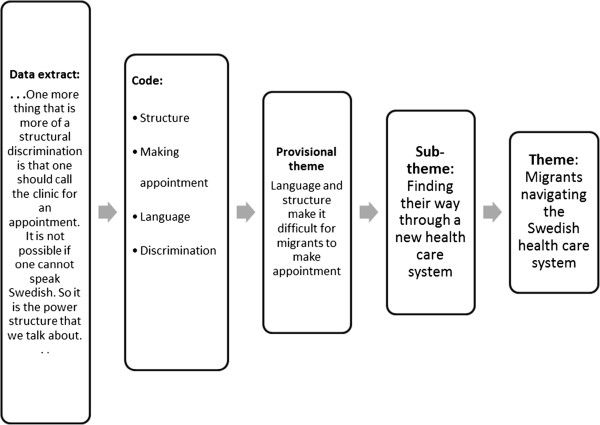
We used an interpretive description approach, combining semi-structured interviews with 10 caregivers purposively selected and participant observation of patient-provider interactions in caring encounters. The interviews were transcribed and analyzed using thematic analysis approach. Field notes were also used to orient data collection and confirm or challenge the analysis.
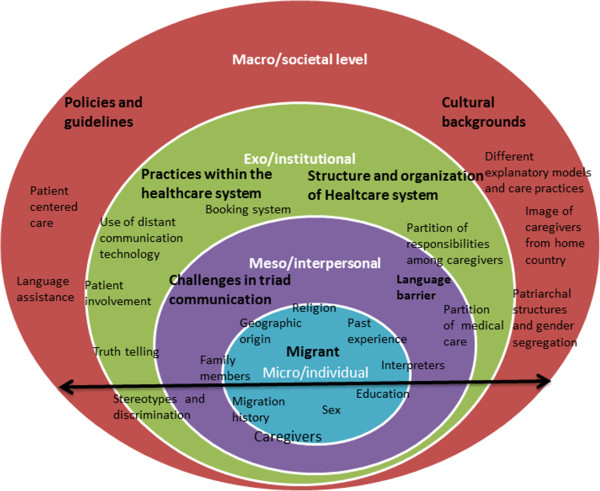
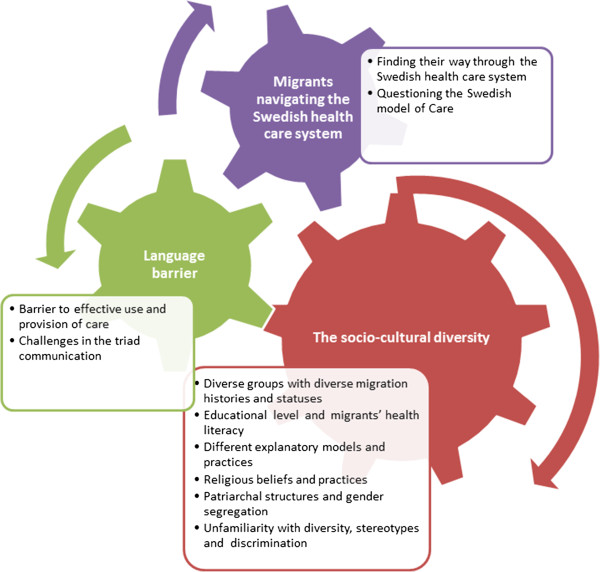
We found complex and intertwined challenges as indicated in the three themes we present including: the sociocultural diversity, the language barrier and the challenges migrants face in navigating through the Swedish health care system. The caregivers described migrants as a heterogeneous group coming from different geographical areas with varied social, cultural and religious affiliations, migration histories and statuses, all of which influenced the health care encounter, whether providing or receiving. Participants also described language as a major barrier to effective provision and use of health services. Meanwhile, they expressed concern over the use of interpreters in the triad communication and over the difficulties encountered by migrants in navigating through the Swedish health care system.
The study illuminates complex challenges facing health care providers caring for migrant populations and highlights the need for multifaceted approaches to improve the delivery and receipt of care. The policy implications of these challenges are discussed in relation to the need to (a) adapt care to the individual needs, (b) translate key documents and messages in formats and languages accessible and acceptable to migrants, (c) train interpreters and enhance caregivers' contextual understanding of migrant groups and their needs, (d) and improve migrants' health literacy through strategies such as community based educational outreach.
具有人口多样性的国家的经验表明,医疗保健需要文化和语言能力。在瑞典,尽管多样性不断增加,但只有少数研究关注跨文化护理的挑战。本研究的目的是探讨瑞典北部护理移民患者的护理人员的观点和经验,以了解他们面临的挑战,并生成可以为临床实践提供信息的知识。
我们采用解释性描述方法,将 10 名护理人员的半结构化访谈与患者 - 提供者在护理过程中的互动进行了参与者观察相结合。访谈记录进行了转录,并使用主题分析方法进行了分析。现场记录也用于指导数据收集并确认或挑战分析。
我们发现了复杂且相互交织的挑战,体现在我们提出的三个主题中,包括:社会文化多样性、语言障碍以及移民在瑞典医疗保健系统中遇到的导航挑战。护理人员将移民描述为一个来自不同地理区域、具有不同社会、文化和宗教背景、移民历史和地位的异质群体,这些因素都影响了医疗保健的接触,无论是提供还是接受。参与者还描述了语言是有效提供和使用卫生服务的主要障碍。同时,他们对三人组交流中使用口译员表示关注,并对移民在瑞典医疗保健系统中遇到的困难表示关注。
该研究阐明了护理移民人群的医疗保健提供者面临的复杂挑战,并强调需要采取多方面的方法来改善护理的提供和接受。这些挑战的政策影响在以下方面进行了讨论:(a)根据个人需求调整护理;(b)将关键文件和信息翻译成移民可访问和接受的格式和语言;(c)培训口译员,并增强护理人员对移民群体及其需求的背景理解;(d)通过社区教育外展等策略提高移民的健康素养。