Functional Neuroimaging Unit, CRIUGM, Montreal, Canada.
PLoS One. 2013;8(1):e52805. doi: 10.1371/journal.pone.0052805. Epub 2013 Jan 2.
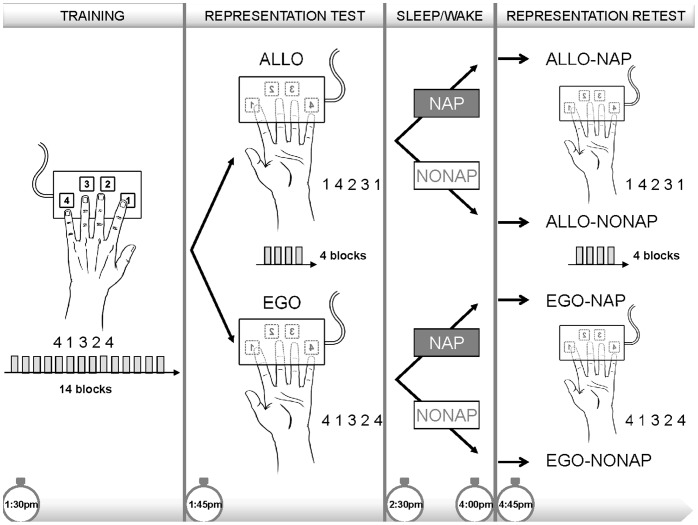
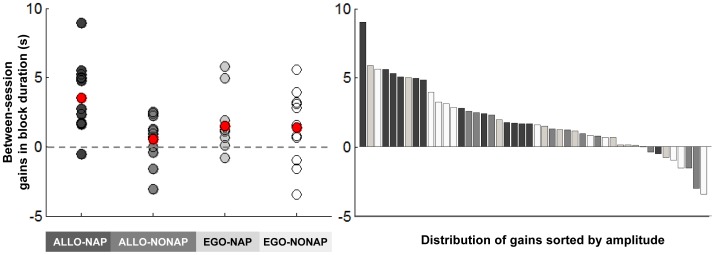
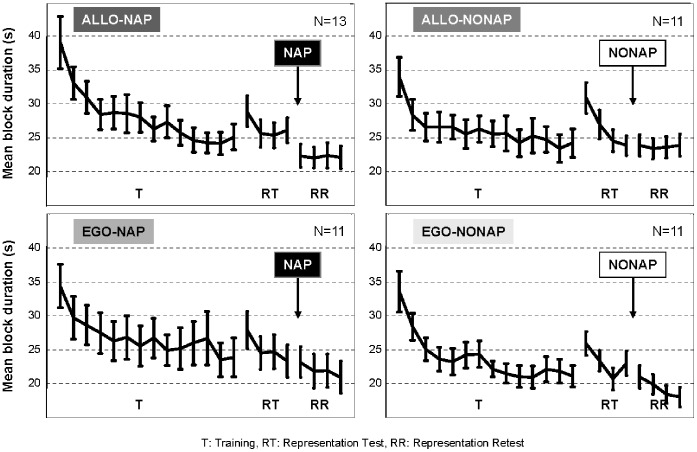
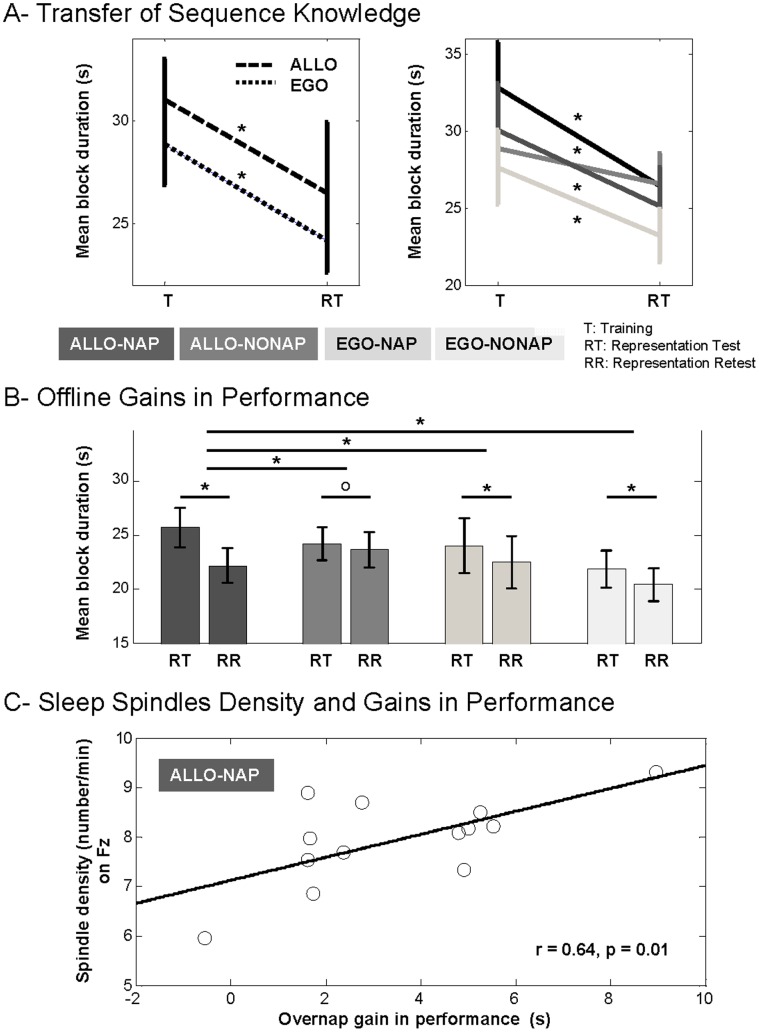
Motor sequence learning is known to rely on more than a single process. As the skill develops with practice, two different representations of the sequence are formed: a goal representation built under spatial allocentric coordinates and a movement representation mediated through egocentric motor coordinates. This study aimed to explore the influence of daytime sleep (nap) on consolidation of these two representations. Through the manipulation of an explicit finger sequence learning task and a transfer protocol, we show that both allocentric (spatial) and egocentric (motor) representations of the sequence can be isolated after initial training. Our results also demonstrate that nap favors the emergence of offline gains in performance for the allocentric, but not the egocentric representation, even after accounting for fatigue effects. Furthermore, sleep-dependent gains in performance observed for the allocentric representation are correlated with spindle density during non-rapid eye movement (NREM) sleep of the post-training nap. In contrast, performance on the egocentric representation is only maintained, but not improved, regardless of the sleep/wake condition. These results suggest that motor sequence memory acquisition and consolidation involve distinct mechanisms that rely on sleep (and specifically, spindle) or simple passage of time, depending respectively on whether the sequence is performed under allocentric or egocentric coordinates.
运动序列学习被认为依赖于多个过程。随着技能的不断练习,会形成两种不同的序列表示:一种是基于空间参照坐标构建的目标表示,另一种是通过自我参照运动坐标介导的运动表示。本研究旨在探索日间睡眠(小睡)对这两种表示的巩固作用。通过操纵一个明确的手指序列学习任务和转移协议,我们表明,在初始训练后,可以分离出序列的空间参照(空间)和自我参照(运动)表示。我们的结果还表明,即使考虑到疲劳效应,小睡也有利于离线提高空间参照的表现,而不是自我参照的表现。此外,在训练后小睡的非快速眼动(NREM)睡眠期间,观察到的与空间参照相关的睡眠依赖性表现增益与纺锤波密度相关。相比之下,无论睡眠/觉醒状态如何,自我参照的表现都只能维持,而不能提高。这些结果表明,运动序列记忆的获取和巩固涉及不同的机制,这些机制依赖于睡眠(特别是纺锤波)或简单的时间流逝,这取决于序列是在空间参照坐标还是自我参照坐标下进行的。