ICBAS - Abel Salazar Biomedical Sciences Institute, University of Porto, Porto, 4050-313, Portugal.
Int J Environ Res Public Health. 2013 Jan 14;10(1):278-94. doi: 10.3390/ijerph10010278.
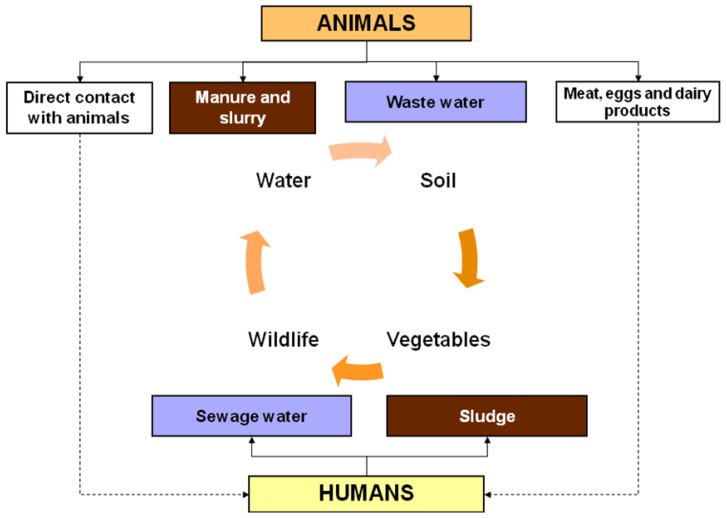
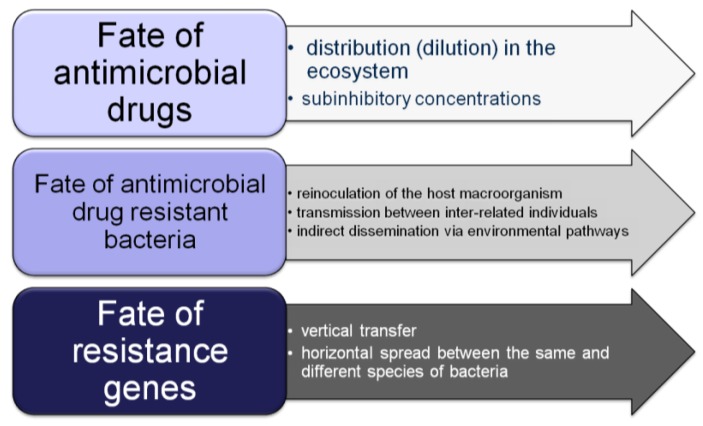
The use of antimicrobial agents has been claimed to be the driving force for the emergence and spread of microbial resistance. However, several studies have reported the presence of multidrug-resistant bacteria in populations exposed to low levels of antimicrobial drugs or even never exposed. For many pathogens, especially those organisms for which asymptomatic colonization typically precedes infection (e.g., Enterococcus spp. and Escherichia coli), the selective effects of antimicrobial use can only be understood if we considerer all biological and environmental pathways which enable these bacteria, and the genes they carry, to spread between different biomes. This ecological framework provides an essential perspective for formulating antimicrobial use policies, precisely because it encompasses the root causes of these problems rather than merely their consequences.
抗生素的使用被认为是微生物耐药性出现和传播的主要驱动力。然而,有几项研究报告称,在接触低水平抗生素药物甚至从未接触过抗生素药物的人群中存在多重耐药细菌。对于许多病原体,特别是那些无症状定植通常先于感染的生物体(例如肠球菌属和大肠杆菌),如果我们考虑到使这些细菌及其携带的基因在不同生物群落之间传播的所有生物和环境途径,才能理解抗生素使用的选择作用。这种生态框架为制定抗生素使用政策提供了一个重要的视角,正是因为它包含了这些问题的根本原因,而不仅仅是其后果。